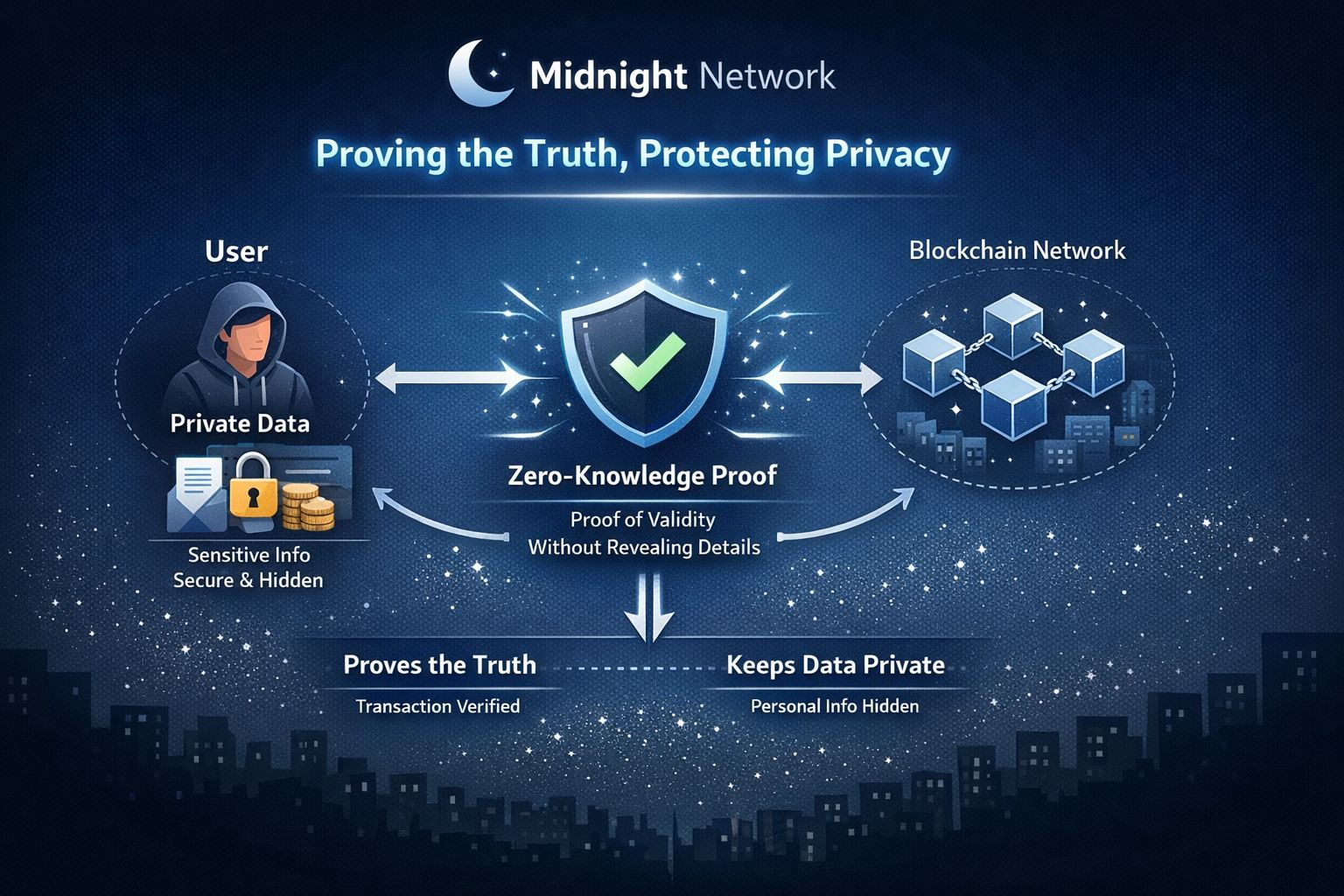
Midnight Network, often referred to simply as Night, becomes much easier to understand when you step away from the dense technical language that usually surrounds blockchain discussions. At its core, the concept is surprisingly straightforward. Instead of focusing only on transparency like most blockchains, Midnight explores how blockchain technology can maintain trust without forcing everything into public view.
It starts by recognizing a problem that has existed since the early days of blockchain.
The Transparency Dilemma in Traditional Blockchains
Most blockchains are designed around complete transparency. Every transaction is recorded on a public ledger that anyone can inspect. This openness is powerful because it creates trust. People can verify that transactions happened exactly as claimed, without needing to rely on a central authority.
But transparency also comes with a trade-off.
When blockchain moves beyond simple token transfers and begins handling real-world data—things like personal information, business contracts, financial records, or digital identity—the idea of making everything visible starts to feel problematic. Users can prove something happened on-chain, but they often reveal more information than they would like in the process.
In other words, trust is gained, but privacy is sacrificed.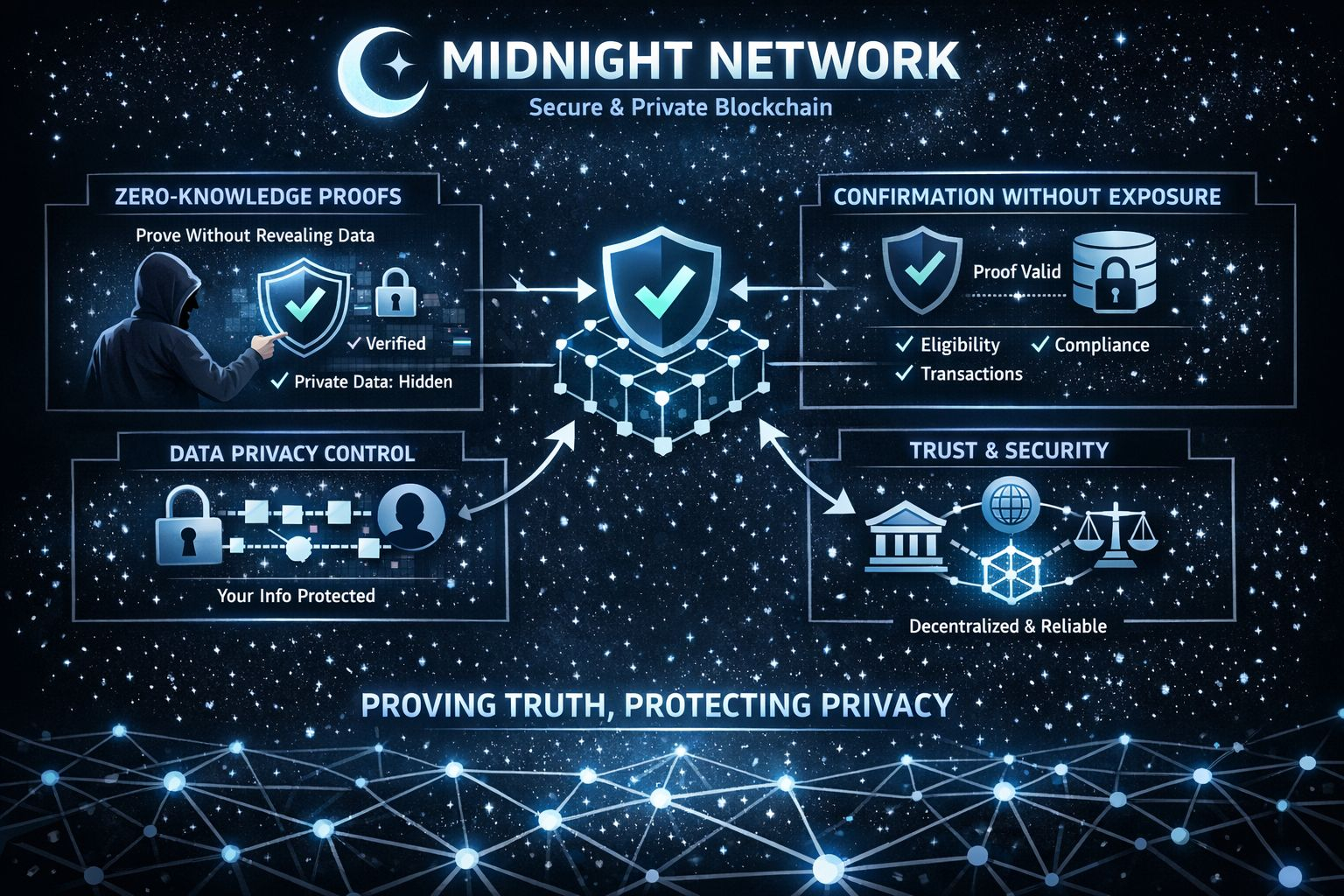
Midnight’s Different Approach
Midnight Network approaches this challenge from a different angle. Instead of assuming that all information must be public, it asks a more thoughtful question:
How much information actually needs to be visible for verification to work?
This shift in thinking changes the entire design philosophy of the system. Midnight aims to keep the strengths of blockchain—verification, decentralization, and ownership—while protecting the sensitive information that doesn’t need to be shared with everyone.
The Role of Zero-Knowledge Proofs
The technology that makes this possible is called zero-knowledge proofs. The term may sound complicated, but the concept behind it is surprisingly intuitive.
A zero-knowledge proof allows someone to prove that something is true without revealing the underlying data that proves it.
For example, a system could verify that a transaction follows the rules of the network without exposing the exact financial details involved. Similarly, someone could prove they meet certain conditions—like age or eligibility—without revealing personal information.
This approach allows verification to remain strong while keeping sensitive data private.
A More Human Way to Think About Data
Because of this design, Midnight shifts the focus of blockchain conversations. Instead of constantly asking:
“How public can this system be?”
the question becomes:
“What actually needs to be public?”
This may seem like a subtle difference, but it reflects a more realistic understanding of how people and organizations interact with data. In many real-world scenarios, transparency and privacy need to coexist, not compete.
Businesses may need to prove compliance without exposing confidential data. Individuals may want control over their digital identity without broadcasting personal details across a public ledger.
@MidnightNetwork is built with these realities in mind.
Why Midnight Stands Out
What makes Midnight interesting is not just its technology, but the philosophy behind it. The network treats data protection as a fundamental design principle, rather than an optional feature added later.
Ownership still matters. Verification still matters. Trust in the system remains essential. But Midnight acknowledges that privacy is equally important if blockchain technology is going to support real-world applications at scale.
Rather than promising a perfect future, Midnight simply recognizes a key friction point in existing blockchain systems and attempts to solve it carefully.
And in a digital world where information is often exposed by default, building systems that verify truth while protecting privacy may be one of the most important steps forward.