
When oil prices suddenly surge, the shock doesn’t stay limited to the energy sector. It often spreads across global financial markets, including crypto. Recently, USOIL crossed the 101.951 USDT level, raising an important question among traders: will higher energy costs drain liquidity from crypto, or could it strengthen the narrative of digital assets like $BTC as a hedge similar to Gold?
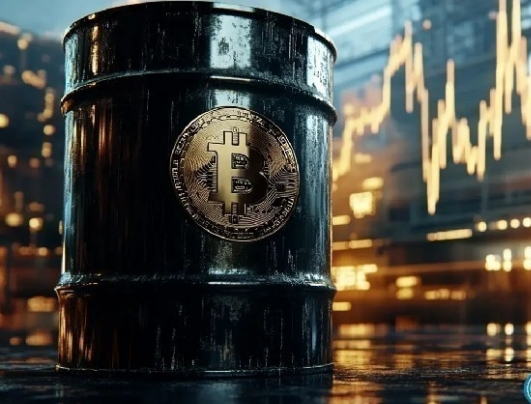
Let’s break down how rising oil prices influence the crypto market and what traders should watch next.
Why Is This Event Affecting Crypto?
1. Inflation Pressure Increases
When oil prices move above the 100 USDT level, it typically raises global inflation expectations. Higher energy costs increase production and transportation expenses worldwide, which pushes consumer prices up.
In response, central banks such as the Federal Reserve may delay interest-rate cuts or maintain tighter monetary policies. This reduces overall market liquidity, and risk assets like Ethereum and Bitcoin often react with short-term volatility.
Because of this macro pressure, crypto markets could experience short-term fluctuations in the range of –5 % to –12 %, mainly driven by sentiment rather than fundamental changes.
2. Rotation Toward Defensive Assets
Energy shocks often trigger a shift in investor behavior. Instead of high-risk assets, traders temporarily move funds into safer alternatives such as gold, stablecoins, or commodity-linked assets.
This rotation can reduce demand for high-beta altcoins, causing temporary weakness across the altcoin market. However, these pullbacks frequently create new accumulation zones for long-term investors who are looking to buy strong projects at lower prices.
3. Liquidity Redistribution
Institutional investors often adjust their portfolios during energy-driven volatility. Some leveraged positions in crypto derivatives may be reduced to manage exposure in other markets, including oil.
Recent on-chain data suggest that inflows into Bitcoin-related investment products have slowed as USOIL prices rise. This does not necessarily signal a long-term trend reversal. Instead, it reflects a temporary liquidity shift caused by macro sentiment.
Possible Trading Approaches
Short-Term Strategy (1–7 Days): Defensive Volatility
During sudden energy shocks, markets often react emotionally before stabilizing. Traders sometimes hedge their portfolios with assets linked to commodities such as tokenized gold.
Another approach is watching for exhaustion signals in oil, especially when prices reach the 100–104 USDT zone. Indicators such as declining funding rates or an RSI near 70 may suggest that the risk-off momentum is fading.
Mid-Term Strategy (1 Month or More): Inflation-Hedge Positioning
Over a longer horizon, some traders maintain partial exposure to energy-linked assets while gradually accumulating high-liquidity cryptocurrencies once macro tensions begin to ease.
Currently, analysts estimate that USOIL may fluctuate within a 95–110 USDT range depending on geopolitical developments and global economic stability.
Key Takeaway
The current oil surge is best viewed as a liquidity adjustment driven by market emotion rather than a structural shift in crypto fundamentals. Energy shocks may temporarily shake the market, but they also create opportunities for disciplined traders who focus on macro signals and risk management.
In simple terms: trade the market structure, not the fear.