
There is a growing contradiction in the way the tech world talks about automation. On one side, the narrative suggests we are entering an era where machines will independently manage logistics, manufacturing, and even digital services. On the other side, very little attention is paid to the systems that would allow those machines to coordinate with each other safely. The excitement around autonomous technology moves quickly, but the deeper question lingers in the background: what kind of infrastructure would make a machine-driven economy actually work? Projects like Fabric Foundation and its $ROBO ecosystem begin to surface in that conversation, not by promising futuristic robots, but by asking how those robots would function inside shared networks.
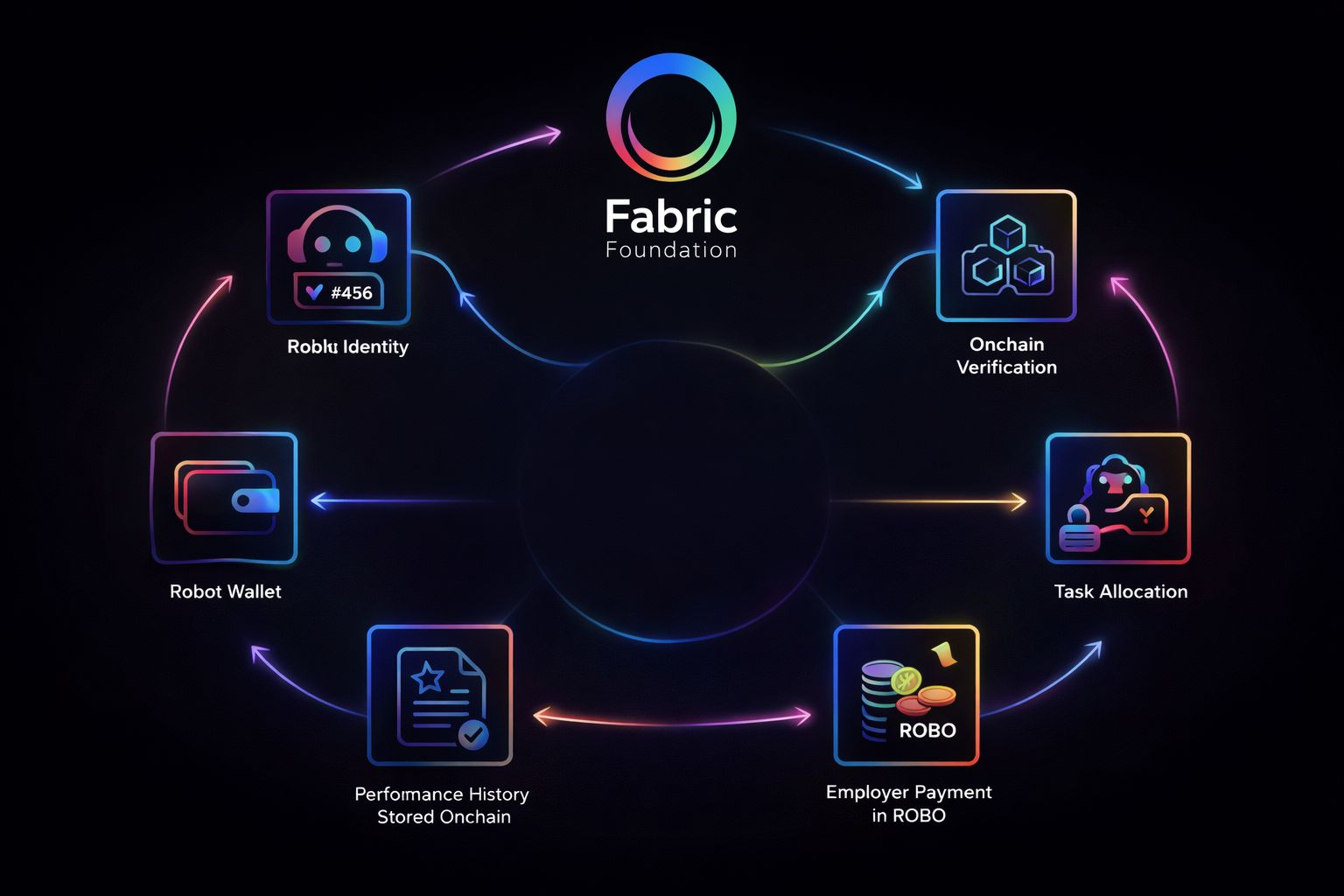
The conversation about decentralized technology has historically focused on finance, governance, and digital ownership. Yet as automation expands, a different layer of complexity begins to emerge. Machines are no longer just tools controlled by centralized platforms; they are gradually becoming participants in systems that generate and exchange value. When robots collect data, perform computations, or execute physical tasks, their outputs may influence other agents in the network. Suddenly the question is not simply about machine intelligence. It becomes about coordination.
Machine economies introduce structural challenges that traditional digital networks rarely encounter. When thousands of autonomous systems operate simultaneously, each generating information and performing actions, the network must be able to verify what actually happened. Without reliable verification, data produced by machines cannot be trusted. Without clear governance, conflicts between agents become difficult to resolve. And without shared incentives, coordination quickly breaks down.
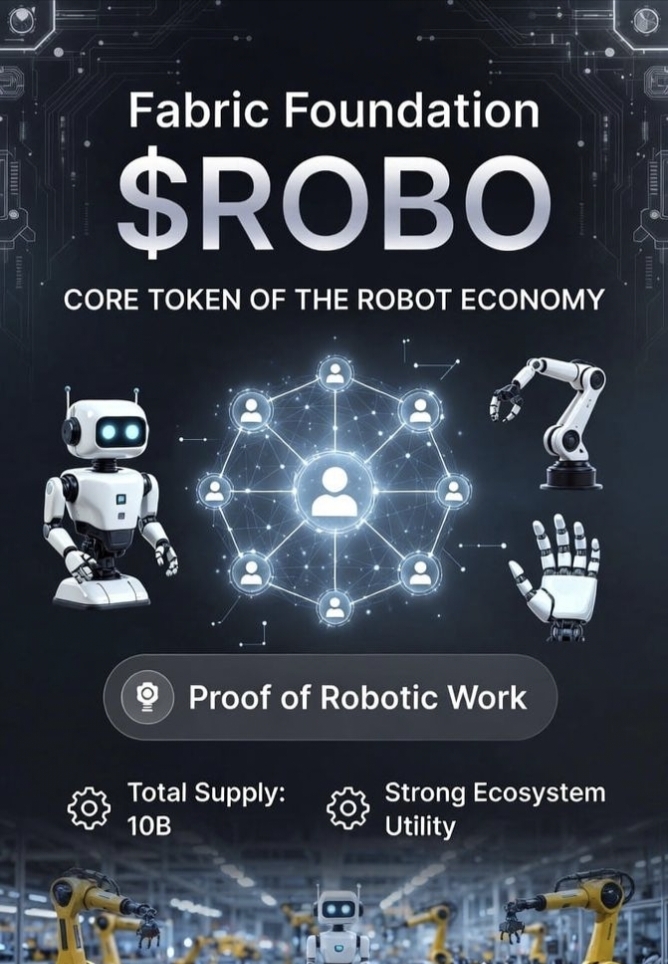
This deeper layer of complexity is where Fabric Protocol begins to position itself. Rather than focusing on the spectacle of robotics capabilities, the protocol explores the infrastructure required for autonomous agents to collaborate in decentralized environments. Its premise is relatively simple yet ambitious: if robots are going to become active participants in economic systems, those systems must be able to coordinate their actions transparently.
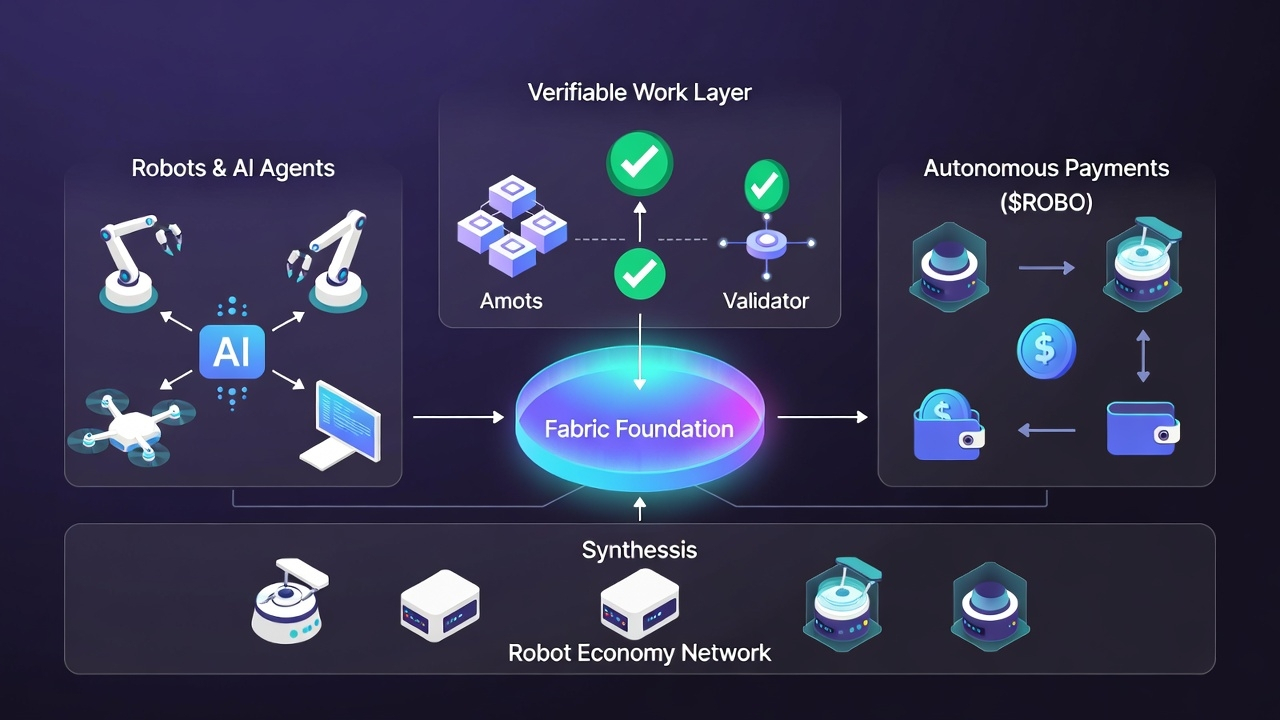
Fabric Protocol is described as a global open network designed to support the construction, governance, and collaborative evolution of general-purpose robots. The emphasis on collaboration is important. Instead of imagining isolated machines executing tasks independently, the protocol envisions ecosystems where humans and autonomous agents operate within shared frameworks. Data flows between participants, computational tasks are distributed across the network, and outcomes can be evaluated collectively.
Supporting the development of this ecosystem is the Fabric Foundation, a non-profit organization responsible for guiding the long-term evolution of the protocol. In many open technological initiatives, foundations act as custodians rather than operators. Their purpose is to maintain neutrality, encourage community participation, and ensure that infrastructure projects remain aligned with broader goals rather than short-term market trends.
The presence of a non-profit foundation suggests that Fabric views itself as foundational infrastructure rather than a product designed for rapid commercialization. Infrastructure projects typically develop slowly, often requiring years of experimentation before their real impact becomes visible. But they also tend to shape the environments in which other innovations eventually emerge.
One of the central concepts in Fabric’s architecture is verifiable computing. As machines become responsible for generating valuable outputs—whether through data analysis, environmental monitoring, or physical tasks—the network must be able to confirm that those outputs are legitimate. Verification becomes the cornerstone of trust in machine-driven ecosystems.
Traditional centralized systems solve this problem through oversight. A company verifies results internally, and participants trust that process because they rely on the institution managing it. Decentralized systems, however, cannot depend on a single authority to confirm outcomes. Verification must occur through shared mechanisms that allow independent participants to evaluate the validity of machine-generated results.
Fabric Protocol approaches this challenge by coordinating data, computation, and regulatory logic through a public ledger. The ledger functions as a shared record of activity across the network. Actions performed by machines, computational processes, and resulting outputs can be recorded in ways that allow participants to examine and verify them.
Alongside verifiable computing, Fabric introduces the concept of agent-native infrastructure. This idea represents a shift in how machines are treated within digital systems. In many existing networks, robots are external devices connected to centralized platforms. They execute tasks but remain peripheral to the network’s core logic.
Agent-native infrastructure changes that dynamic by treating autonomous agents as participants within the system itself. Robots and software agents interact directly with network protocols, data layers, and governance frameworks. Instead of being passive tools, they become actors capable of contributing to decentralized workflows.

This shift may appear subtle, but it has far-reaching implications. Once machines become participants in networks, the system must account for their behavior. Incentives must guide their actions, governance models must accommodate automated decision-making, and verification systems must evaluate outcomes produced by both humans and machines.
Coordination becomes particularly important in these environments. Imagine a network where thousands of autonomous robots operate across different industries—monitoring infrastructure, managing logistics routes, or conducting environmental analysis. Each robot produces data that may influence decisions made by other agents. If that data cannot be verified, the reliability of the entire network becomes questionable.
Incentives also play a crucial role. Autonomous agents interacting within economic systems must follow rules that align their actions with the broader goals of the network. Without carefully designed incentives, individual agents may behave in ways that undermine coordination or create inefficiencies.
Governance mechanisms provide another layer of stability. As machine networks evolve, rules will inevitably need to change. Governance frameworks allow communities to update protocols, resolve disputes, and adapt infrastructure to new technological realities. In decentralized environments, governance is often distributed among participants rather than controlled by a central authority.
Trust ultimately emerges from the interaction of these elements. When coordination mechanisms are clear, verification processes are reliable, incentives are aligned, and governance structures are transparent, participants begin to trust the system as a whole. This type of trust does not rely on personal relationships or centralized control. Instead, it arises from the architecture of the network itself.
Fabric Protocol appears to focus precisely on building this architectural layer. Rather than presenting itself as a revolutionary robotics platform, the project emphasizes modular infrastructure capable of supporting complex interactions between humans and machines. The modular approach allows the network to adapt as new types of autonomous agents and applications emerge.
This flexibility is particularly important in fields where technological change occurs rapidly. Automation technologies continue to evolve, and the ways in which machines interact with digital systems may look very different in a decade. Infrastructure that can evolve alongside these changes is more likely to remain relevant.
At the same time, it would be unrealistic to assume that any single protocol can solve the challenges associated with decentralized machine networks. Autonomous systems operate in unpredictable environments, and integrating them into economic systems introduces new layers of complexity. Technical solutions must coexist with social, regulatory, and ethical considerations.
Fabric does not appear to claim that it has solved these problems entirely. Instead, the project seems to function as an exploration of how such infrastructure might develop. By experimenting with verifiable computing, agent-native systems, and decentralized coordination mechanisms, the protocol contributes ideas that may influence the broader ecosystem.
Another notable aspect of Fabric’s approach is its focus on human-machine collaboration. Despite popular narratives suggesting that robots will eventually replace human participation in many industries, reality tends to be more nuanced. Humans remain essential for designing systems, interpreting complex situations, and guiding governance processes.
Machines, on the other hand, excel at performing repetitive tasks, processing large volumes of data, and operating continuously without fatigue. When these strengths are combined effectively, collaboration between humans and machines can produce outcomes neither could achieve independently.
Infrastructure that facilitates this collaboration must balance automation with oversight. It must allow machines to operate efficiently while ensuring that human participants retain visibility into the system’s behavior. Transparent coordination layers and verifiable processes play an important role in maintaining that balance.
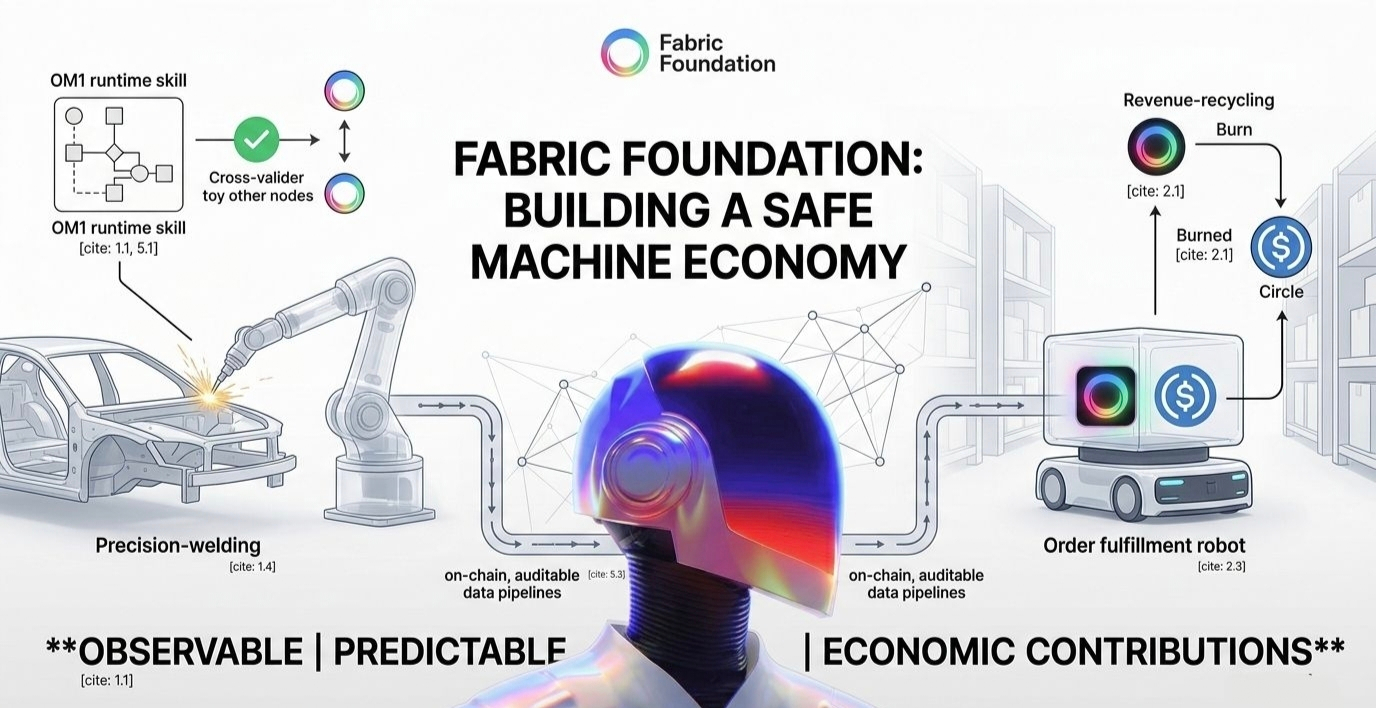
Projects like Fabric highlight an often overlooked truth about technological progress. Breakthroughs rarely depend solely on new capabilities. More often, they emerge when infrastructure evolves to support those capabilities at scale. The internet became transformative not simply because computers existed, but because protocols allowed those computers to communicate reliably across networks.
In a similar way, the future of machine economies may depend less on how advanced robots become and more on how effectively networks can coordinate their activities. Infrastructure that enables transparent collaboration between autonomous agents could eventually shape entire industries.
For now, Fabric Protocol remains one of several initiatives exploring this frontier. Whether it ultimately becomes a foundational layer for machine networks or simply contributes valuable ideas to the ecosystem is still uncertain. But its focus on infrastructure, verification, and coordination reflects an understanding that the machine economy will require more than intelligent machines.
It will require systems capable of bringing those machines together in ways that humans can understand, trust, and govern.
Watching how Fabric Protocol and the Fabric Foundation continue to develop this infrastructure may provide insight into how decentralized technologies evolve beyond purely digital assets. The path toward machine collaboration is unlikely to be simple, but experiments like this help illuminate the challenges that lie ahead.
And sometimes, the most important innovations are not the ones that generate immediate headlines, but the ones quietly building the frameworks that make future breakthroughs possible.
@Fabric Foundation $ROBO #ROBO #robo
