
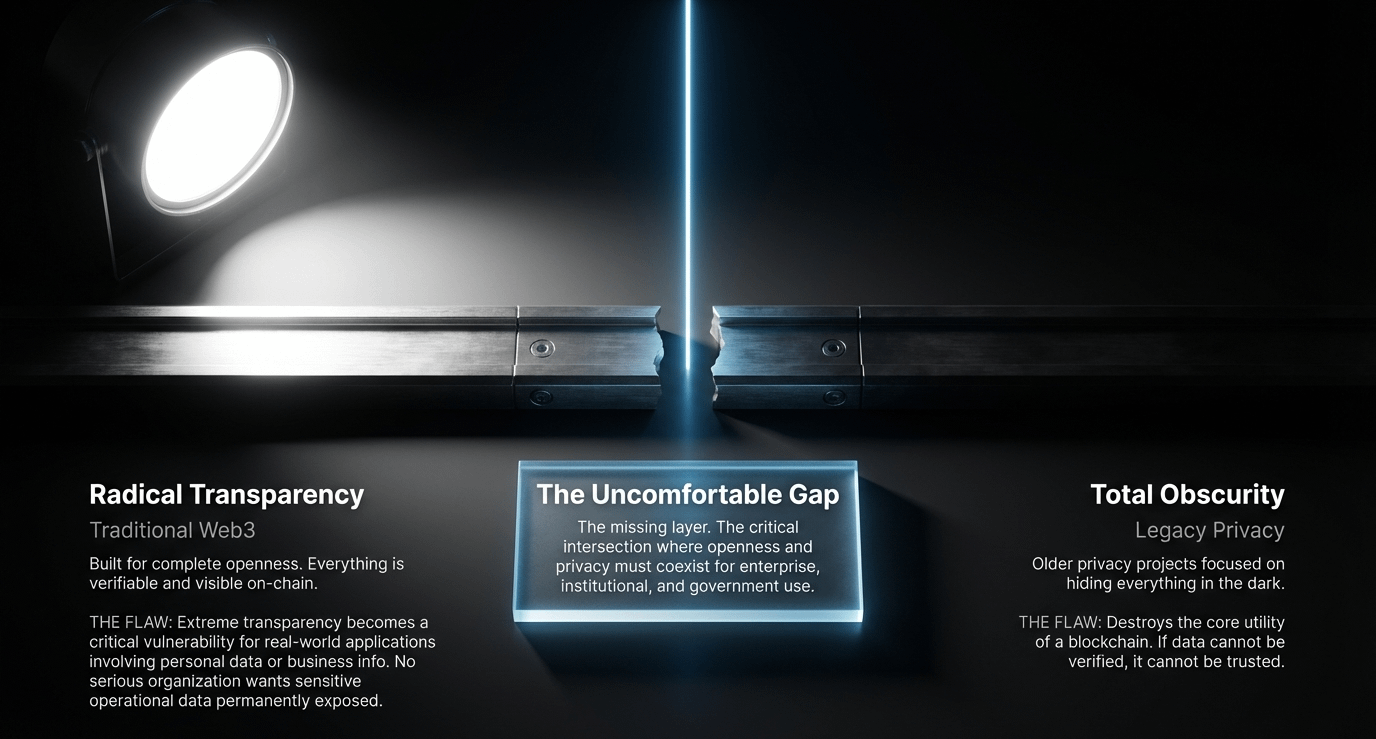
There is a strange paradox in crypto that people rarely talk about. We built blockchain for transparency; everything is verifiable, everything is visible on-chain. Sounds great, almost ideal. But when Web3 slowly moves closer to real-world applications, especially things involving personal data, financial records, or business information… that extreme transparency suddenly becomes a problem. Not everyone wants their data permanently exposed on a public ledger. And that gap, that uncomfortable tension between openness and privacy, is exactly where Midnight starts becoming interesting.
Midnight positions itself as a privacy-first blockchain, but not in the traditional sense that some older privacy projects tried. It’s not about hiding everything in the dark. The idea here is more balanced: keep the verifiability of blockchain while protecting sensitive data. That may sound abstract at first, but the core concept is actually simple. An application can prove that something is correct without revealing the underlying data behind it.
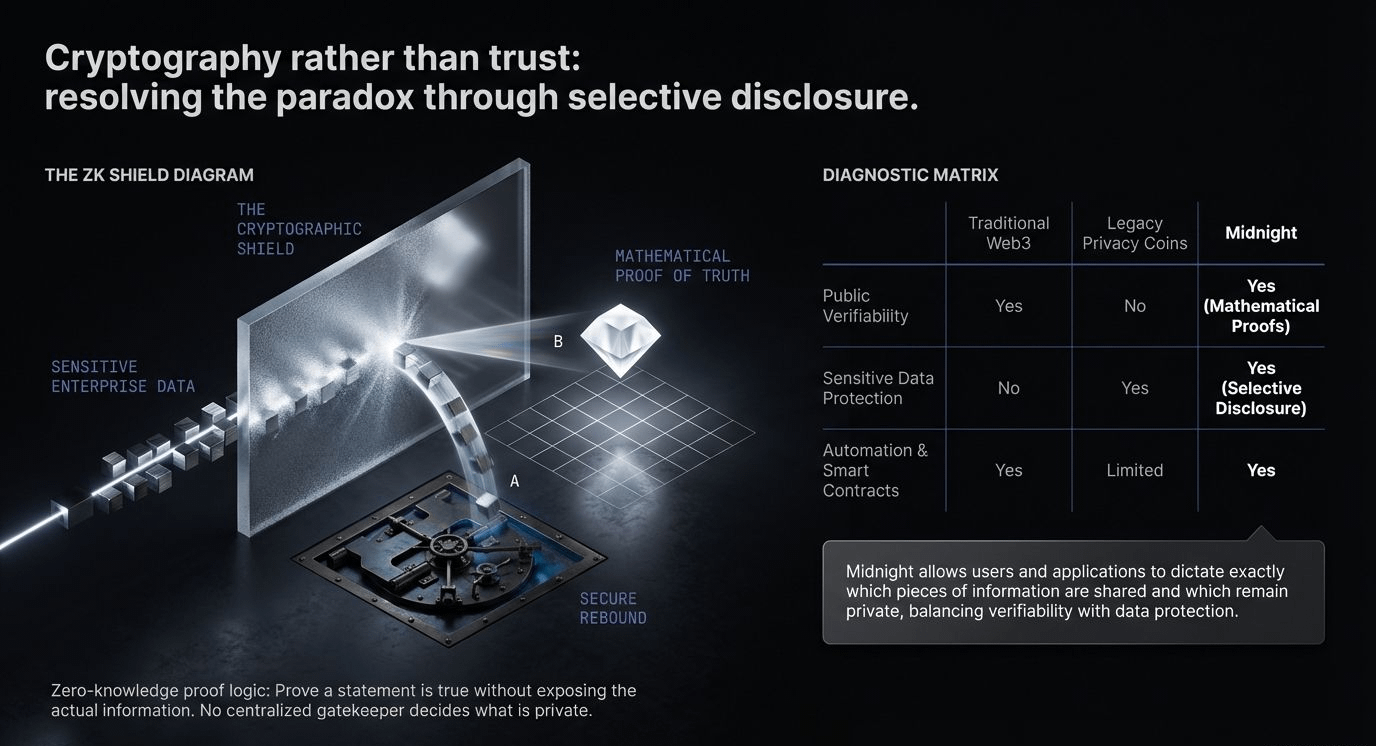
The technology that enables this is zero-knowledge proof. If you’ve been around Web3 long enough you’ve probably heard the term quite a few times recently. It’s quietly becoming one of the most important technological trends in the space. The logic behind it is elegant: you can prove a statement is true without exposing the actual information. For example, someone could prove they meet the requirements for a financial service without revealing their full financial history. A company could prove regulatory compliance without exposing internal records.
Midnight goes one step further with something called selective disclosure. This basically means users or applications decide exactly which pieces of information are shared and which remain private. That detail may sound small but it could significantly change how Web3 applications are designed. For years, blockchain critics have pointed out that on-chain transparency can be a double-edged sword. It’s great for auditing and verification, but not ideal when sensitive data is involved.
If you think about the future of Web3, especially a version where blockchain isn’t just for traders or crypto enthusiasts but also for enterprises, institutions, and possibly governments… privacy becomes non-negotiable. No serious organization wants sensitive operational data fully exposed on a public network. So systems that can protect data while still preserving public verification will likely become extremely important.
Midnight seems to be aiming directly at that intersection. A blockchain where applications can process confidential information while still benefiting from the strengths of decentralized infrastructure, things like verifiability, transparency of outcomes, and automated execution through smart contracts. When you start imagining real-world scenarios, the possibilities become quite interesting.
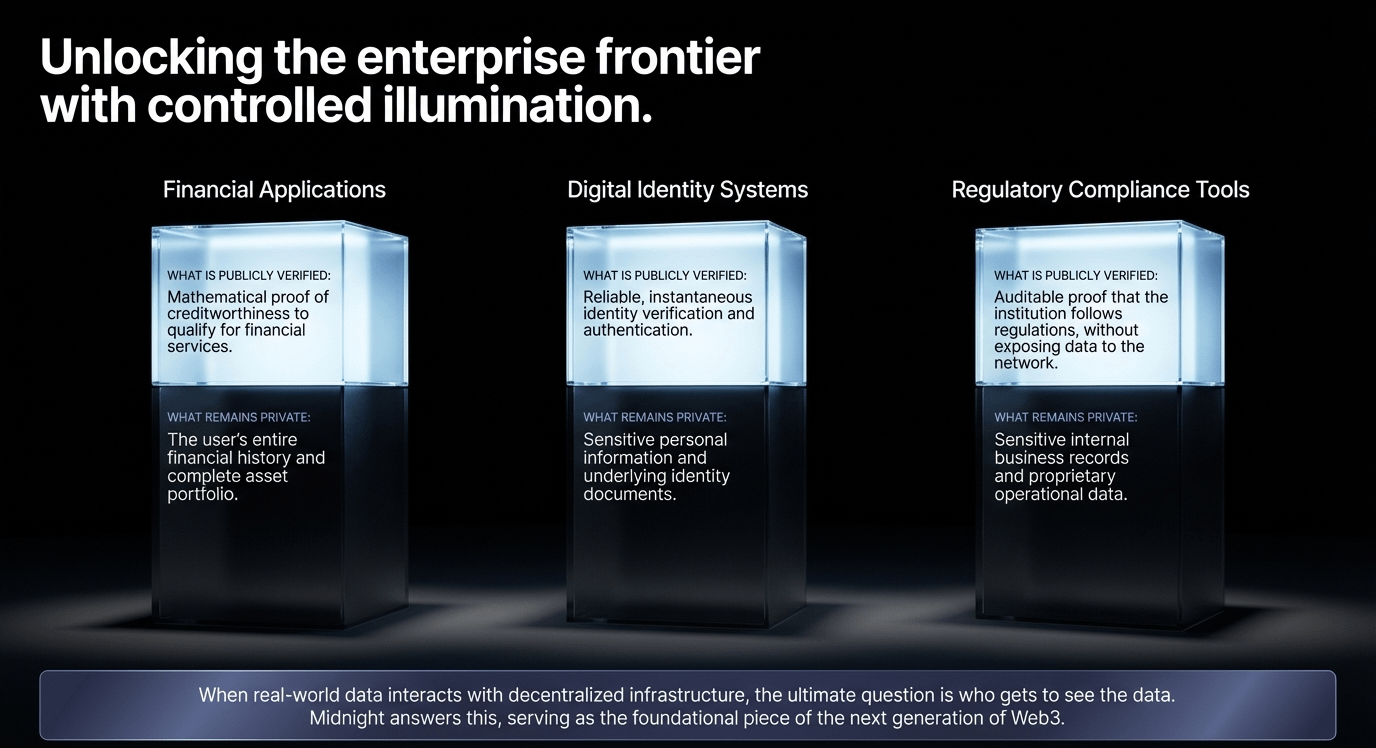
Think about financial applications where users prove creditworthiness without revealing their entire portfolio. Or digital identity systems where personal information stays private but identity verification still works reliably. Or compliance tools where institutions can prove they follow regulations without exposing sensitive internal data to the entire network.
Another detail worth noting is that Midnight doesn’t treat privacy as something that conflicts with blockchain principles. Instead of hiding everything, it focuses on controlled disclosure. That way the system still preserves verifiability, which has always been one of the core strengths of blockchain technology.
Looking at the broader picture, if the next wave of Web3 actually shifts toward practical real-world use rather than pure asset speculation, then data infrastructure becomes incredibly important. Because once blockchain starts handling identity systems, financial records, enterprise processes, or sensitive information, the biggest question becomes simple but critical: who gets to see the data.
Midnight attempts to answer that question through cryptography rather than trust. No centralized gatekeeper deciding what is private and what is public. Instead, mathematical proofs ensure that conditions are met while the underlying information stays protected. If that model works well at scale, it could become a foundational piece of the next generation of Web3 infrastructure.
Of course everything is still early. Zero-knowledge technology is evolving rapidly and building a strong ecosystem around any new blockchain is never easy. But if Web3 really moves toward applications that interact with real-world data, platforms like Midnight might quietly become essential infrastructure. That said, the crypto market is unpredictable and highly volatile. Strong ideas do not automatically guarantee success, so anyone exploring projects like this should always do their own research before making decisions involving digital assets.@MidnightNetwork $NIGHT #night