
Traditional robotics development often requires significant financial resources, specialized hardware, and advanced research environments. Because of these barriers, only a limited number of organizations and institutions have historically been able to participate in cutting-edge robotics innovation.
Decentralized collaboration models aim to change this dynamic. By enabling distributed participation, ecosystems like the one being developed by @Fabric Foundation could allow developers, engineers, and researchers from around the world to contribute to robotics innovation through a shared infrastructure.
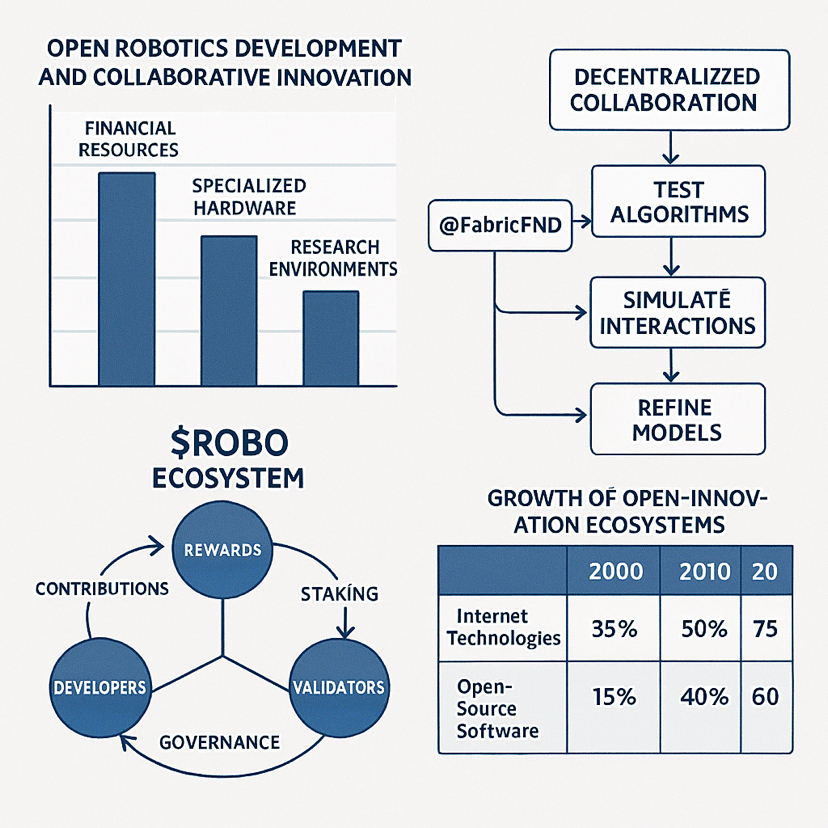

The $ROBO ecosystem explores how decentralized coordination could support open robotics development by allowing contributors to access shared environments for training, experimentation, and machine learning research.
These collaborative environments may allow participants to:
• test new algorithms for robotic systems
• simulate robotic interactions in virtual environments
• refine control systems and machine learning models
This approach reflects the open-innovation model that helped accelerate the growth of internet technologies and open-source software communities. When developers can collaborate across borders and organizations, innovation often moves significantly faster.
If similar principles are applied successfully to robotics, decentralized collaboration networks could unlock entirely new levels of experimentation and creativity in machine intelligence development.
As robotics and artificial intelligence continue to evolve, open ecosystems like the one supported by @Fabric Foundation and the $ROBO token may play an important role in shaping the future of collaborative robotics infrastructure.
#robo $ROBO #Web3 #decentralizedai