
This might sound controversial at first, but it really isn’t. Ethereum didn’t fail. In fact, Ethereum did exactly what it was designed to do. It introduced smart contracts, decentralized applications, and programmable money to the world. For its time, it was a revolutionary breakthrough, and today the ecosystem built around it is worth hundreds of billions of dollars.
But breakthroughs often reveal new limitations.
And the biggest limitation public blockchains ran into is something the industry rarely discusses openly: complete transparency.
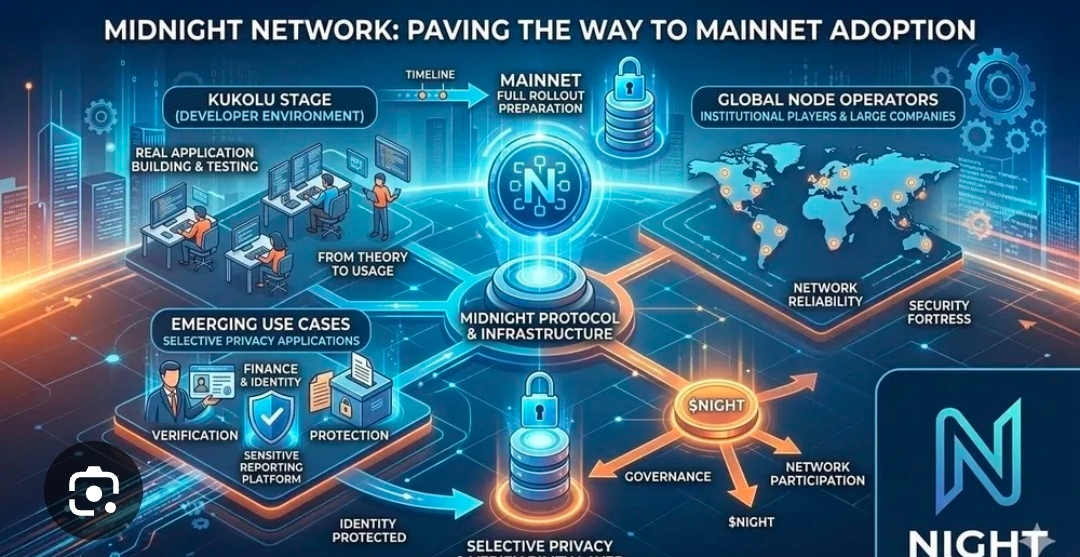
Transparency is what makes blockchain trustworthy. Every transaction is visible, verifiable, and permanently recorded. But that same transparency becomes a problem the moment sensitive data is involved.
The Wall Public Blockchains Hit
When you interact with a smart contract on Ethereum, everything is public. Wallet addresses, transaction amounts, the contract you interact with, and the result of that interaction are all permanently visible on the ledger.
For many use cases, that works perfectly. Token trading, NFTs, and DAO governance don’t require privacy.
But the next wave of blockchain adoption involves industries where privacy is essential.
Hospitals cannot publish patient medical records on a public ledger. Banks cannot expose KYC information to the world. Companies cannot reveal supplier contracts or pricing to competitors. Governments cannot place citizen credentials in publicly readable databases.
These aren’t edge cases. These industries represent the majority of global economic activity. And in their current form, public blockchains simply cannot support them.
What Midnight Is Actually Building
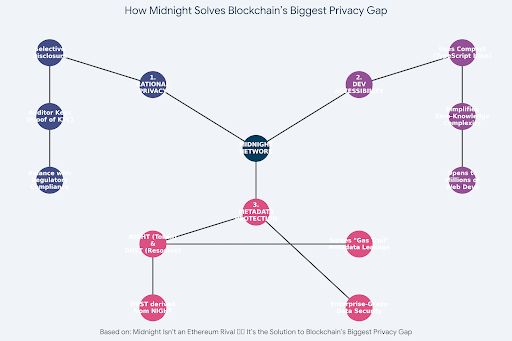
Midnight isn’t trying to compete with Ethereum as another Layer-2 or scaling solution. It’s building a completely separate infrastructure layer designed specifically for confidential blockchain applications.
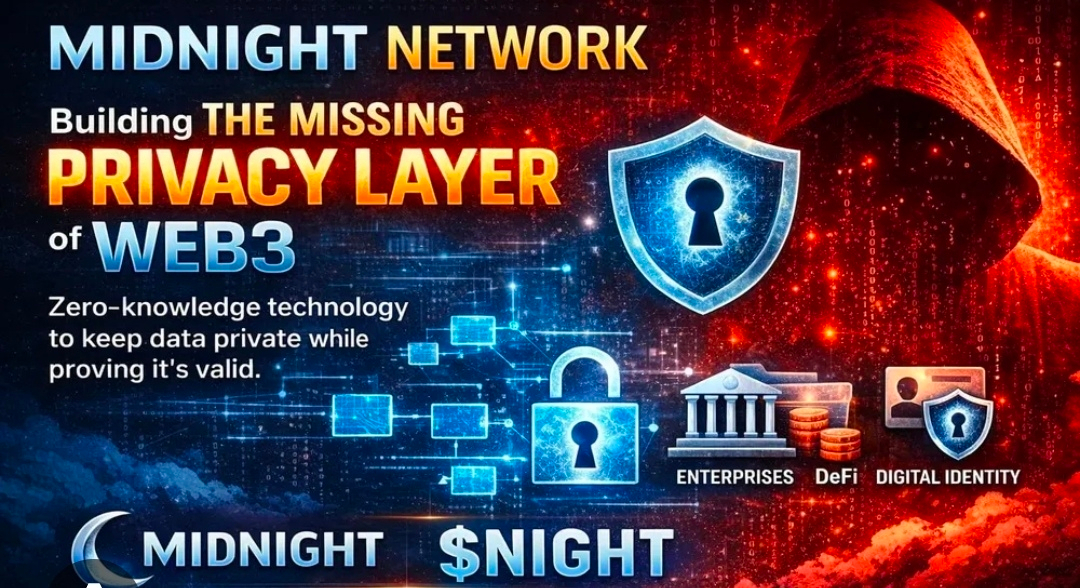
At the core of Midnight is zero-knowledge proof technology.
Zero-knowledge proofs allow a system to verify that something is true without revealing the underlying information. For example, you can prove you are over 18 without sharing your birthdate. You can prove you have sufficient funds without revealing your account balance. You can verify your identity without exposing personal documents.
The blockchain verifies the proof — but it never sees the private data itself.
Midnight calls this approach “rational privacy.”
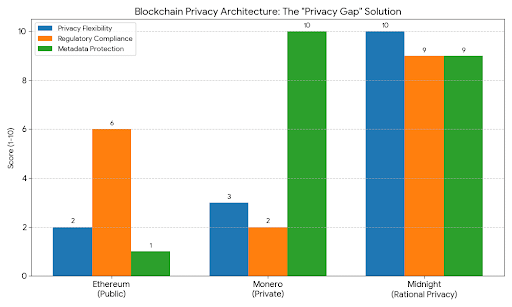
It’s not about hiding everything like early privacy coins attempted. And it’s not about exposing everything like traditional public blockchains. Instead, it creates a selective system where only the necessary information is shared.
Regulators can still verify compliance. Enterprises can protect their data. Individuals maintain control over their personal information.
Making Privacy Development Practical
One major reason privacy-focused blockchains struggled to gain traction is the complexity of zero-knowledge cryptography. Building applications required deep mathematical expertise and highly specialized teams.
Midnight aims to solve this through Compact, its smart contract language built on TypeScript.
TypeScript is already one of the most widely used programming languages in the world. Millions of developers who build web apps and backend services are already familiar with it.
With Compact, developers simply define the application’s logic. The compiler automatically generates the complex zero-knowledge circuits behind the scenes.
This dramatically lowers the barrier to entry and allows the massive global community of TypeScript developers to start building privacy-enabled blockchain applications.
The Role of the NIGHT Token
Midnight’s token model introduces a design aimed at solving a major challenge for enterprise adoption.
The $NIGHT token serves as the main asset used for governance, trading, and participation in the ecosystem.
But the network introduces another component called DUST.
DUST is automatically generated by holding NIGHT and cannot be bought or sold. It is used to pay transaction fees on the network and slowly regenerates over time, similar to a battery recharging.
Because DUST isn’t tradable and gradually decays when unused, transaction costs remain relatively stable regardless of fluctuations in the NIGHT token price.
For enterprises managing operational budgets, predictable costs are critical. This design allows companies to estimate blockchain expenses without worrying that market volatility will suddenly double their infrastructure costs.
Early Institutional Support
Midnight’s mainnet, called Kukolu, is scheduled to launch at the end of March 2026.
Several major organizations are already confirmed as node operators, including Google Cloud, MoneyGram, Vodafone through its Pairpoint division, Blockdaemon, and eToro.
MoneyGram processes transfers across more than 200 countries. Their involvement suggests that real-world payment infrastructure is already being explored on the network.
Google Cloud’s participation goes beyond simple marketing. Running blockchain nodes requires engineering resources and infrastructure commitment from one of the largest technology companies in the world.
The Bigger Picture
Ethereum helped build the second generation of blockchain technology. It introduced programmable money and decentralized applications that reshaped the financial landscape.
But the next billions of blockchain users are unlikely to come from DeFi trading or NFT marketplaces.
They will come from healthcare systems, financial institutions, legal frameworks, government services, and global supply chains.
Those sectors require privacy, compliance, and data protection — capabilities that public blockchains were never originally designed to provide.
Midnight isn’t trying to outperform Ethereum at the same game.
It’s playing a completely different game — one that the market may not fully understand yet.
With mainnet launching soon and institutional partners already participating, the real question isn’t whether privacy-enabled blockchain infrastructure will be needed.
The real question is whether the market realizes its importance before or after Midnight goes live.
#night $NIGHT @MidnightNetwork
