
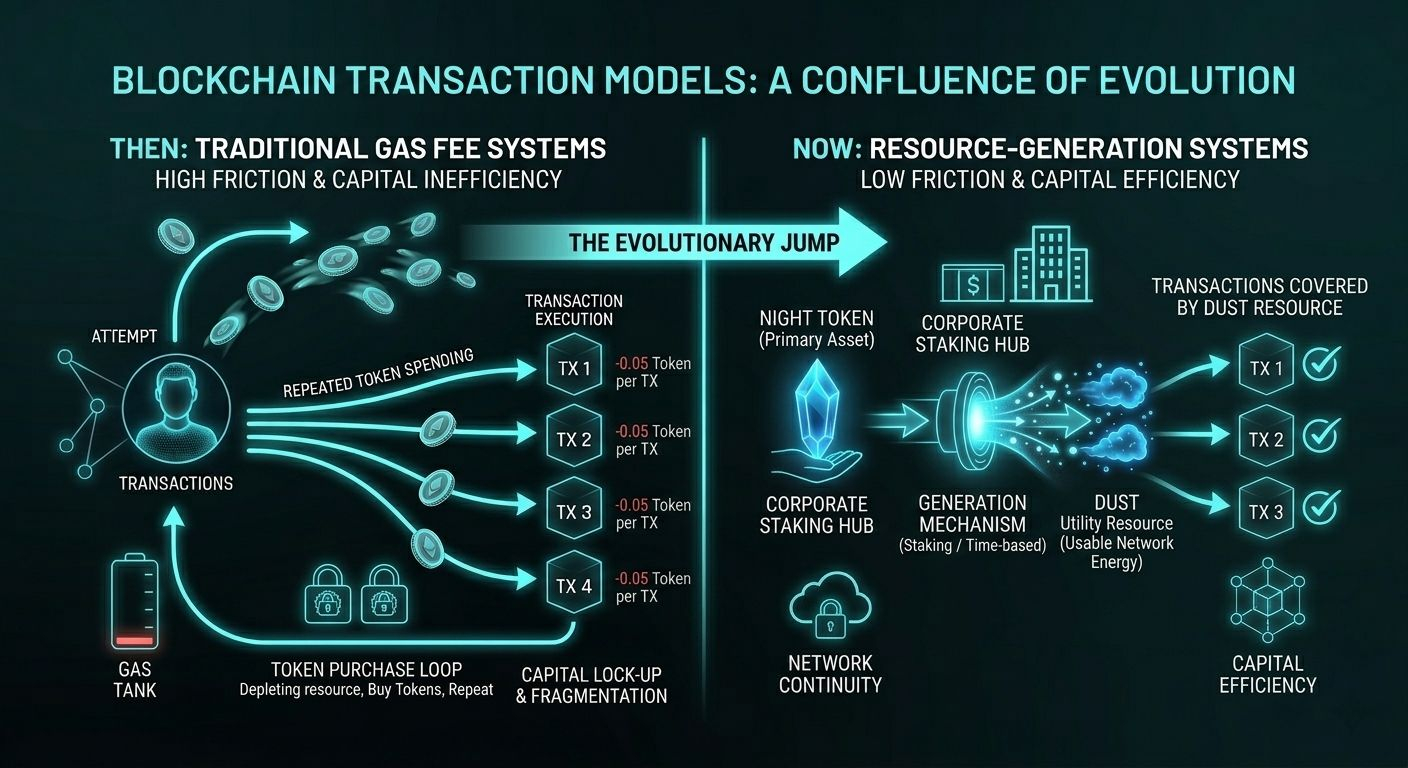
Most blockchain users are familiar with a simple rule.
If you want to use the network, you need to pay for it.
Every transaction requires a fee.
Every interaction depends on holding the native token.
At first glance, this model seems straightforward.
But the more I look at how real applications are supposed to work, the more this design starts to feel limiting.
In most blockchains, transaction fees are directly tied to token prices.
When the token price rises, using the network becomes more expensive.
When the price falls, incentives shift unpredictably.
For traders, this volatility might not be a problem.
For everyday users and applications, it creates friction.
Imagine using a financial app where every action depends on market conditions.
Sending a transaction, interacting with a contract, or running a service—all tied to a fluctuating asset price.
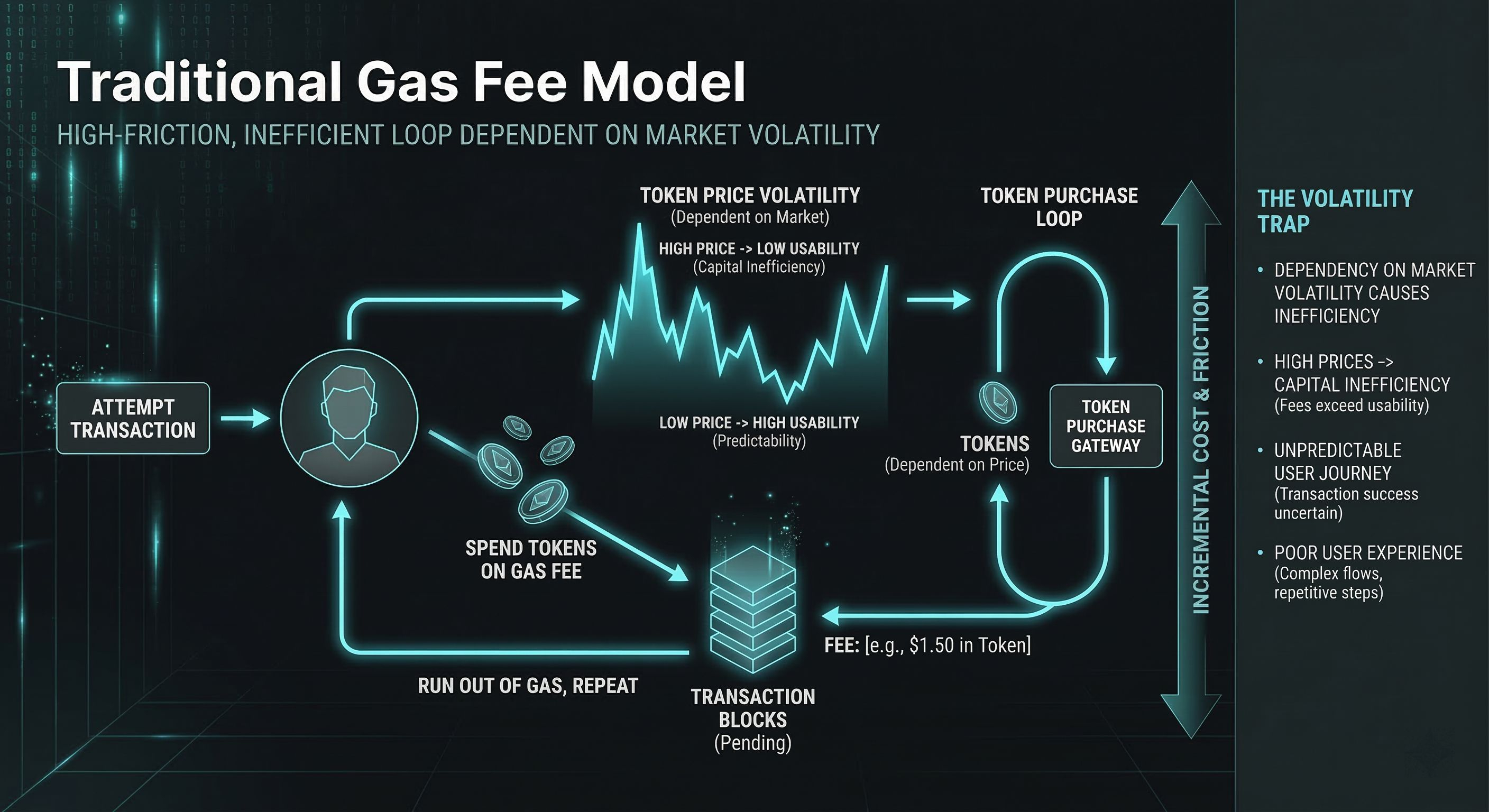
That’s a difficult foundation for building stable systems.
This is where alternative economic models start to become interesting.
Instead of treating the native token purely as a payment mechanism, some designs separate ownership from usage.
In this model, holding an asset gives access to a resource that can be used within the network.
The user experience changes significantly.
Instead of constantly buying tokens to pay fees, the system becomes more predictable.
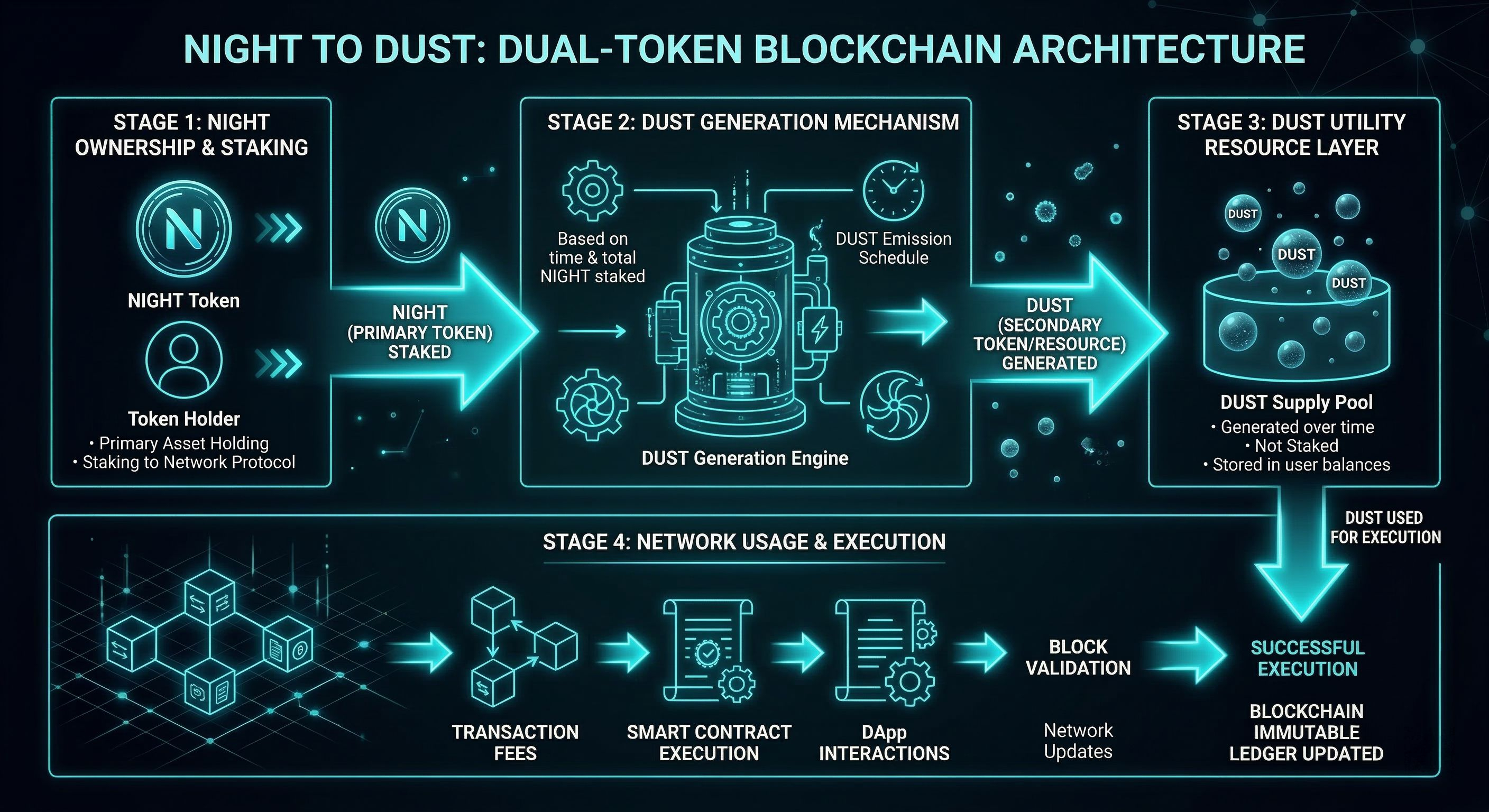
This is the idea behind the NIGHT → DUST model.
In the case of @MidnightNetwork , the primary asset (NIGHT) represents ownership within the network.
From that ownership, a secondary resource (DUST) is generated.
DUST is then used to execute transactions and interact with the system.
This separation introduces an interesting dynamic.
NIGHT functions as a long-term asset.
DUST functions as a consumable resource.
Rather than exposing users to constant fee payments and market fluctuations, the system provides a more structured way to access network usage.
Of course, this model also raises new questions.
How efficiently is DUST generated?
How does supply and demand balance over time?
What happens under heavy network usage?
These are important considerations, and the answers will depend on how the system evolves.
But the broader idea is worth paying attention to.
If blockchain technology is going to support real-world applications, economic design may need to move beyond simple fee models.
Separating ownership from execution could be one of the steps in that direction.