

Japan’s potential interest rate hike is starting to attract serious attention across global financial markets. For many investors, the idea might sound technical or distant, but the reality is that decisions made by Japan’s central bank can ripple across the entire world. I remember watching markets react the last time Japan signaled a shift in its long-standing ultra-low interest rate policy. What initially looked like a local monetary decision quickly turned into a global story, affecting stocks, currencies, bonds, and even cryptocurrencies.
For years, Japan has been known for maintaining extremely low interest rates. In fact, its central bank kept rates near zero for such a long time that investors around the world became used to borrowing cheap money in Japanese yen. This strategy, often called the “yen carry trade,” allowed large institutions and hedge funds to borrow yen at low cost and invest that money into higher-yielding assets elsewhere. That money flowed into global stock markets, emerging markets, bonds, and sometimes even riskier assets like technology stocks and crypto. It quietly became one of the invisible forces supporting liquidity in global markets.
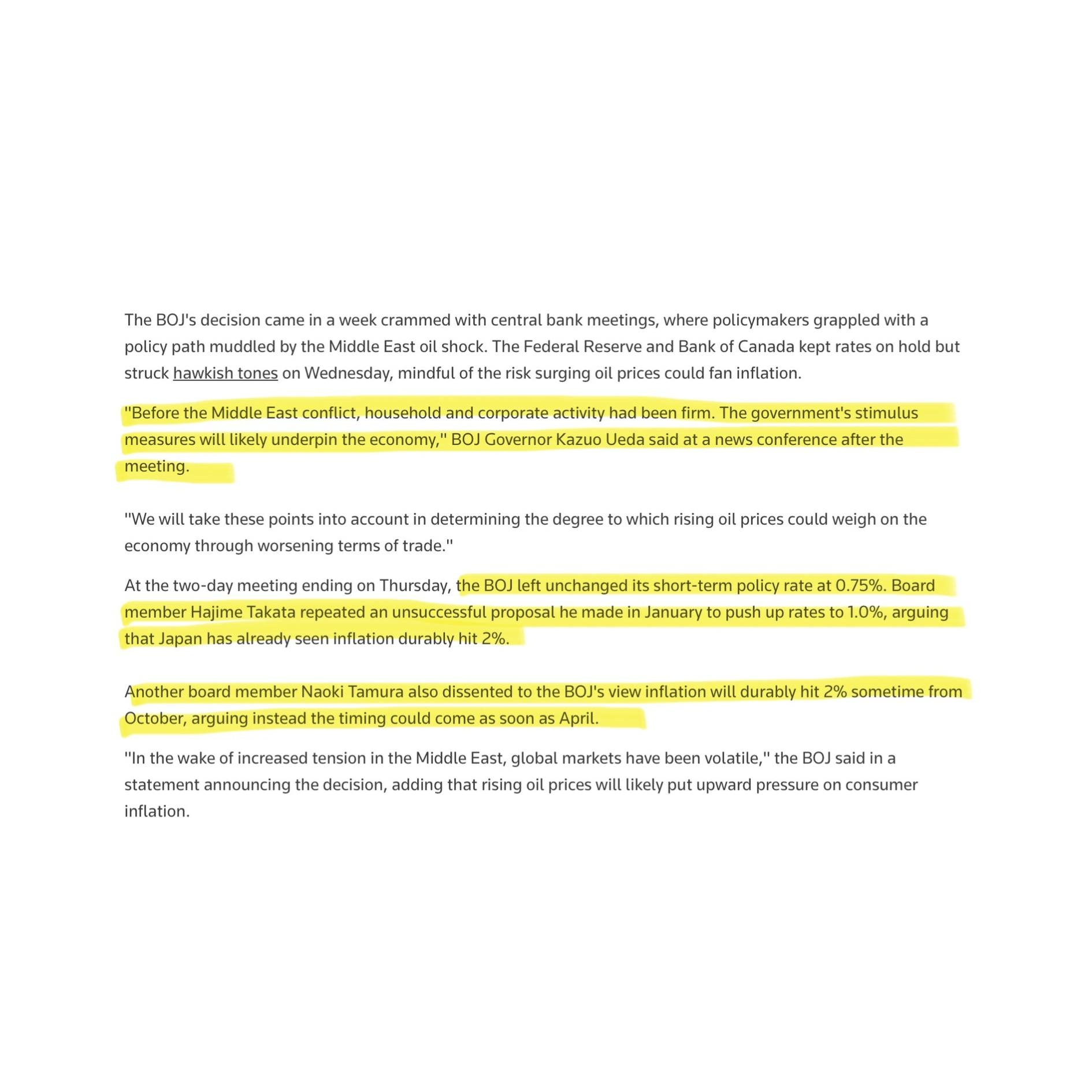
But when Japan starts talking about raising interest rates, the entire equation begins to change.
Higher interest rates in Japan make borrowing yen more expensive. As that cost increases, investors who previously borrowed cheap yen may decide to unwind their positions. That means selling the assets they bought with that borrowed money and repaying their loans. When large institutions begin doing this at scale, it can create sudden selling pressure across many markets at once. Stocks fall, risk assets weaken, and volatility quickly returns.
I remember how markets reacted the last time Japan hinted at tightening policy. Global investors suddenly realized that one of the world’s largest sources of cheap liquidity might begin to disappear. The reaction was immediate. Traders started reducing exposure to risky assets, and markets across different regions moved almost in sync. It became clear that Japan’s policy decisions don’t stay within its borders—they echo throughout the global financial system.
Another factor is the Japanese yen itself. When interest rates rise, the yen often strengthens. A stronger yen can create additional pressure on global markets because investors who borrowed yen must now repay loans in a currency that is becoming more valuable. That makes their positions even more expensive to maintain, which can accelerate the unwinding of trades. This dynamic has the potential to amplify market volatility in a very short period of time.
What makes the current situation especially interesting is the timing. Global markets are already dealing with uncertainty from multiple directions: inflation concerns, shifting central bank policies, geopolitical tensions, and questions about economic growth. In this environment, even a small change in Japan’s interest rate policy could act as a catalyst that pushes investors to become more cautious.
Risk assets like technology stocks, high-growth sectors, and cryptocurrencies are often the first to feel the pressure when liquidity tightens. When money becomes more expensive to borrow, investors naturally move toward safer assets and reduce exposure to speculative markets. This doesn’t mean a collapse is guaranteed, but it does increase the probability of sharp corrections or sudden waves of selling.
Still, it’s important to remember that markets rarely move in a straight line. Sometimes the anticipation of a policy shift causes more volatility than the actual decision itself. Investors may react quickly to headlines, only to stabilize once the policy change is fully understood and priced in.
What I’ve learned from watching these cycles is that global markets are deeply interconnected. A policy decision in Tokyo can influence investment flows in New York, London, or Singapore within hours. Japan’s potential interest rate hike is another reminder that liquidity and confidence are two of the most powerful forces in finance. When either of them begins to shift, the effects can spread across the world faster than most people expect.#BankOfJapan