

 In every crypto journey there comes a moment when excitement collides with reality. It happened to me too. It was a simple trade the strategy was clear, the entry was strong. But the moment the transaction left my wallet some unknown wallets started tracking it. The price movement became unnatural. A decision I made quietly suddenly became public.
That’s when I realized blockchain does not just record transactions it exposes intent.
And this is one of the most underrated yet dangerous problems in crypto.
We often call blockchain transparency a strength. But when everything is visible wallet history, transaction patterns, timing it becomes an attack surface. Traders get front-run, businesses can not protect their strategies and users’ identities can be indirectly traced. This is exactly why many real-world use cases still hesitate to adopt blockchain. Because in the real world privacy is not optional it is expected.
This is the gap Midnight is trying to solve.
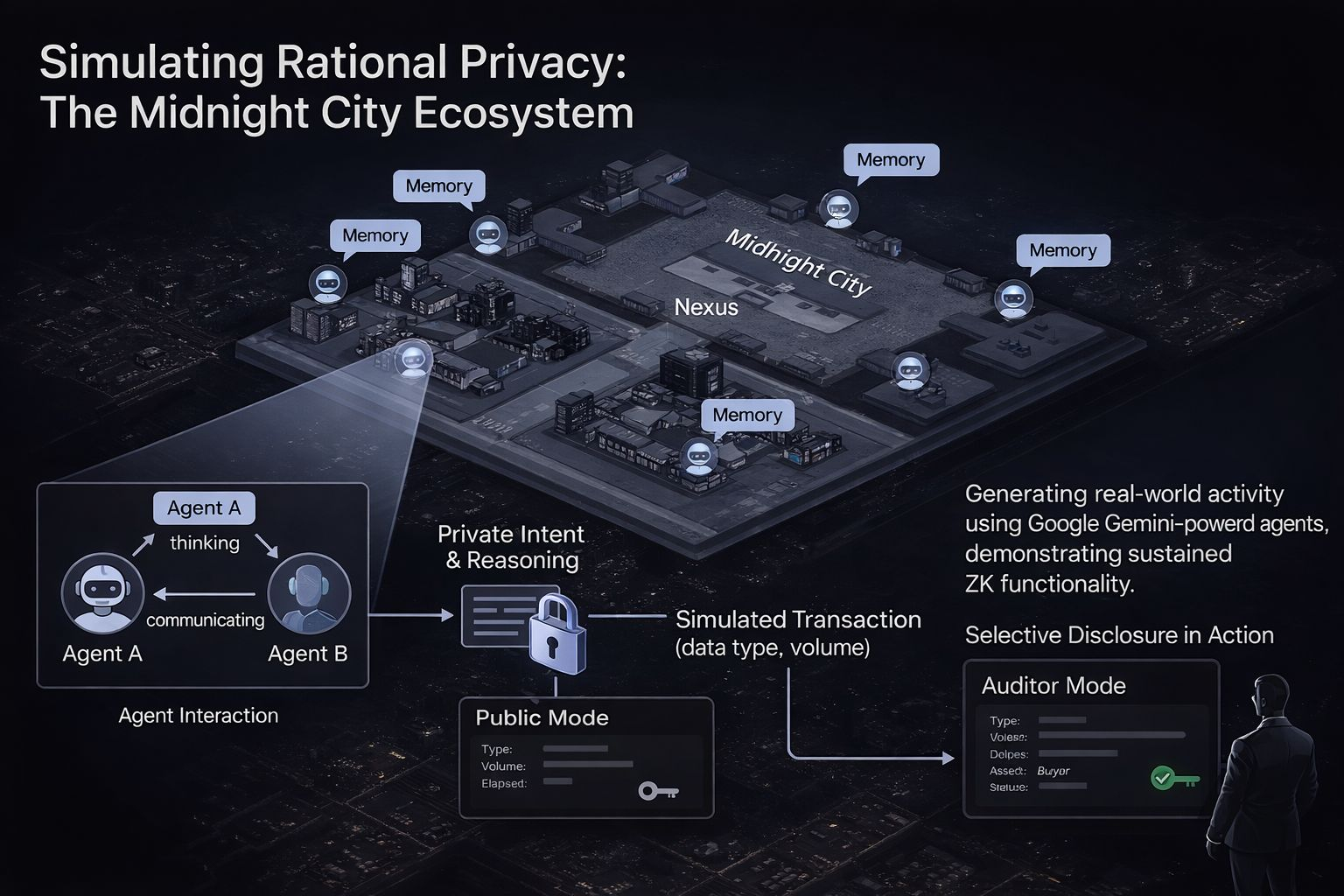
Midnight’s approach is not just theoretical. It is not limited to whitepapers or promises. It has created a live environment the Midnight City Simulation. For the first time I saw a blockchain not just explaining its capabilities but actually demonstrating them.
It’s a digital city where autonomous AI agents interact, transactions are continuously generated, and a dynamic economy runs in real time. It mirrors real-world activity but with one key difference: privacy is not compromised.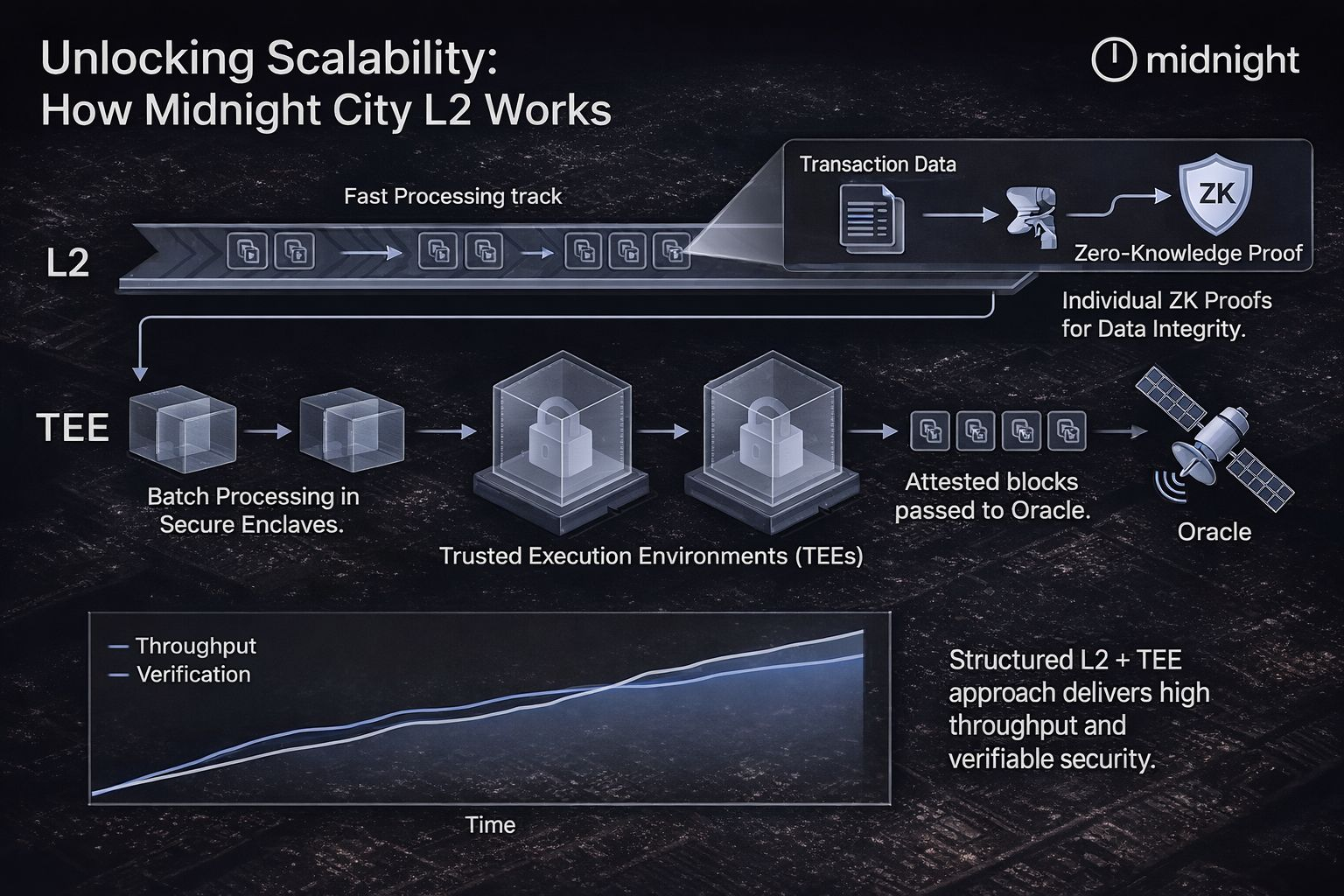
At the core of this system is a powerful concept selective disclosure.
In crypto you usually have two extremes: everything is public or everything is hidden. Midnight introduces a more intelligent balance. The same transaction can be viewed from different perspectives. In public view only verification is visible. In auditor view authorized data is revealed. In private view the user maintains full control.
This is exactly how real-world systems operate where each entity sees only what they need to see.
The impact goes beyond privacy. It redefines trust.
But what stood out to me the most was intent protection. Crypto’s biggest loophole is that if someone knows what you’re about to do, they can exploit it. Midnight directly addresses this issue. In the simulation agents’ actions are visible but their reasoning remains hidden.
The result is visible but the strategy is protected.
This is a game changer especially for a future where AI systems act as economic agents.
Now let’s talk about scalability.
Traditionally, privacy and scalability are opposites. More privacy usually means heavier computation. But Midnight challenges this limitation. With continuous transaction generation, L2 scaling architecture and zero-knowledge proofs it shows that privacy can be both secure and scalable.
This is not just theory it’s demonstrated in a live simulation handling real-world-like activity at scale.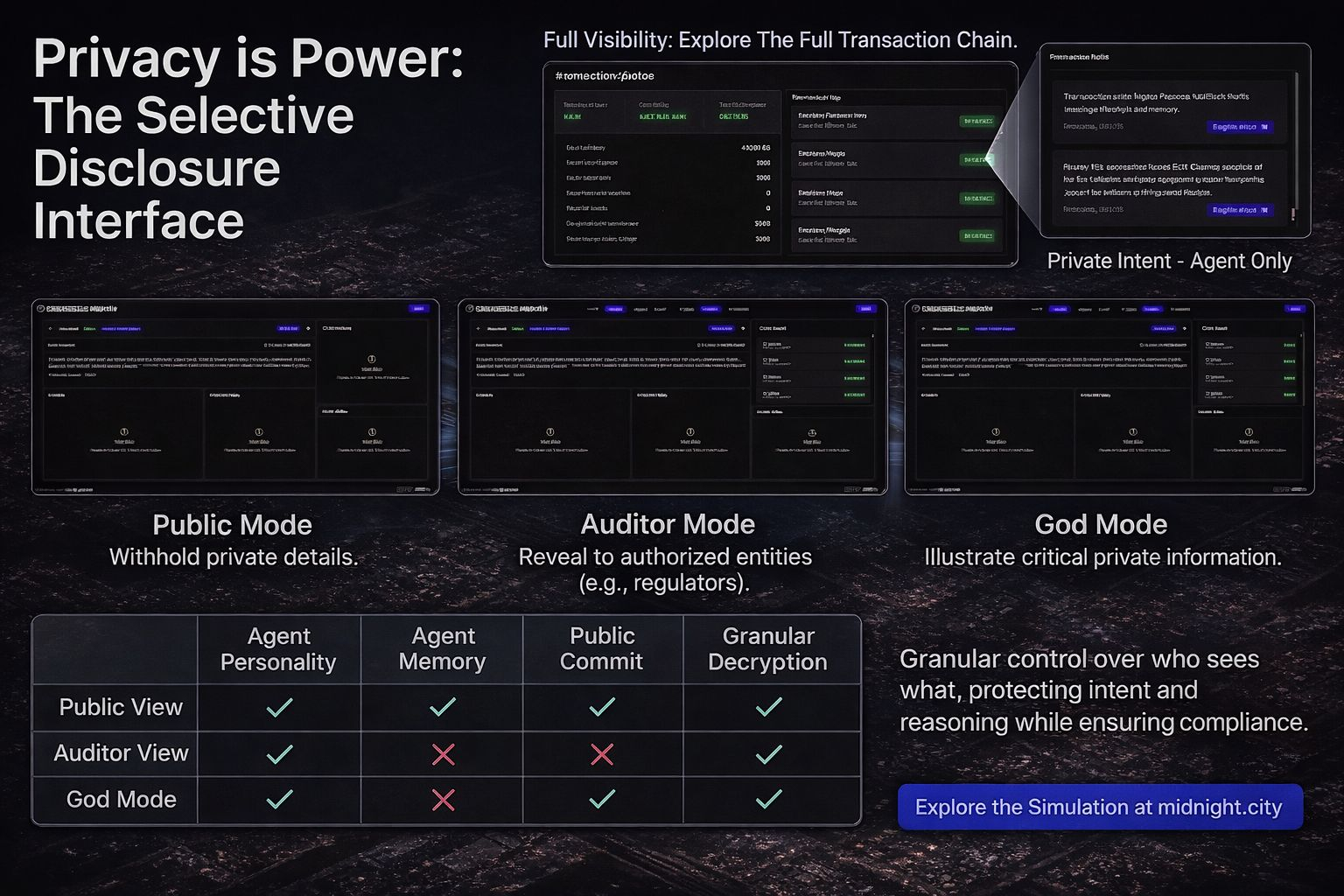
Then comes another real problem fees.
In crypto fee unpredictability is a major barrier. Sometimes gas is high sometimes low. For businesses this is unsustainable. Midnight introduces a dual model. The $NIGHT token is used for governance and rewards, while DUST acts as a shielded resource powering transactions.
This design brings cost predictability while protecting metadata. It allows users to interact with the system without exposing activity and without constantly worrying about fee volatility.
This approach is fundamentally different from traditional tokenomics where a single token handles everything and creates unpredictability.
From a broader perspective Midnight is not just another blockchain. It is a response to real problems created by earlier blockchain designs. Early systems adopted radical transparency to build trust but the side effect was exposure of sensitive data creating barriers for compliance and adoption.
Midnight doesn’t try to reverse this. It evolves it.
Today crypto is moving in two directions. One side is driven by speculation and short-term gains. The other is focused on real-world adoption where systems need to be secure, private and scalable.
Midnight is clearly building for the second path.
For me the biggest realization was this: the next phase of crypto isn’t just about being faster or cheaper. It is about being smarter.
A system where you can prove without revealing.
Where you can interact without being exposed.
Where trust is built not on transparency, but on cryptography.
Midnight City may be a simulation, but its message is real.
The future of blockchain would not be about showing everything. It will be about understanding
what to reveal,
to whom,
and when.
And honestly the project that understands this is not just part of the ecosystem.
It is defining its next evolution.
