
I learned something embarrassing last week.
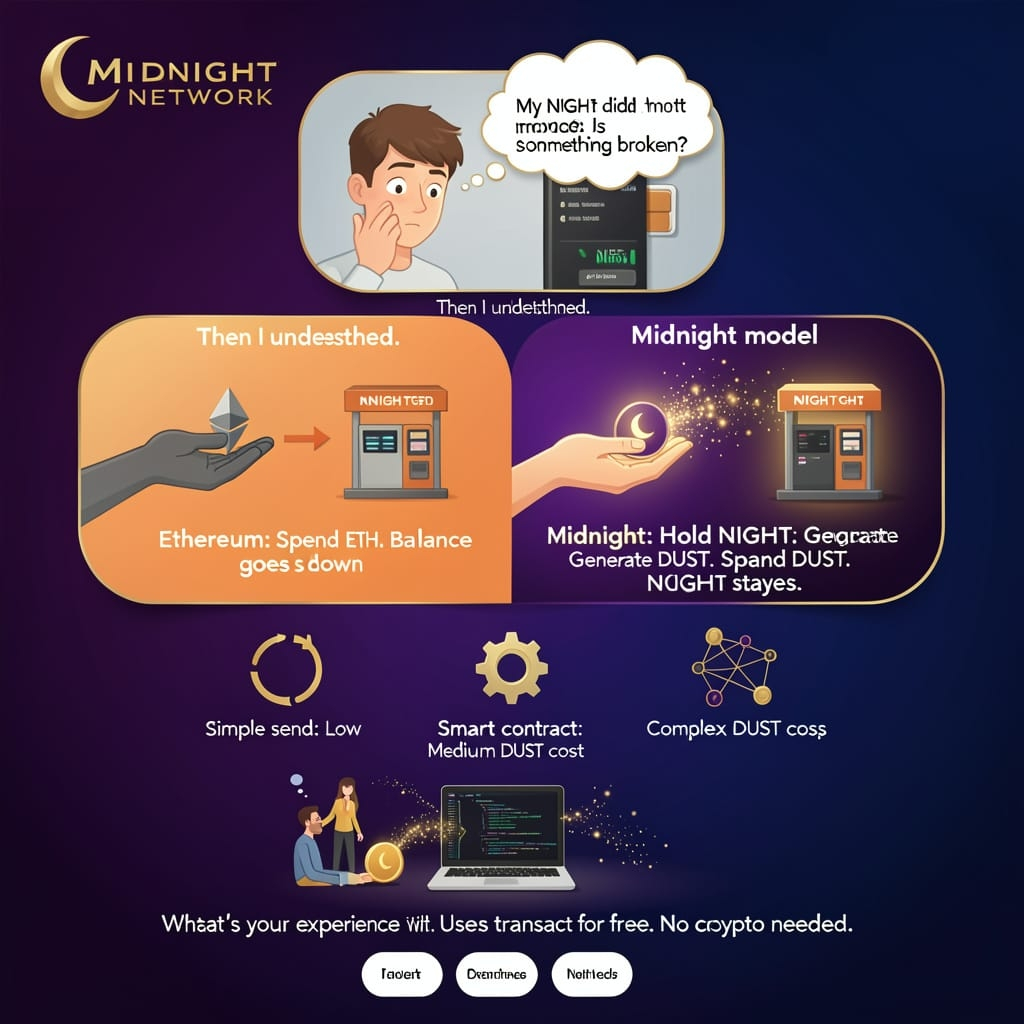
I tried to send a transaction on Midnight for the first time. Clicked send. My NIGHT balance didn't move. I thought the network was broken.
Turns out, I was the one who didn't understand.
You don't spend NIGHT on Midnight. You hold $NIGHT . While you hold it, it quietly generates something called DUST in the background. DUST is what pays for transactions.
Think of it like this. On Ethereum, you spend ETH. Your balance goes down every time you do anything. On Midnight, you keep your NIGHT. Always. The only thing that moves is the DUST it made while you weren't looking.
Fees work differently too. On most networks, costs spike when everyone is using them. Sunday night? Gas fees double. Big news drops? Good luck sending anything cheap.
On Midnight, fees are based on how complex your transaction is. A simple send costs almost nothing. A complicated smart contract costs more. Network traffic doesn't matter. Your costs stay predictable.
Here's the part developers love. They can hold NIGHT, generate DUST, and let their users transact for free. Users never touch crypto. Never see a fee screen. Never abandon an app because gas got expensive.
I spent weeks confused. Now I realize I was thinking about fees all wrong. It's not about spending. It's about holding something that makes what you need.
What's your experience with network fees? Hate paying them? Or just accept it as part of crypto?
@MidnightNetwork #night #TrumpConsidersEndingIranConflict #BinanceKOLIntroductionProgram #OpenAIPlansDesktopSuperapp