
I have been watching SIGN since it launched, and the more I looked at it, the more I felt the market was reading it too simply. A lot of people see the big gap between the current market cap and the full supply, and they instantly call it a dilution trap. But that does not really match what I have been seeing in the market day after day.
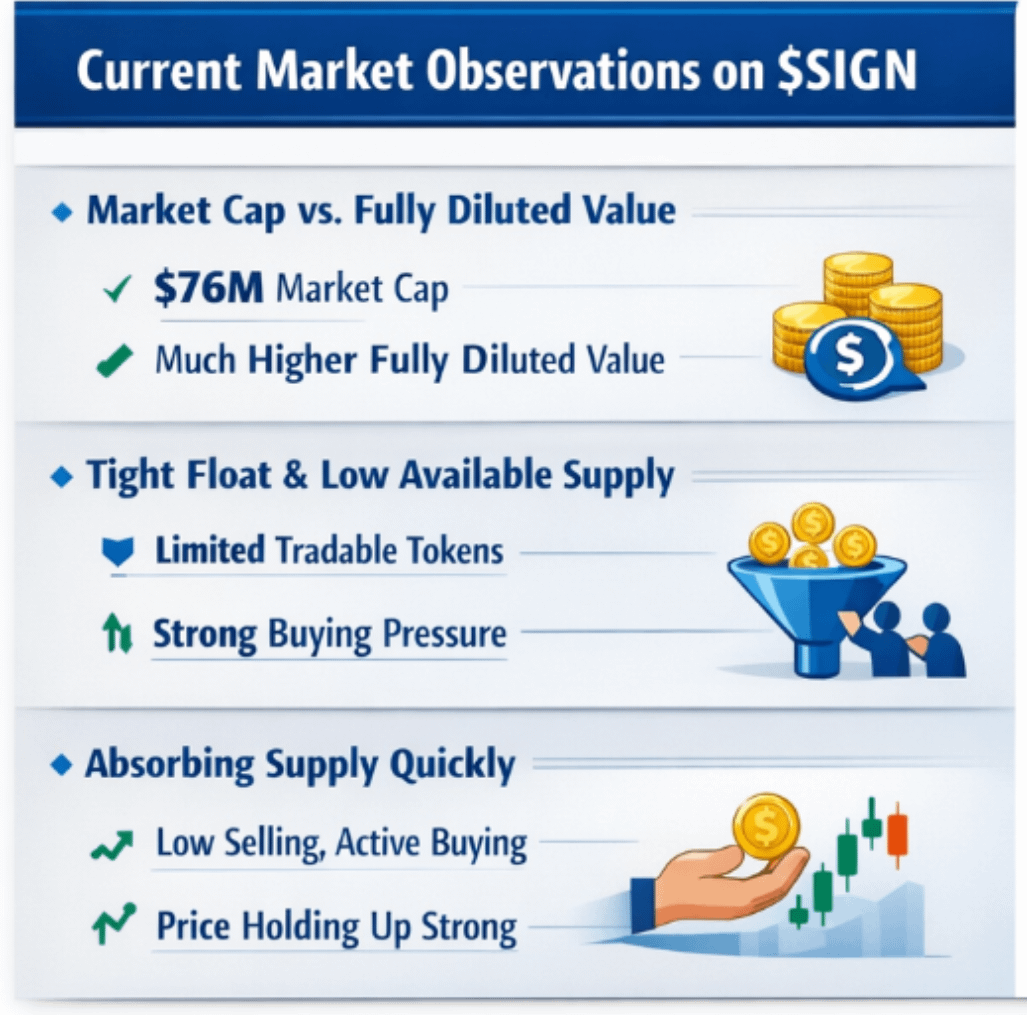
What stands out to me is that the amount of supply actually available to trade feels much smaller than people think. The token is moving inside a pretty tight float, and that float keeps getting absorbed faster than new supply is coming in. So instead of endless selling pressure, it feels more like buyers are fighting over a limited number of tokens.
Right now, the market cap is around $76 million, while the fully diluted value is much higher. On paper, that sounds like a risk. But in reality, most of the supply is still locked or not in active circulation. That means the price is being shaped by a much smaller pool of tokens than the headline numbers suggest. That is one reason the token can see strong volume without the price falling apart.
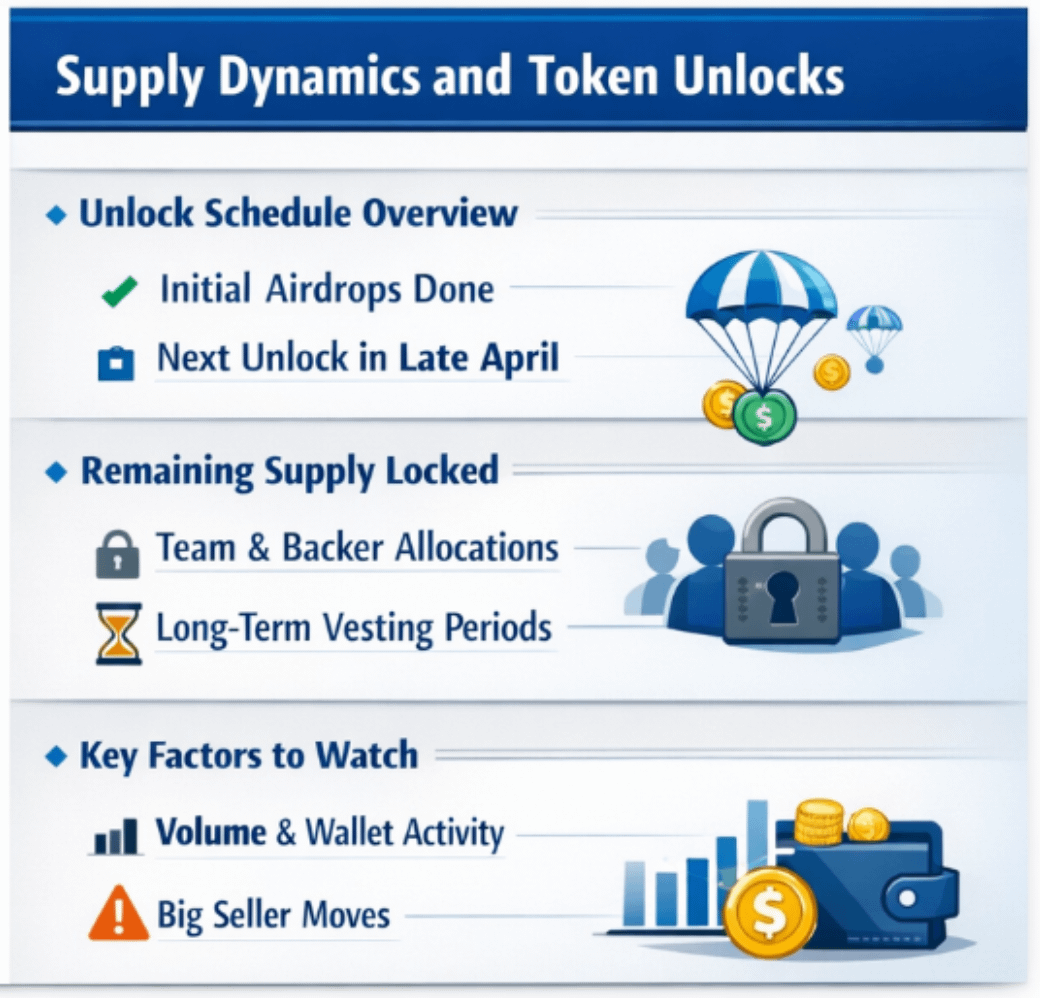
The unlock schedule also tells an important part of the story. The larger community and airdrop portion already went through its first major release, and what is left is coming out slowly over the next few years. The next unlock in late April looks small when compared with the daily volume the token is already seeing. Most of the remaining supply is still locked in team, backer, and ecosystem allocations that are spread out over a long period.
What surprises me most is how little real selling pressure seems to be showing up. Even when volume is strong, the biggest wallets do not appear to be dumping in any serious way. A lot of the supply is still locked, controlled, or tied to protocol use. That creates a situation where even moderate buying can move the price more than people expect, because there are not many big sellers stepping in.
That said, I am not ignoring the risk. If the broader market turns weak and a few large holders decide to sell at the same time, this setup could change fast. If ecosystem activity slows down and the natural buying side dries up, then the dilution argument becomes a lot more believable. So this is not a blind bullish take.
For me, the idea stays valid if $SIGN holds up through the April unlock, volume stays healthy, and new wallets keep coming in without a big jump in large outflows. That would suggest the market is still absorbing supply well. But if a release lines up with a sharp drop, weaker volume, and clear selling from major wallets, then the bearish case gets much stronger.
So overall, I do not see $SIGN as a simple dilution story. I see it more like a token with a tight tradable supply, where the market is still adjusting to how little liquidity is actually available. The pressure is not some far off event. It is already being tested now, and the price action is showing that. That is why I think it deserves attention.