

I’ve been thinking about this while studying @SignOfficial The schema is not just structure. It quietly acts as the rulebook that decides who qualifies and who doesn’t.
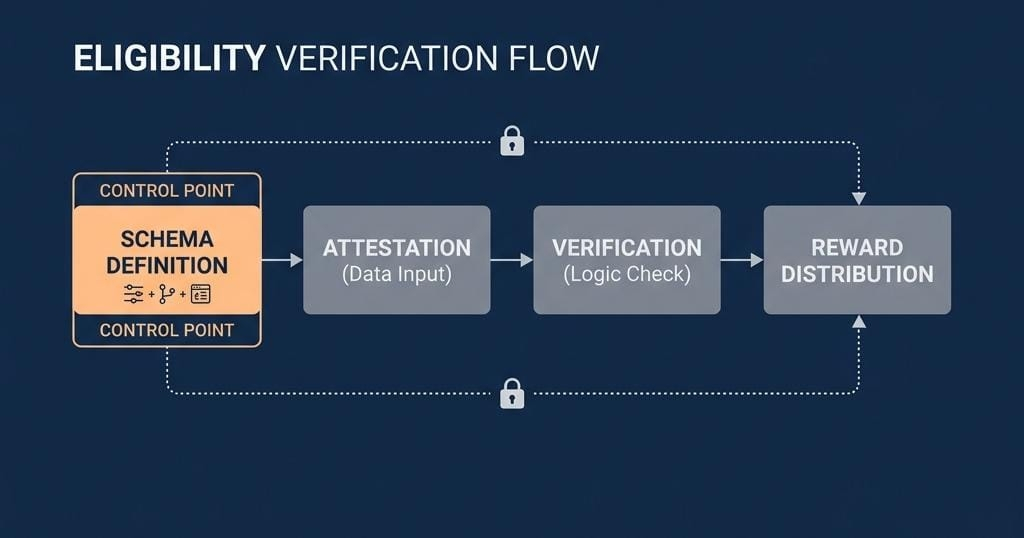
In SIGN, every attestation exists because a schema allows it. Before any reward or recognition happens someone already defined what counts as valid activity. That decision shapes everything that follows.
Small choices inside a schema change outcomes more than people realize. If a schema values participation then presence becomes valuable. If it values on-chain actions then interaction volume starts to matter. Same system but completely different winners. This is where bias enters.
Schema creators decide what behavior gets recorded. They define fields, conditions and limits. Even when it looks neutral it rarely is. A schema that favors early users ignores late contributors. One that tracks quantity can overlook real impact.
SIGN makes this visible through its attestation system. Every credential is tied to an issuer and a schema. So when I see rewards being distributed, I don’t just look at users. I look at who designed the schema behind those attestations. That’s the hidden control layer.
Builders and issuers don’t directly hand out tokens, but they define what data becomes eligible for token distribution. That is a deeper level of influence.
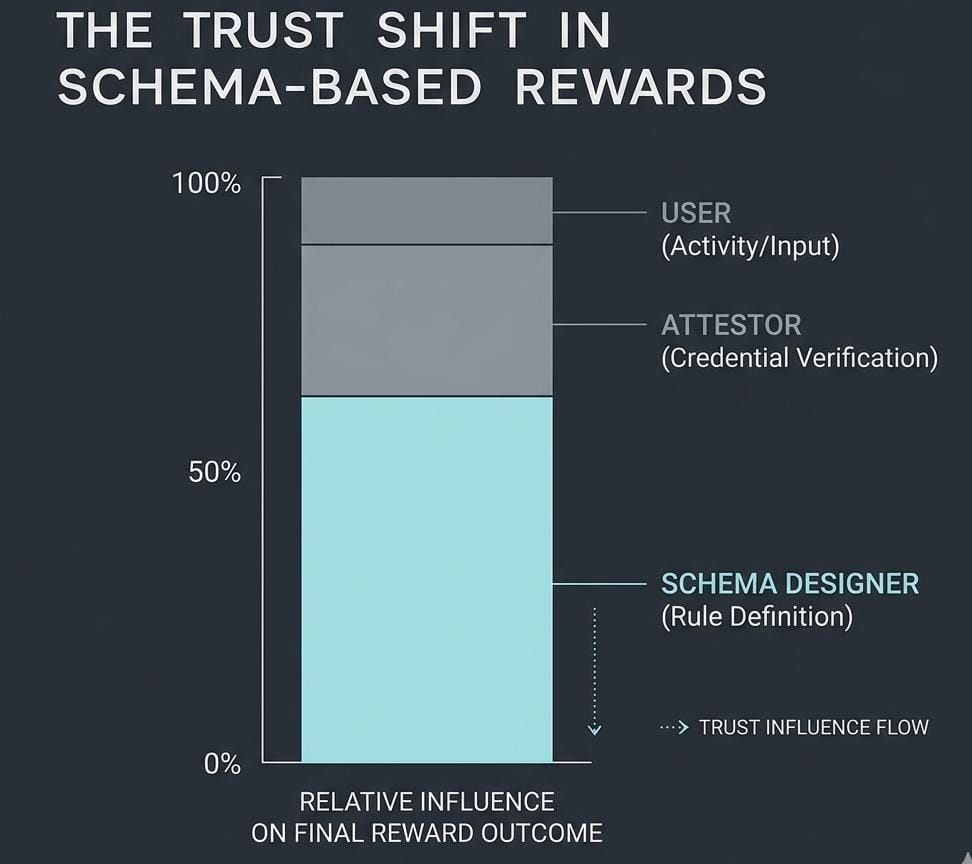
Credential verification in SIGN is strong. Attestations are signed, structured, and stored on-chain. But verification only checks if something fits the schema. It doesn’t question whether the schema itself is fair. That’s where trust shifts...
In SIGN trust is not just about users or attestors. It extends to schema designers. If the schema is flawed even honest attestations can lead to unfair outcomes.
Sybil resistance also depends on schema design. A schema can include identity checks or limits but if those rules are weak or selective the system can still be gamed. Not because SIGN failed, but because the schema allowed it.
Identity in SIGN is shaped through attestations but only within what the schema captures. Two users can contribute in similar ways yet only one gets recognized if the schema is built that way.
That’s something I find hard to ignore.
It means rewards are not purely merit-based. They are schema-based. Merit only matters if the schema is designed to see it.
At the same time, this flexibility is what makes SIGN powerful. Builders can design systems that reward exactly what they value. But that power also means responsibility, and not every issuer will use it carefully.
When I analyze SIGN based distributions, I don’t just ask who earned rewards. I ask who wrote the schema. That’s where the real decision was made.
If schema design decides who gets rewarded then the real competition is not between users. It is in how the rules themselves are written.