
I keep seeing the same pattern in crypto. A campaign gets reach, posts flood the timeline, claim links go viral, and then a week later the product feels empty again.
Most campaigns create clicks, not daily users. That gap matters. Attention is easy to rent. Utility is much harder to build.
My view is simple: if Sign Official wants community energy to turn into durable usage, it has to move people through a clear funnel:

Not just “show up and claim,” but “show up, do something real, come back, and then have a reason to bring others.” That matters even more for a project like Sign, because the product category is already built around verification, eligibility, and rules-based distribution, not just hype. Sign’s own public materials frame the stack this way : Sign Protocol is the evidence and attestation layer, while TokenTable handles allocation, vesting, unlocks, and rules-based distribution. Binance Research also notes strong 2024 usage growth, from 4,000 to 400,000 schemas and from 685,000 to 6 million+ attestations, with TokenTable having distributed over $4 billion to 40 million+ wallets.
The simple funnel that matters :
Attention :
People notice the campaign, the brand, or the creator story.
Activation :
They complete a first meaningful action, not just a like. Maybe they verify eligibility, mint a credential, claim through a proper flow, or connect a wallet for a real use case.
Retention :
They come back without needing a fresh bribe every single time.
Advocacy :
They tell others, build tools, write guides, or integrate the product into their own workflow.
That is the whole game. I’d put it even more simply: proof of participation has to become proof of habit. If a system can verify who did what, and then reward useful repeat behavior instead of one-time noise, it has a shot at turning community energy into real utility. That idea fits Sign especially well because its stack is built around structured schemas, attestations, eligibility checks, public or private records, and repeatable audit trails.
What “credential verification + token distribution infrastructure” means in plain English :
I’d explain Sign like this to a normal reader: it is infrastructure that helps answer two questions.
First, can someone prove they qualify?
That is the credential side. A user might need to prove they attended an event, passed KYC, live in an allowed region, completed a task, or built something worth rewarding.
Second, if they qualify, what should they receive, when, and under what rules?
That is the distribution side. This is where allowlists, airdrops, vesting schedules, unlocks, rewards, and gated access come in.
Official docs say Sign Protocol lets teams define schemas, issue verifiable attestations, support public, private, and hybrid records, and query or audit that data later. TokenTable then handles the execution layer: allocation tables, claim conditions, vesting, push or pull distributions, clawbacks, and policy-driven rules. Sign Protocol is also currently listed across 14 mainnets on its supported-networks page, and the project provides public querying tools through SignScan, plus SDK and API access for builders.
Community campaigns that actually convert :
I think quests, learn-to-earn, allowlists, and attendance campaigns work best when they lead into a second action.
A weak campaign says, “Do one task, get one reward.”
A stronger campaign says:
- Verify you're eligible,
- Complete a real action,
- Unlock the next step,
- Build history,
- Earn better access later.
That is where Sign’s stack can be useful. A credential can record event attendance, a completed tutorial, a verified identity status, or a contribution milestone. Then distribution can reference that credential later for eligibility, access, or rewards. In Sign’s own case studies, this pattern already shows up in practical form: one ZetaChain airdrop flow used Sign Protocol together with TokenTable so users could complete KYC, bind that status to a wallet, and claim only after the smart contract validated eligibility. The case study reports 14,786 KYC-whitelisted addresses, 12,858 passed KYC, 295 were rejected due to block list or fraud, and median verification time was 14 seconds.
The lesson for me is obvious. A campaign that rewards repeat verified actions beats a one-time claim every time.
That is how you stop farming and start building user history.
Incentives that don’t wreck token health :
This is where a lot of teams fail. They treat incentives like a volume button. Turn rewards up, get traffic. Turn rewards off, users vanish.
I’d split incentives into two buckets:
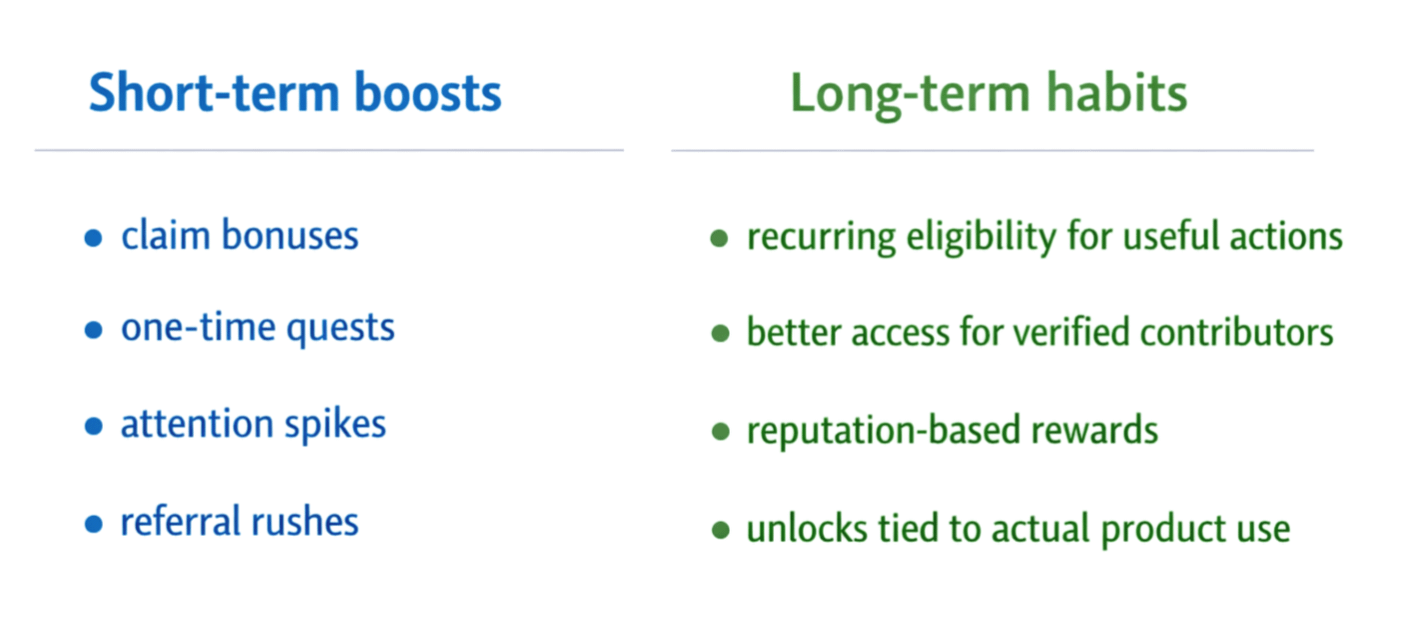
If Sign wants sustainable usage, the second bucket matters more. Token distribution should reward behavior that compounds, not just behavior that screenshots well. Good examples would be rewarding repeat on-chain participation, verified contributions from builders, or reputation-linked access that gets more valuable over time. That idea lines up with Sign’s public case studies too: one example covers developer reputation through Aspecta, where verifiable attestations help show skills, projects, and endorsements, and another covers audit verification with OtterSec, where an audit summary is recorded as an attestation so market participants can verify the real source instead of trusting a random PDF.
If I were evaluating whether incentives are healthy, I would watch five numbers:
Activation rate, D7 retention, D30 retention, cost per retained user, percent of repeat actions that happen without a fresh reward push.
Those are the numbers that tell you whether you built utility, or just rented traffic.
Creator ecosystem as distribution :
This is the part I think many people still underestimate. Creators do not just bring attention. They can also lower the cost of product understanding.
A strong creator ecosystem can turn a complicated stack into simple, repeatable use:
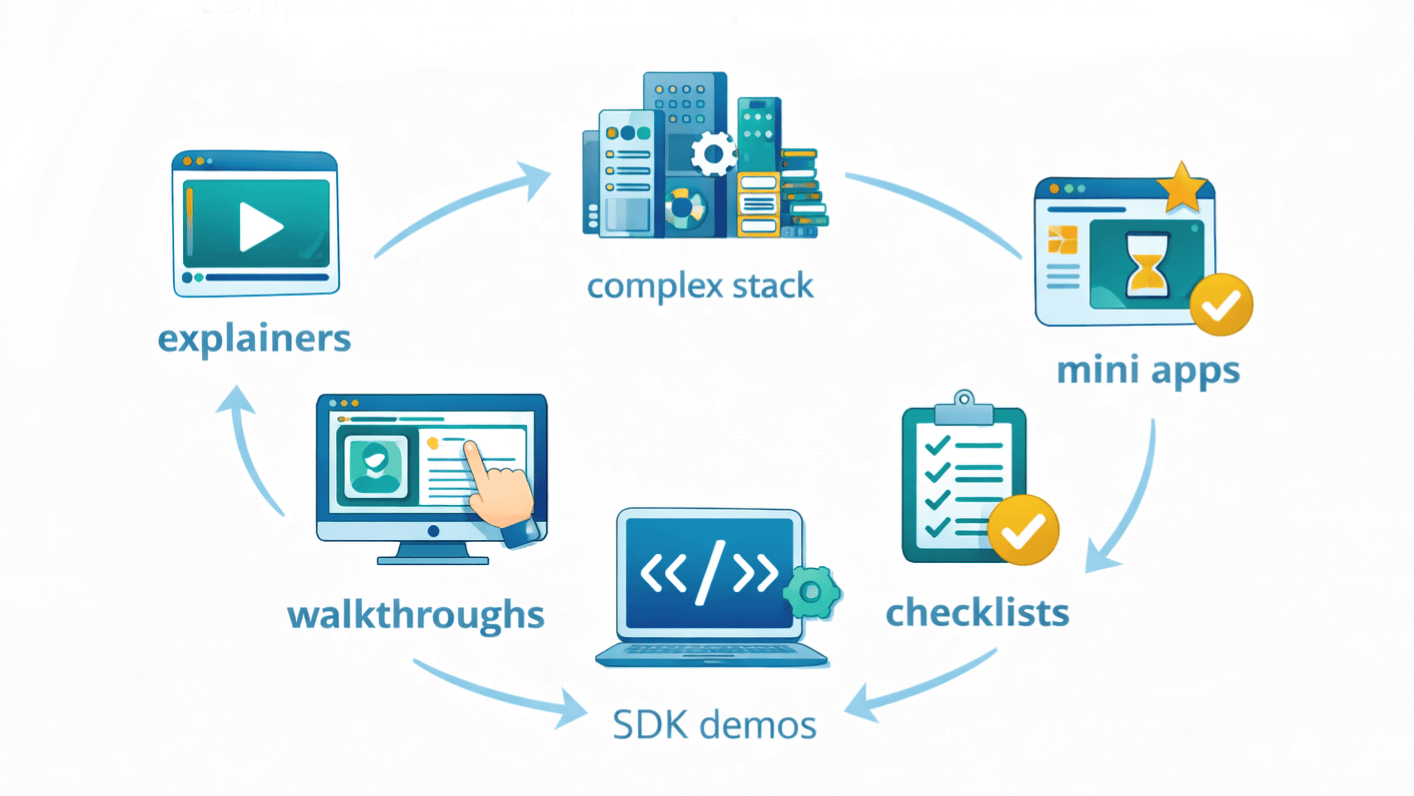
That matters because Sign is not a meme coin story. It is infrastructure. Infrastructure wins when more people can actually use it. Public docs show Sign gives builders SDK access, API access, and a public explorer where schemas and attestations can be created, searched, and verified, including no-code flows through SignScan. To me, that creates a real opening for creator-led distribution, especially when creators help users understand things like attendance badges, privacy-aware region gating, reputation rewards, or verified eligibility for claims.
So yes, creators can drive reach. But the better model is this: builders create usage, creators translate usage, and the best ecosystems do both at once.
The utility flywheel :
This is the flywheel I’d watch:
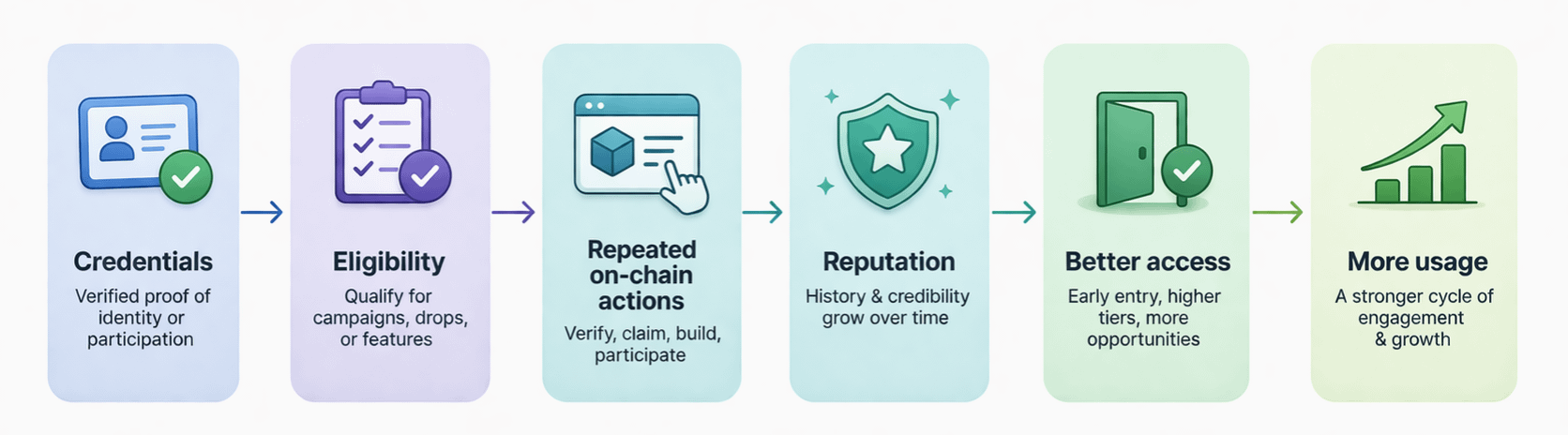
That is powerful because each step can feed the next one. Attend an event, get a badge. Hold a badge, unlock an allowlist. Complete a verified action, build reputation. Build reputation, qualify for better rewards or opportunities. Do that repeatedly, and the system starts to feel less like a campaign machine and more like a trust layer.
Sign’s docs also make an important privacy point here. The project frames its model as keeping sensitive information private to the public while remaining auditable to authorized oversight, with selective disclosure, data minimization, and proof systems used so teams do not need to expose raw personal data for every verification flow. That matters for use cases like KYC, region gating, and privacy-aware eligibility checks. It also matters for trust. People will use verification systems more often when they feel those systems do not demand too much data.
Risks and failure modes :
I don’t think this story is automatically bullish. It can go wrong in a few obvious ways:
Sybil and bot pressure: if rewards are easy to farm, low-value actors will show up first.
Mercenary users: if people only appear for payouts, retention breaks.
Privacy concerns: if verification feels invasive, users leave.
Unclear value capture: if credentials never unlock meaningful next steps, the whole system feels cosmetic.
Over-complex UX: if a claim flow has too many clicks, good users drop before bad users do.
Security also matters. TokenTable’s docs say its products have undergone multiple smart-contract audits across different products and chains, including reviews by firms such as CODESPECT, OtterSec, Nethermind, and TonTech. That helps, but users still need basic discipline: verify official channels, double-check contracts, and only use trusted claim pages.
Practical checklist :
If I were a user, I’d ask:
Does this credential unlock something real later?
Is the claim flow official and clearly documented?
Am I building any reusable reputation, or just farming once?
If I were a builder, I’d ask:
What is the second action after the first claim?
Can I measure D7 and D30 retention, not just wallet count?
Am I rewarding repeat value, not just first-touch noise?
If I were a community lead, I’d ask:
Are creators educating users, or only driving clicks?
Are we tracking bot-filter rate and cost per retained user?
Does the reward logic make habits stronger over time?
Quick FAQ :
What would be a strong Sign use case for community growth?
A flow where a verified attendance badge, task completion, or contribution record becomes the key to future access, not just a one-time reward.
What is a weak use case?
A campaign where users claim once, dump attention into the chart, and never touch the product again.
What should readers verify before joining any campaign?
Official channels, contract addresses, and claim pages. In crypto, bad links spread faster than good research.
Closing thought :
I think the real opportunity for Sign Official is not just turning attention into claims. It is turning verified participation into repeat behavior.
That is a higher bar, but it is also the only bar that matters if the goal is real utility.