

The RWA tokenization boom is real.
Just 3 days ago (March 25, 2026), the U.S. House Financial Services Committee held a landmark hearing titled:
“Tokenization and the Future of Securities: Modernizing Our Capital Markets.”
Both parties agreed on one thing:
Tokenization is inevitable.
They discussed deeply about KYC, AML, compliance, and how tokenized securities will reshape traditional capital markets.
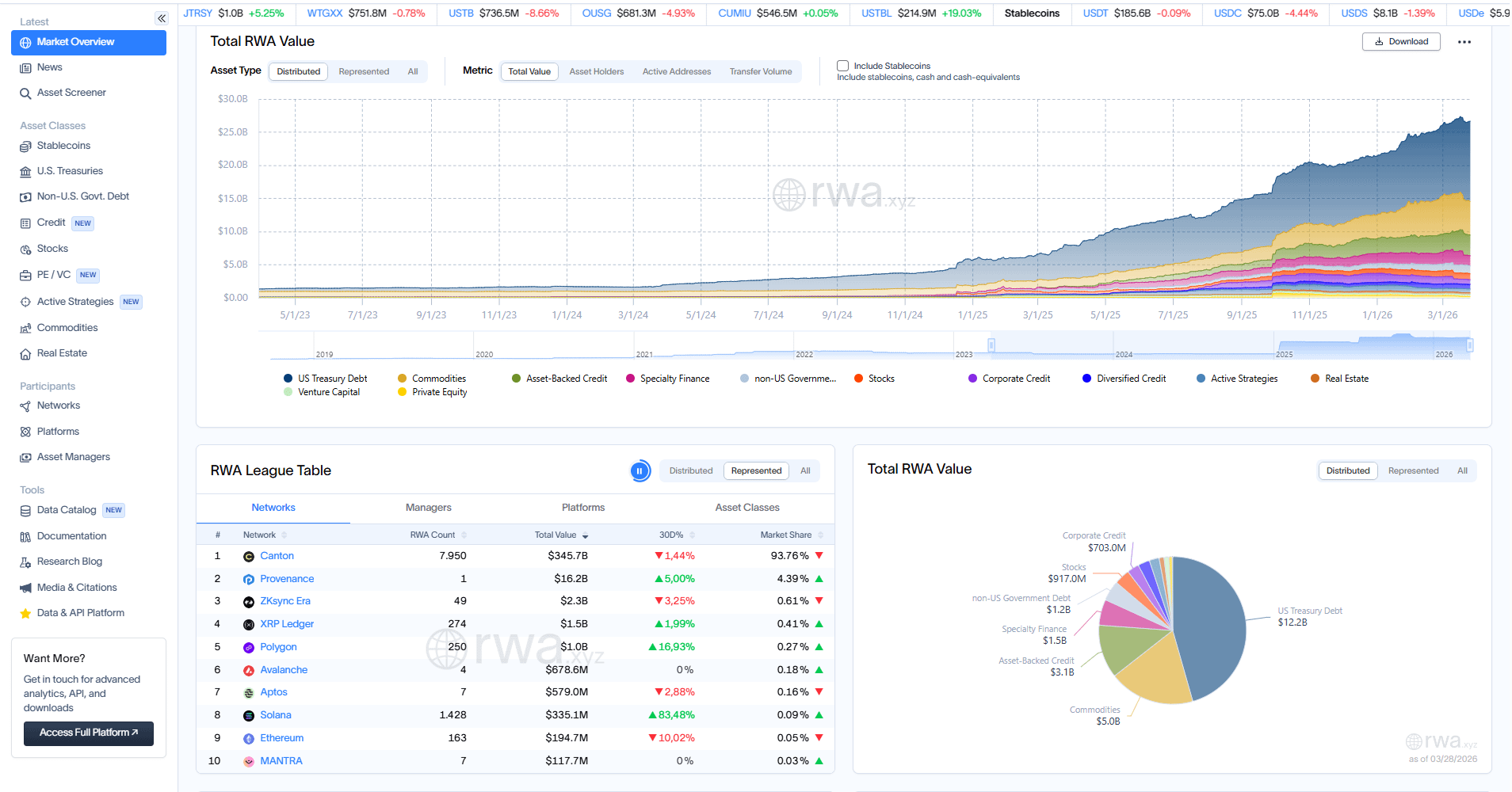
Meanwhile, latest data from rwa.xyz shows:
The on-chain RWA market has surpassed $26.63B, up +4.47% in just 30 days.
Everything is being tokenized:
👉 U.S. Treasuries
👉 Investment funds
👉 Real estate
👉 Gold & commodities
But there’s a massive gap no one is talking about loudly enough:
RWA doesn’t lack tokenization technology.
It lacks real verification & provenance.
When you buy a tokenized real estate, bond, or fund:
❓ Who actually owns the underlying asset?
❓ Where is the origin and transfer history?
❓ Who verified its existence and legality?
❓ If the issuer disappears or disputes arise, what do you really have besides “trust”?
Blockchain records transactions extremely well.
But it cannot prove the real world by itself.
That’s exactly why RWA hasn’t truly exploded yet — even with $26B already on-chain.
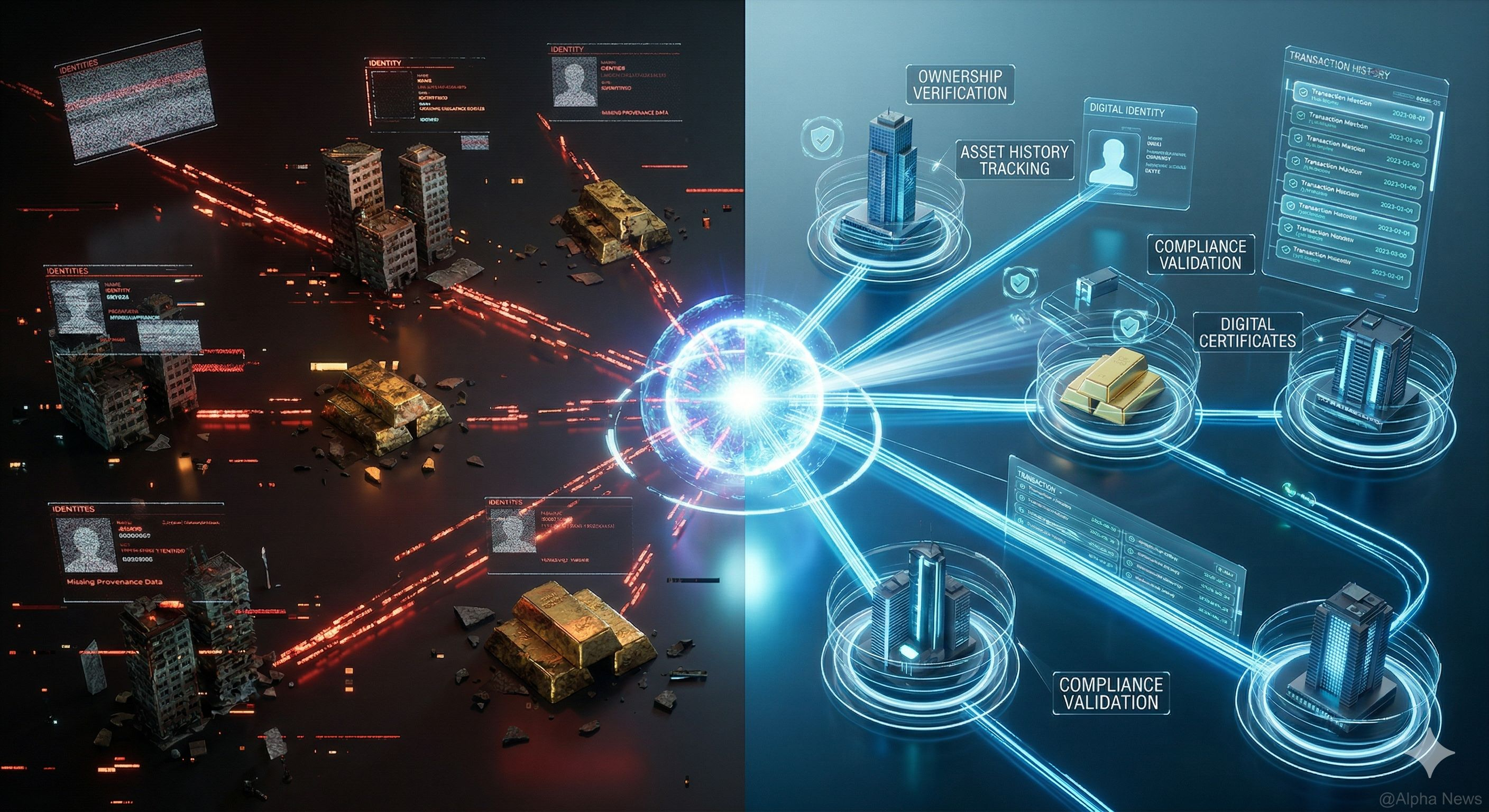
This is where @SignOfficial becomes a critical infrastructure layer.
Sign Protocol is not just another tokenization project.
It is building #SignDigitalSovereignInfra — a sovereign digital infrastructure designed specifically to solve the verification & provenance gap in RWA.
With on-chain attestations, Sign enables:
✅ Real ownership verification
✅ Transparent asset provenance & tracking
✅ Fully verifiable on-chain proof (“Don’t trust, verify”)
A simple example:
A real estate asset tokenized on Sign is not just a token.
It comes with complete on-chain proof:
who owns it, transfer history, legal verification — all instantly verifiable, without intermediaries or “audit promises.”
After the March 25, 2026 hearing, as the U.S. government seeks to balance innovation with compliance and investor protection,
Sign Protocol fits perfectly:
It enables regulatory compliance while preserving decentralization and true transparency.
Web3 taught us:
Trust is fragile.
Web4 will demand:
Proof by default.
And $SIGN is building that infrastructure for the future of the tokenized economy.
What do you think?
Will RWA truly take off only when strong on-chain verification like Sign exists?
👉 Let’s discuss this below! 👇👇👇👇
