📊 Traditional Banking & Payment Delays
With traditional banking systems, delays in transferring money are sometimes considered normal. There are many “objective” reasons, like settlement taking time—and after all, millions of people still use these systems.
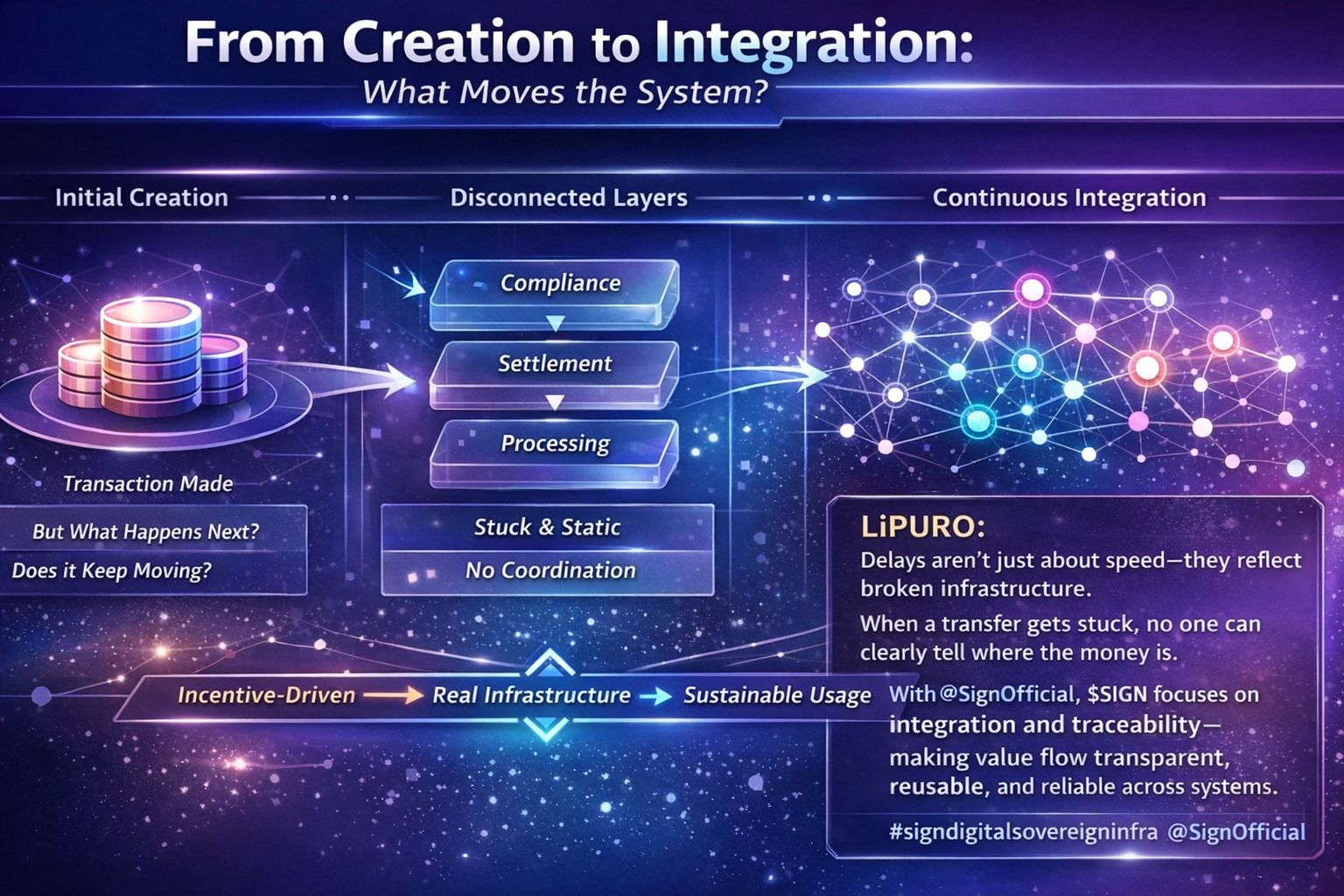
But when one of your transactions gets stuck along the way, you don’t know whether the money has arrived or not. There are no updates, and no one is truly responsible. And that’s when you realize—no one can tell you exactly where your money is.
⚙️ Not a Speed Issue, but an Infrastructure Issue
That’s not a speed problem. It’s an infrastructure problem.
It’s like sending a package through five different warehouses, each operating on its own schedule. A transaction can be created instantly, but what happens after that?
Does it keep moving, interacting, and generating value, or does it get “frozen” within disconnected layers?
🧠 A Different Way to Evaluate Systems
That’s why I think we should evaluate banking or transaction systems based on their ability to integrate and connect across endpoints, as well as the underlying transport infrastructure.
And most importantly, I should be able to track exactly where my “package of money” is at any time.
🔗 Observing @SignOfficial
With @SignOfficial I’m watching real-world adoption.
Consistent activity matters more than hype. If it’s driven only by incentives, it will fade. But if it becomes infrastructure used daily, it will last.