Semua orang berdebat tentang geopolitik—siapa yang benar, siapa yang salah, siapa yang memulai apa.
Tapi ada sisi yang lebih tenang—ayo kita perlambat ini, hilangkan semua kebisingan, dan bangun kembali menjadi sesuatu yang terasa seperti orang nyata yang duduk, memikirkan dengan seksama, dan menulisnya dengan niat—bukan sekadar suara.
🚨 Ini bukan hanya tentang perang… ini tentang insentif
Semua orang berdebat tentang geopolitik—siapa yang benar, siapa yang salah, siapa yang memulai apa.
Tapi ada lapisan yang lebih tenang di bawah semua itu:
Siapa yang diuntungkan ketika segala sesuatunya tetap tidak stabil?
Mari kita lihat sisi minyak, karena di sanalah hal-hal menjadi menarik.
Sebelum ketegangan terakhir, Arab Saudi mengekspor sekitar 6,6 juta barel per hari.
Belakangan ini, angka itu telah turun secara signifikan—lebih dekat ke 3,3 juta dalam beberapa estimasi.
Pada saat yang sama, harga minyak tidak tetap datar.
Mereka melonjak—dari sekitar $60–70 per barel menjadi lebih dari $100 pada periode puncak.
Dan kemudian ada strategi penetapan harga. Minyak mentah Saudi—terutama untuk pasar Asia—sering kali dijual dengan premi tambahan, yang berfluktuasi tetapi telah mencapai level yang tidak biasa tinggi selama periode pasokan yang ketat.
🤔 Jadi apa artinya itu sebenarnya?
Bahkan jika volume ekspor turun,
harga yang lebih tinggi + premi tambahan dapat mengimbangi—atau bahkan melebihi—kerugian dalam volume.
Itu bukan konspirasi. Ini adalah mekanika pasar dasar:
Pasokan lebih rendah → harga global lebih tinggi
Harga lebih tinggi → pendapatan per barel yang lebih kuat
Penetapan harga strategis → margin tambahan
$
Itu tidak secara otomatis berarti “cari keuntungan.”
Tapi itu berarti beberapa pemain secara struktural berada dalam posisi untuk mendapatkan keuntungan ketika harga naik.
🌍 Sudut Hormuz (bagian ini penting)
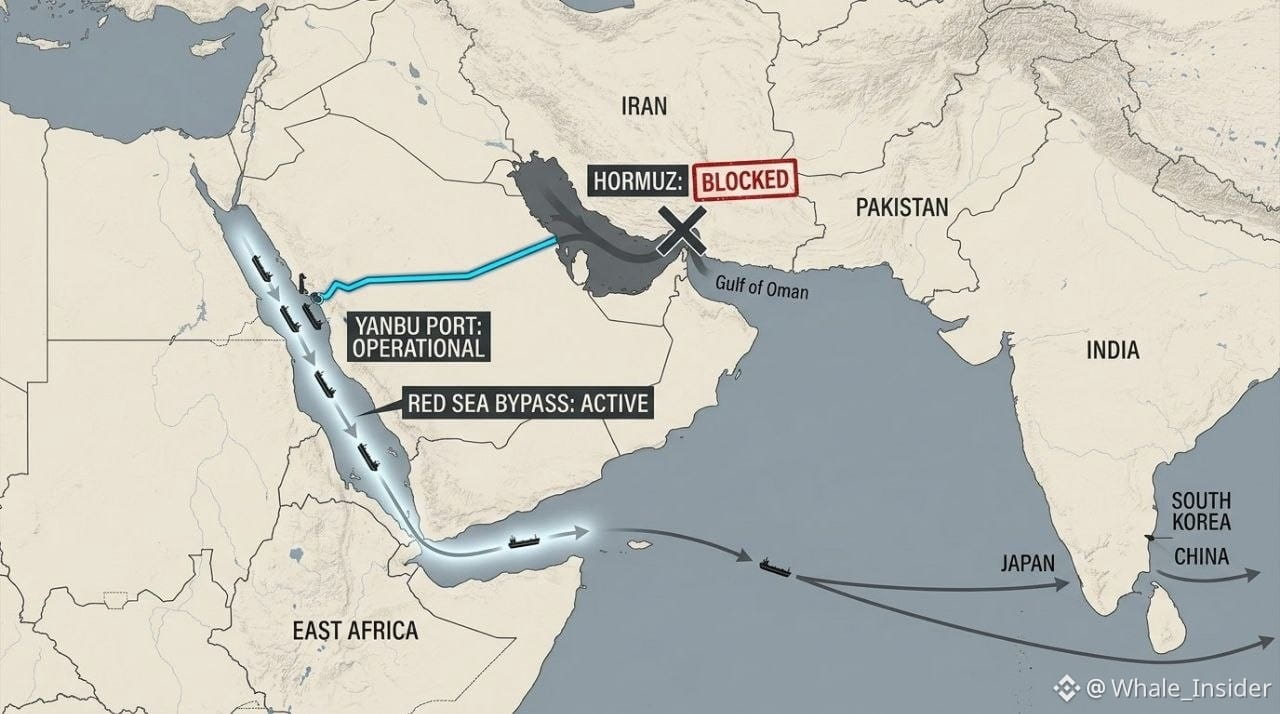
Banyak orang membicarakan Selat Hormuz seolah-olah itu adalah titik kegagalan tunggal untuk minyak Teluk.
Tapi Arab Saudi telah menghabiskan bertahun-tahun untuk mengurangi risiko itu.
Mereka membangun pipa Timur-Barat yang mengalirkan minyak mentah ke seluruh negeri ke Laut Merah, memungkinkan ekspor untuk terus berlanjut bahkan jika Hormuz menjadi tidak stabil.
Jadi dalam skenario terburuk?
Mereka tidak se-terpapar seperti yang banyak orang anggap.
Itu tidak mencurigakan—ini adalah perencanaan infrastruktur jangka panjang.
🧠 Di mana hal-hal menjadi lebih kompleks
Selalu ada klaim yang beredar bahwa negara tertentu diam-diam lebih suka ketegangan yang berkepanjangan karena keuntungan ekonomi—terutama di pasar energi.
Tapi inilah kenyataan yang harus dihadapi:
Pemerintah menyeimbangkan keuntungan, keamanan, dan tekanan global
Pendapatan minyak itu penting—tapi stabilitas regional juga penting
Klaim publik tentang “mendorong perang untuk keuntungan” sering kali sulit untuk diverifikasi dan sangat diperdebatkan
Jadi meskipun harga minyak yang lebih tinggi dapat menguntungkan eksportir seperti Arab Saudi,
sulit untuk mereduksi seluruh situasi menjadi satu motif.