

I keep coming back to games like Pixels and wondering what exactly pulls me in—whether it’s the game itself or the idea wrapped around it. On the surface, it looks simple enough: farming, wandering around, building things at your own pace. It reminds me of the kind of games I used to play when I just wanted to switch off and exist somewhere quieter. But then there’s this extra layer—the Web3 part—that makes me pause and think a little harder about what I’m actually doing there.
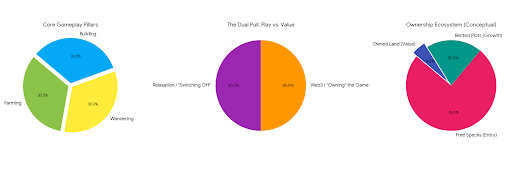
At first, I told myself I was just curious. Everyone seems to be experimenting with these blockchain-based worlds, and Pixels feels like one of the more approachable ones. It doesn’t throw complexity at you right away. You plant crops, explore, maybe chat with other players. It feels familiar, almost intentionally so, like it’s trying to ease you into something bigger without making a big deal out of it.
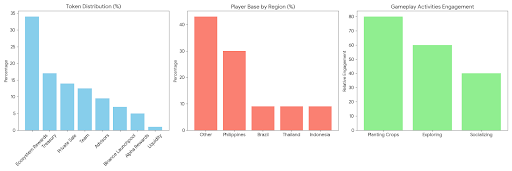
But the more time I spend in it, the more I notice that quiet shift in mindset. In a normal game, progress is just… progress. You grow something, you build something, and it stays within the boundaries of that world. Here, there’s this subtle suggestion that what you’re doing might carry value outside the game. And I’m not sure if that excites me or makes me uneasy.
I catch myself questioning my own motivations. Am I farming because I enjoy it, or because there’s a potential reward tied to it? And does that difference matter? Maybe it does. There’s something oddly fragile about fun when it starts being measured.
At the same time, I can’t deny that there’s something interesting about ownership being part of the experience. The idea that what you create or collect is actually yours—not just locked inside a game server—feels like a shift, even if I don’t fully understand where it leads. It makes the world feel a bit more persistent, a bit more real, even if it’s still just pixels on a screen.
Still, I’m cautious. I’ve seen how quickly excitement around new tech can turn into noise. Every new system promises to change everything, and most of them quietly fade into the background. I don’t know if Pixels is different, or if it’s just another step in that same cycle. Maybe it doesn’t have to be revolutionary to matter. Maybe it just has to be… enjoyable.
What I find myself appreciating, oddly enough, is how calm the game feels despite everything layered beneath it. You can ignore the bigger picture if you want to. You can just plant seeds, watch them grow, and log off. There’s something comforting about that option—like the game isn’t forcing you to care about its deeper mechanics unless you choose to.
And maybe that’s where I land with it, at least for now. I don’t fully buy into the vision, but I’m not dismissing it either. I’m somewhere in the middle, quietly observing, occasionally participating, trying to understand what this blend of gaming and ownership actually means in practice.
It’s strange, though. I went in expecting to evaluate a system, but I ended up reflecting more on myself—on how easily purpose can shift when incentives change, and how I negotiate that internally without even realizing it.
So I keep playing, but not in a committed way. More like checking in on an idea as it unfolds. And maybe that’s enough. Not everything needs a firm conclusion. Sometimes it’s just about sitting with the experience and letting it slowly make sense—or not.