
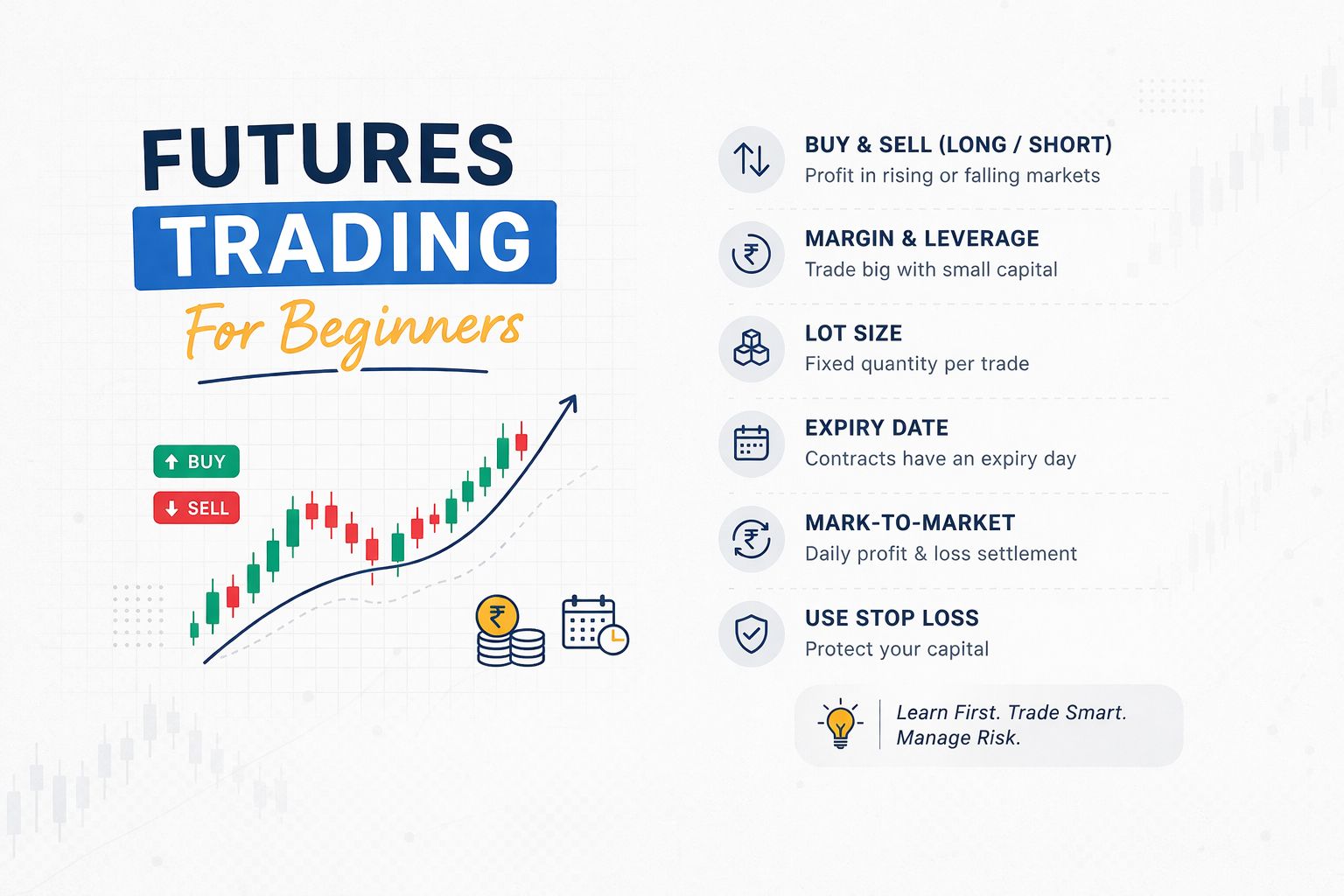
Futures trading is a popular way to trade in the market, but many beginners find it confusing. Let’s break it down in a very simple way.
What is Futures Trading?
Futures trading means you agree to buy or sell an asset (like stocks, gold, or index) at a fixed price on a future date. You don’t always need to hold it till that date—you can exit anytime before expiry.
1. Buy (Long) and Sell (Short)
- Buy (Long): You expect the price to go up.
- Sell (Short): You expect the price to go down.
This means you can earn in both rising and falling markets.
2. Margin (Small Money, Big Trade)
In futures, you don’t pay full money. You only pay a small amount called margin.
This allows you to control a bigger trade with less money.
3. Leverage (High Risk, High Reward)
Futures trading uses leverage.
- Profit can be high
- Loss can also be very fast
So always trade carefully.
4. Lot Size (Fixed Quantity)
You cannot buy just 1 share in futures.
Each contract has a fixed lot size (for example: 25, 50, etc.).
5. Expiry Date
Every futures contract has an expiry date.
If you don’t close your trade before that, it will automatically settle on expiry.
6. Mark-to-Market (Daily Profit/Loss)
In futures, your profit or loss is updated daily.
Money is added or deducted from your account every day based on price movement.
7. Stop Loss is Must
Because of high risk, always use a stop loss.
It protects you from big losses.
8. Who Should Trade Futures?
Futures trading is better for people who:
- Understand market basics
- Can handle risk
- Have proper knowledge and discipline
Final Tip:
Futures trading is powerful but risky. Never start without learning. Practice first, start small, and always control your risk.
Learn first, trade smart, and protect your capital 📊
#CryptoMarketRebounds #SECEasesBrokerRulesforCertainDeFiInterfaces #USDCFreezeDebate #GIGGLESuddenSpike #StrategyBTCPurchase

$