
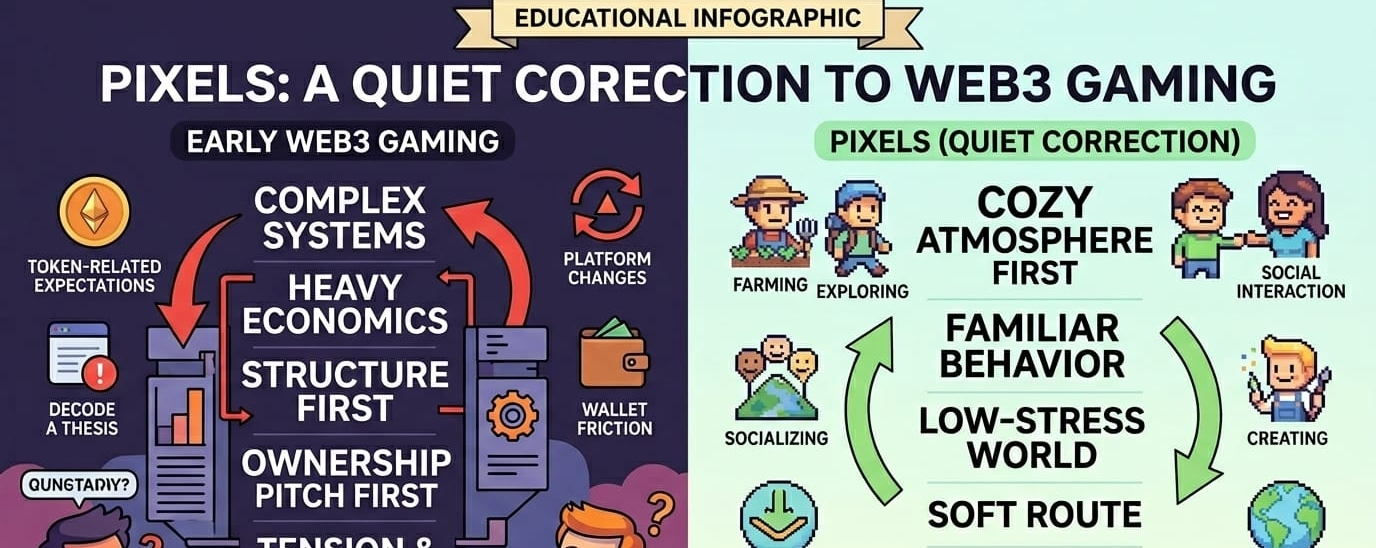

I’ve been thinking about this a lot lately: a huge number of Web3 games didn’t really fail because people hated ownership. They failed because the games themselves felt weirdly tense. Too much structure, too much economy, too much pressure to understand the system before you could just enjoy the world. And honestly, that’s a bad trade.
Most people don’t open a farming game because they want to study an ecosystem. They open it because they want something easy to slip into. A routine. A low-stress world. Something that feels a bit cozy, a bit social, maybe even a little aimless in a good way. That part matters more than crypto people usually admit.
That’s why Pixels stands out to me. Not because it suddenly “solves” Web3 gaming. I don’t think it does. But it points in a different direction. It feels less obsessed with proving blockchain is important and more interested in building a world people might actually want to spend time in.
That sounds simple, but weirdly, it hasn’t been simple for this sector at all.
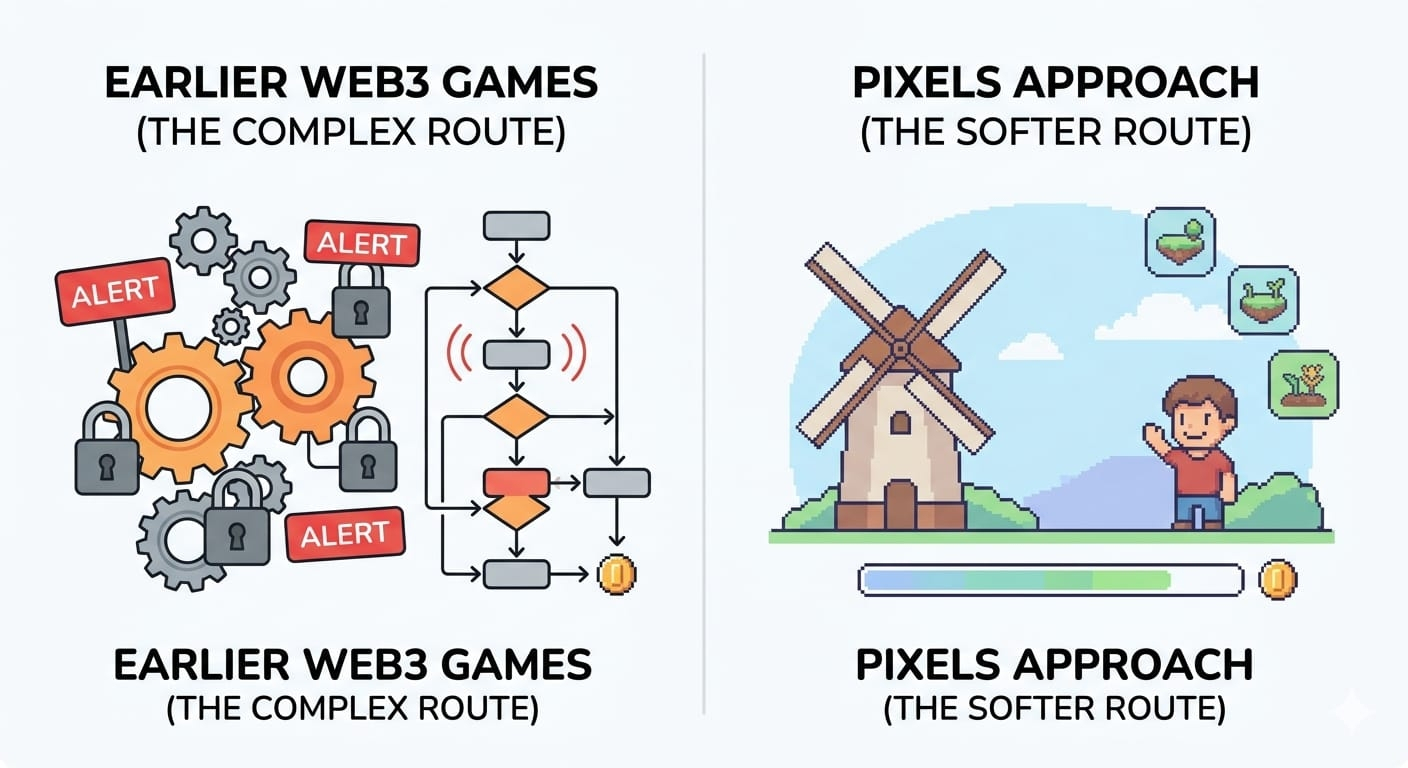
A lot of earlier blockchain games were built like systems first and games second. You could see the logic immediately: here is the asset, here is the loop, here is the incentive, here is the reason this should matter. But the emotional part was missing. The world often felt like a wrapper around mechanics instead of a place with its own pull.
And once players notice that, it’s hard to unsee.
The problem before projects like Pixels was not just bad onboarding or clunky wallets. It was that too many Web3 games asked players to care about structure before they cared about atmosphere. That order matters. In normal games, you usually get attached to the feeling first. Then later, maybe, you start caring about progression, status, items, or whatever else sits underneath.
Web3 gaming often reversed that. It handed people the ownership pitch before giving them a reason to feel at home. That’s probably one reason so many projects were easy to explain and hard to love.
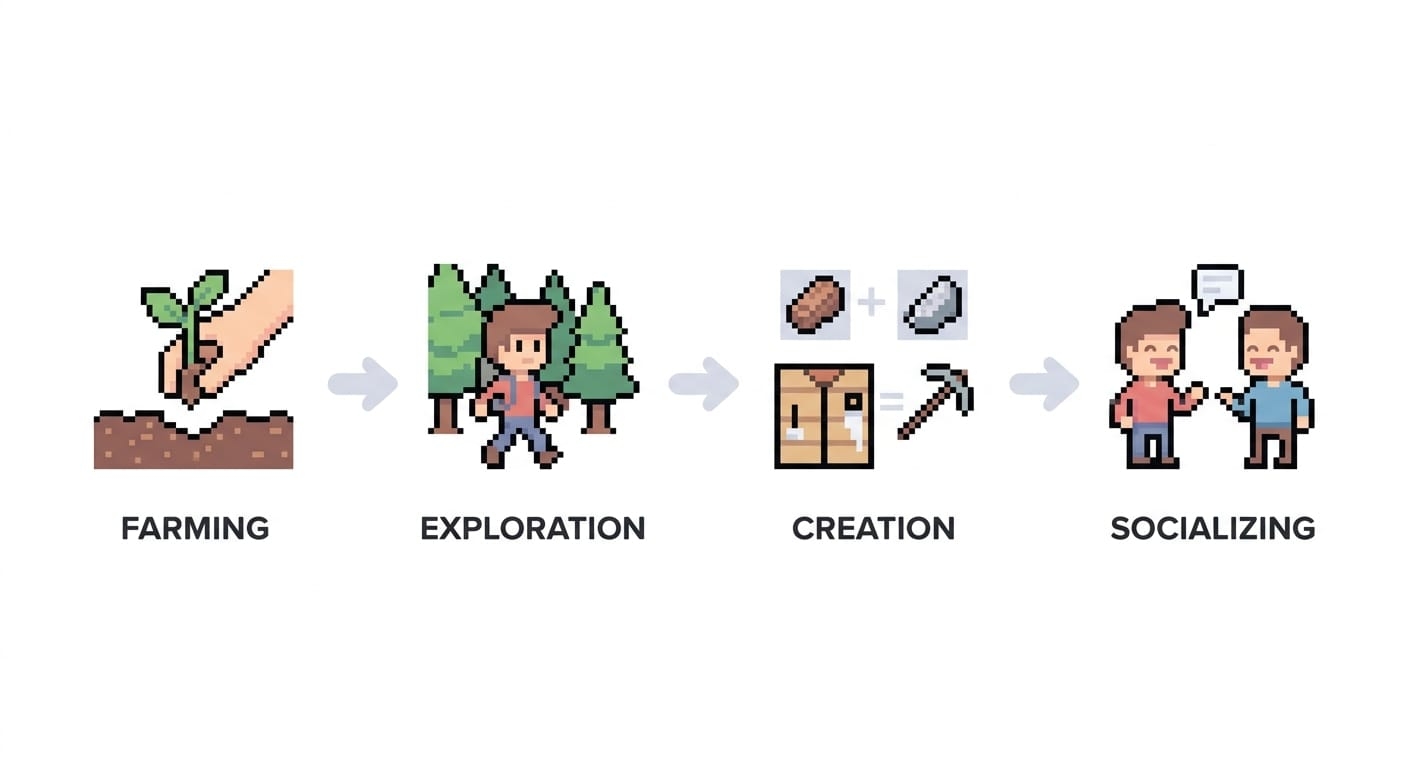
Pixels takes a softer route. Farming, exploration, creation, social interaction that mix is doing more work than it looks like on the surface. These are not aggressive mechanics. They don’t force intensity. They create rhythm. And rhythm is a huge part of why some games become part of a person’s week while others just become a phase.
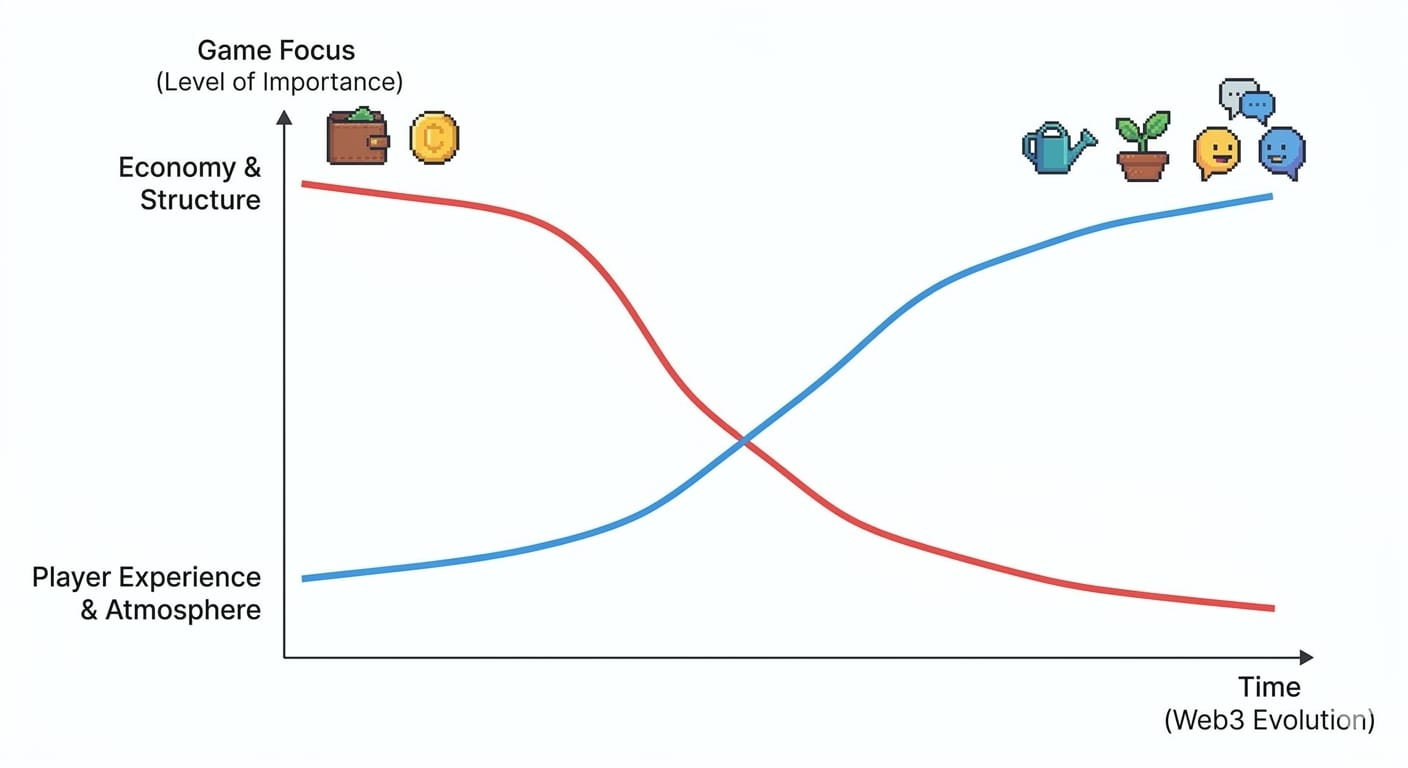
I think that’s the real design choice here. Not just “let’s put a game onchain,” but “let’s build around behavior people already understand.” Log in, move around, collect things, grow something, build something, see who’s around. That flow is familiar. It doesn’t make the player feel like they need to decode a thesis before having fun.
And yeah, being on Ronin fits that direction too. If the infrastructure is supposed to support gaming, then ideally the player shouldn’t feel the rails every five minutes. That’s kind of the point. In a casual game, friction feels louder. Even small inconvenience can ruin the mood because the whole experience depends on ease.
Still, I’m not fully convinced that softer design automatically fixes the deeper issue.
There’s a tension here that I don’t think goes away. The more a game feels casual and welcoming, the more players expect it to behave like a normal game. But once blockchain is under the surface, there are still extra assumptions in the room: wallets, ecosystem dependency, asset logic, token-related expectations, platform changes. Even if the interface is smooth, the structure is still heavier than what a fully mainstream casual audience is used to.
That creates a weird mismatch. A cozy social farming game naturally attracts people who want less stress, less complexity, less mental overhead. Web3, even in its improved form, still introduces more layers than those users usually ask for. So the question becomes: how much hidden complexity can a “light” game carry before players start feeling it anyway?
That’s where I think the real risk is.
Another thing worth saying clearly: not everyone benefits from the same version of accessibility. Crypto-native users may find Pixels refreshingly simple. Traditional gamers may still find it unnecessarily complicated. Those are two very different baselines. So when people say a project is “easy,” it always helps to ask: easy for who?
Pixels probably works best for a middle type of user. Someone who likes online worlds, likes gradual progress, maybe likes the idea of owning digital stuff, but does not want the full weight of Web3 culture dumped on their head. That audience is real. Honestly, it might be more real than the giant “mass adoption” story people keep repeating.
But some people will still sit outside that circle. Players who want zero wallet friction. Players who hear “Web3” and instantly tune out. Players who like cozy games precisely because they don’t want an economy sitting behind everything. Those people are not irrational. They’re reacting to years of baggage this category created for itself.
What I appreciate about Pixels is that it seems to understand something many earlier projects missed: a game does not become more meaningful just because more systems are attached to it. Sometimes the smarter move is the opposite. Strip the feeling back. Lower the pressure. Let the world breathe a little.
That said, I’m also careful with praise here. A calm first impression is one thing. Long-term attachment is another. Plenty of games feel nice at first. Fewer become places people genuinely care about over time. So eventually the test is not whether Pixels feels lighter than earlier Web3 games. The test is whether that lightness leads to real staying power or just a cleaner version of the same short attention cycle.
Maybe that’s the more interesting question around this project. Not whether it makes blockchain gaming look smoother, but whether it can make players forget they’re evaluating a blockchain game at all and if that happens, is that finally a sign of progress, or just proof that Web3 works best when it stops trying so hard to be noticed?