
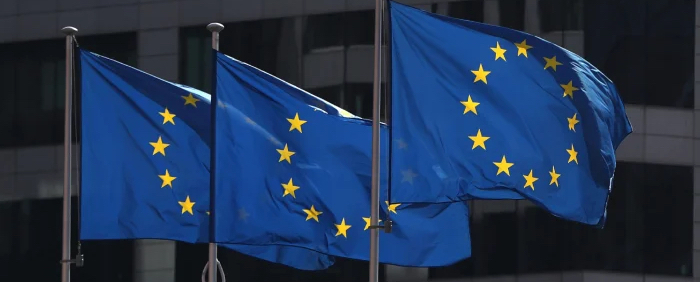
#USDCFreezeDebate The European Union today stands at a moment of quiet but profound reckoning. For decades, it aligned itself closely with the United States, viewing transatlantic unity not just as a partnership but as a strategic necessity. From the early Cold War to the invocation of NATO’s Article 5 after 9/11, Europe consistently demonstrated loyalty to Washington, often at considerable cost to its own economic and political interests.
Yet that loyalty now appears increasingly one-sided. Under President Donald Trump, the United States has adopted a more transactional and, at times, confrontational approach toward its European allies. Tariffs on European goods, public criticism of EU leaders, and pressure on energy and defence policies have created a growing perception in Europe that it is being treated less as a partner and more as a subordinate.
The consequences are becoming difficult to ignore. Europe has borne the economic and security burdens of the Russia-Ukraine conflict, strained its relations with China, and faced rising energy costs—all while navigating the fallout of US policy decisions in the Middle East. Meanwhile, Washington’s willingness to shield European interests appears less certain than before.
This evolving reality raises an uncomfortable but necessary question: should Europe continue to anchor its strategy so firmly to the United States, or is it time to pursue a more independent path?
The answer is neither simple nor without risk. Any meaningful shift would require Europe to revisit deeply entrenched assumptions about security, trade, and diplomacy. It could involve cautiously re-engaging with Russia, exploring diplomatic channels through intermediaries such as China, and broadening its network of alliances beyond the traditional transatlantic framework.
History offers precedent. European nations that once stood as bitter adversaries ultimately found ways to reconcile in pursuit of stability and shared prosperity. The same pragmatism may now be required on a broader geopolitical stage.
None of this suggests abandoning the United States altogether. Rather, it points to the need for recalibration—a foreign policy rooted not in reflexive alignment, but in strategic autonomy. Europe must be willing to define and defend its own interests, even when they diverge from those of its closest ally.
The European Union does have options. The real question is whether it has the political will to pursue them.