
I can’t verify in real time whether that specific bill introduction is currently active or how far it has progressed, so I’ll treat your description as the context and focus on a deeper analytical, high-content breakdown of what this kind of move represents inside the U.S. constitutional and political system.
The moment I first come across the discussion of invoking the 25th Amendment against a sitting president, it immediately feels less like a normal policy dispute and more like a structural stress test on the system itself. Not because the amendment is new or unfamiliar, but because it is one of the rare constitutional tools designed for scenarios where governance and capability are questioned at the highest level of executive power.
From a systems perspective, the 25th Amendment is not a political instrument in the usual sense. It is a continuity mechanism. It exists to answer one very specific question: what happens if the presidency is functionally unable to operate as intended. That framing alone already separates it from impeachment, legislation, or judicial review. It is not about disagreement. It is about capacity.
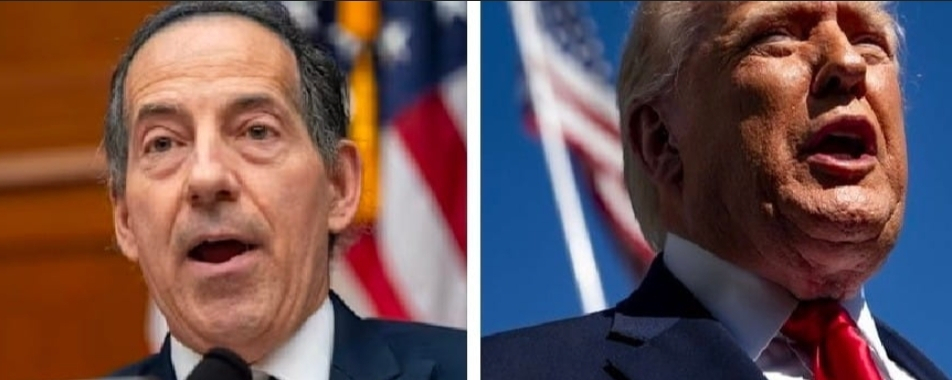
When I look at a move like Representative Jamie Raskin introducing a bill connected to this mechanism, the first thing that stands out is not whether it succeeds or fails legislatively. The first signal is that the conversation has shifted upward into constitutional architecture rather than staying within policy debate.
That shift matters.
Because political systems usually absorb conflict through ordinary channels first. Debate, legislation, elections, committees, courts. These are designed to contain disagreement. When actors begin referencing extraordinary constitutional mechanisms, it usually indicates that normal channels are perceived, rightly or wrongly, as insufficient to resolve the tension.
From that angle, the proposal itself functions as a signal amplifier. Even if the probability of full activation of the 25th Amendment process remains low, the act of introducing it changes the informational environment. It tells different audiences that the level of perceived risk or concern has crossed a threshold where continuity mechanisms are at least being discussed publicly.
But here is where the structure becomes more important than the headline.
The 25th Amendment is intentionally difficult to activate. It requires layered institutional agreement. The Vice President and a majority of principal executive officers can initiate a transfer of power under Section 4, but that action is not unilateral in effect. It can be contested, reviewed, and ultimately escalated to Congress, where supermajority thresholds become decisive.
That design is not accidental. It is built on the assumption that removing a president on grounds of incapacity must require overwhelming institutional consensus. Without that, the mechanism could be misused as a political shortcut.
So when I analyze this kind of proposal, I don’t see a simple “on or off” outcome. I see a multi-stage verification system, similar in structure to a high-friction governance protocol. Each layer of approval acts like a checkpoint, ensuring that no single actor can dominate the outcome.
That is also why most discussions around the 25th Amendment rarely translate into actual implementation. The threshold for agreement is extremely high by design.
However, even when the mechanism is not activated, the discussion itself still produces effects.
This is where political signaling becomes important.
In modern political environments, especially highly polarized ones, proposals like this function as narrative events. They reshape how different groups interpret institutional stability. Supporters may see it as accountability. Opponents may see it as escalation. Neutral observers may interpret it as instability or institutional strain. None of these reactions require the mechanism to actually be used. The signal alone is enough to shift perception.
And perception is not isolated from real-world outcomes.
Markets, international observers, institutional planners, and even internal government actors often adjust expectations based on perceived stability. When leadership continuity becomes part of public discourse, even hypothetically, it introduces a layer of uncertainty that spreads beyond politics into economic and strategic interpretation.
But it is also important to separate noise from structure.
A single bill or proposal does not automatically translate into constitutional action. The U.S. system is built with multiple blocking points specifically to prevent rapid executive removal based on short-term political pressure. That is why these discussions often remain at the level of debate rather than execution.
Still, the existence of the conversation itself reveals something important about the current environment.
It suggests that political disagreement is no longer confined to policy direction. It is increasingly extending into questions about leadership legitimacy, capacity, and continuity. That is a higher-order level of political tension because it moves from “what should be done” to “who is capable of doing it.”
From a structural perspective, that is a significant escalation in narrative intensity even if institutional outcomes remain unchanged.
What I find most important in analyzing this is not the individual actors or the immediate legislative prospects. It is the interaction between constitutional design and political temperature.
The system is designed to be slow, deliberate, and resistant to sudden shifts in executive power. Political discourse, however, can move much faster than institutional mechanisms. When those two speeds diverge, you get a gap between perception and reality. That gap is where uncertainty lives.
So even if this specific proposal does not advance far, it still plays a role in shaping how the system is perceived. It becomes part of a larger feedback loop where political statements influence perception, perception influences expectations, and expectations influence behavior across multiple sectors.
In the end, the most important takeaway is not about whether the mechanism succeeds or fails. It is about what its invocation in public discourse represents.
It represents a moment where political tension has reached a level where even the most extraordinary constitutional tools are no longer outside the conversation. And in any system, when exceptional mechanisms enter normal discussion, it signals that the pressure inside the system is being felt more broadly than usual.
That does not automatically mean the system is breaking. But it does mean the system is being tested in public view, where every signal carries weight beyond its immediate legislative reality.