
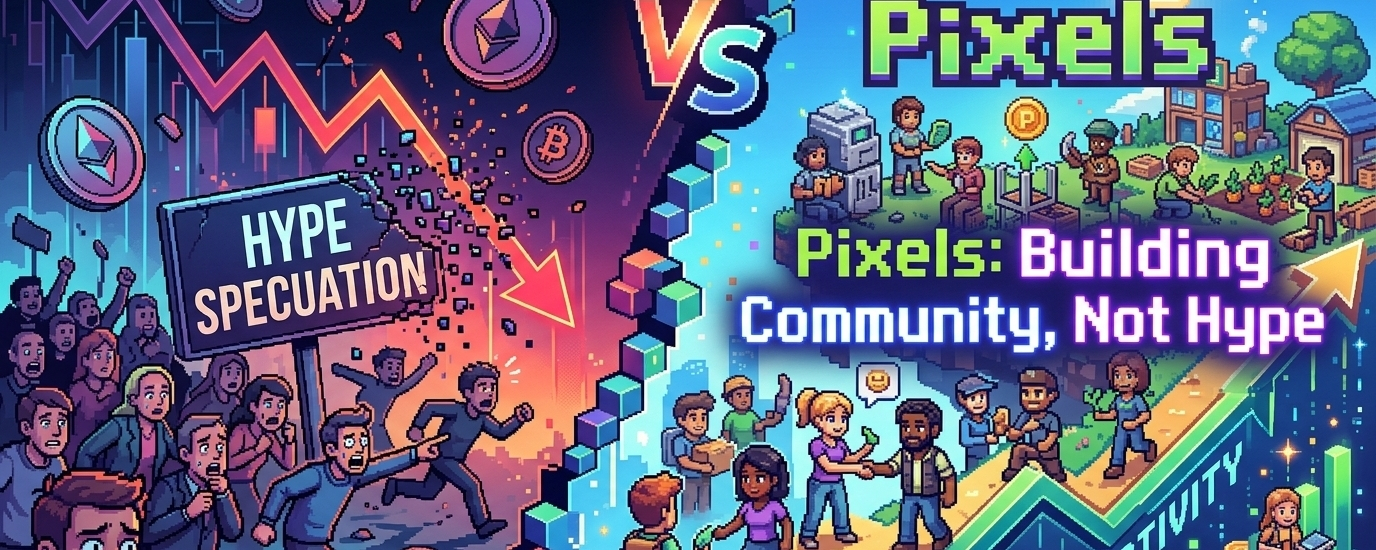
Most Web3 gaming projects don’t fail because of bad ideas — they fail because nobody actually sticks around to use them.
Let’s be real, the majority of these tokens are built for speculation first and gameplay second. That’s why they spike fast and disappear even faster.
@Pixels seems to be taking a different approach, and that’s what makes it worth paying attention to. Instead of forcing token utility, it builds around player activity and lets the ecosystem develop from actual usage. That’s a subtle difference, but it matters more than people think.
The moment a game becomes enjoyable and keeps users engaged, everything else starts to align. This is where $PIXEL becomes interesting — not as a hype asset, but as something tied to what players are doing inside the game.
Another thing most people ignore is retention. If users don’t stay, the economy collapses. If they do stay, demand can build naturally. That’s the real test for any Web3 gaming project.
Right now, pixel is still in the phase where people are watching more than understanding. But the projects that quietly build during this stage are usually the ones that surprise later.