
I didn’t expect to spend this much time thinking about how value flows inside Pixels, but it kept coming back to me after a few sessions. At first everything looks straightforward. You use energy, do actions, get resources and some PIXEL. It feels clean, almost like effort = reward, nothing too complicated.
But that feeling doesn’t really last once you start pushing it a bit.
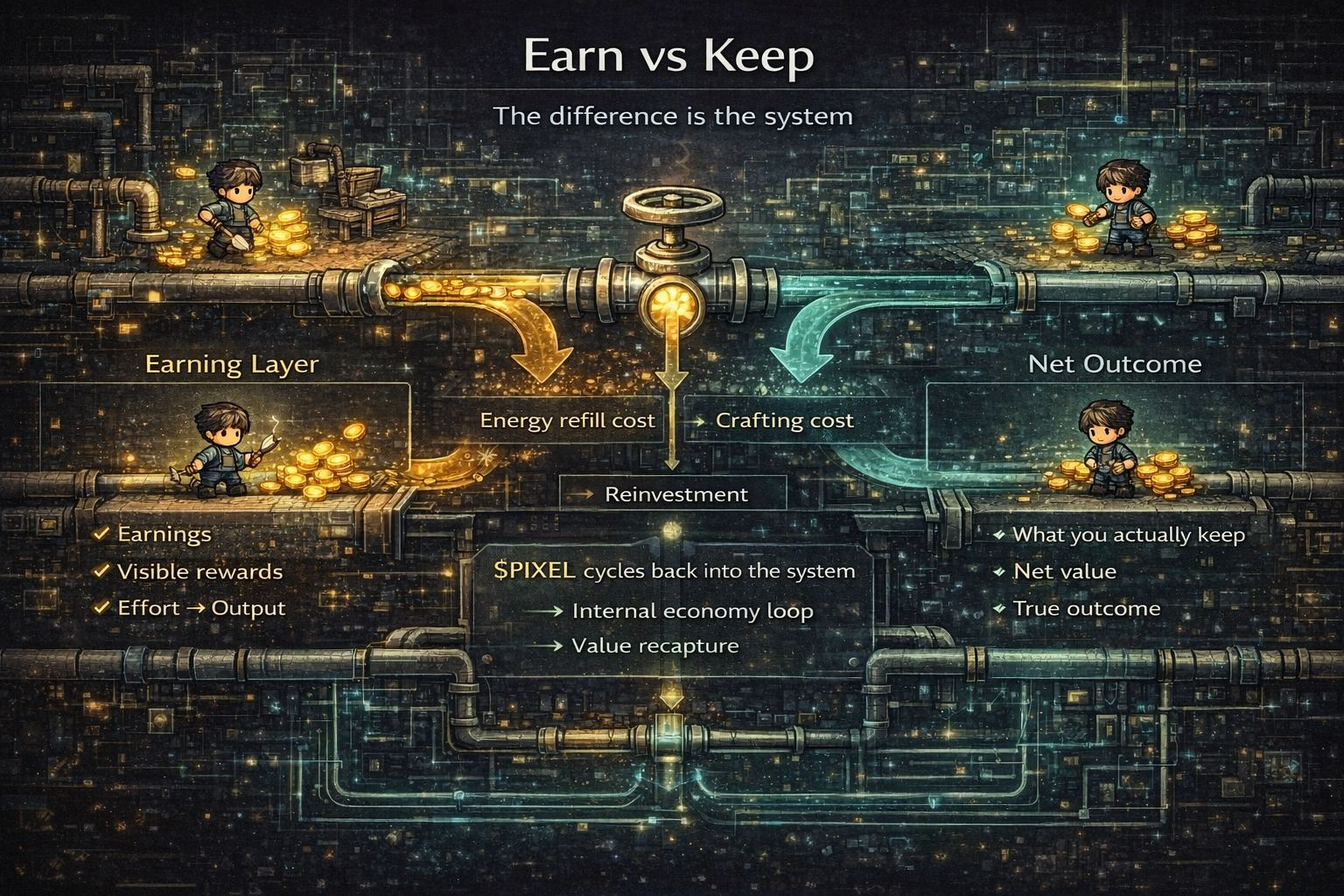
The moment I tried to go beyond just natural energy, things started to feel different. Energy stopped looking like a simple limit and more like something that quietly controls how far you can go without paying for it in some way. Refilling energy seems harmless at first, like you’re just speeding things up, but over time it starts to change how you think about what you’re actually earning.
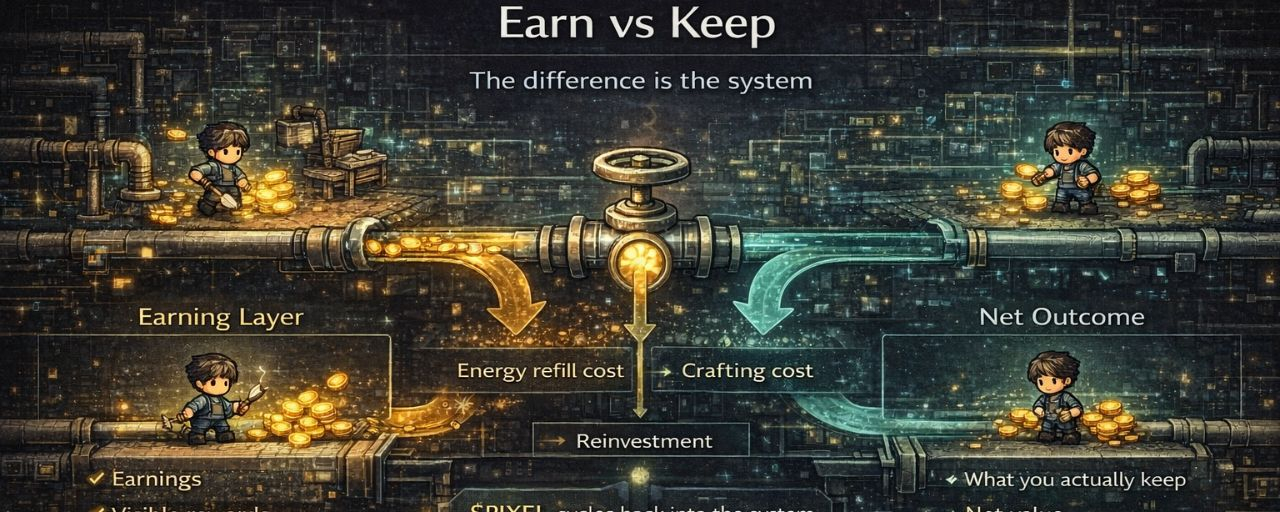
I caught myself looking less at how much I was getting and more at what I was actually keeping. And that’s where it gets a bit strange. Two players can be doing similar things, both earning, but their outcomes aren’t really the same. One is just playing within the natural loop, the other is constantly reinvesting to do more. On the surface, the second one looks like they’re ahead. But when you think about the cost behind that extra output, it’s not as clear anymore.
The system doesn’t really spell this out either. It shows rewards clearly, but it doesn’t push you to think about the cost of maintaining that pace. That part only shows up when you start optimizing, when you try to scale what you’re doing. And by that point, you kind of realize the loop isn’t just about doing more, it’s about how you choose to move inside it.
The more I sit with it, the more it feels like Pixels isn’t trying to maximize how much it gives out. It feels like it’s shaping behavior instead. PIXEL doesn’t just flow outward as rewards, it keeps getting pulled back into the system through energy, crafting, small progression decisions. It’s a loop that feeds into itself, and depending on how you play, you either stay within it or start trading part of your output to push further.
I’m not even sure every player notices this early on. It’s easy to just focus on the visible numbers and assume that’s the whole picture. But once you start asking what you’re actually keeping after all the inputs, the structure feels different.
And that’s probably the part I find most interesting. Not how much you can earn, but the gap between what you see and what you actually walk away with. It’s subtle, but it changes how the whole system feels over time.
I’m still watching how it plays out, but it doesn’t feel like a system that inflates quickly. It feels slower, a bit more dependent on how well you understand it rather than how hard you push it.