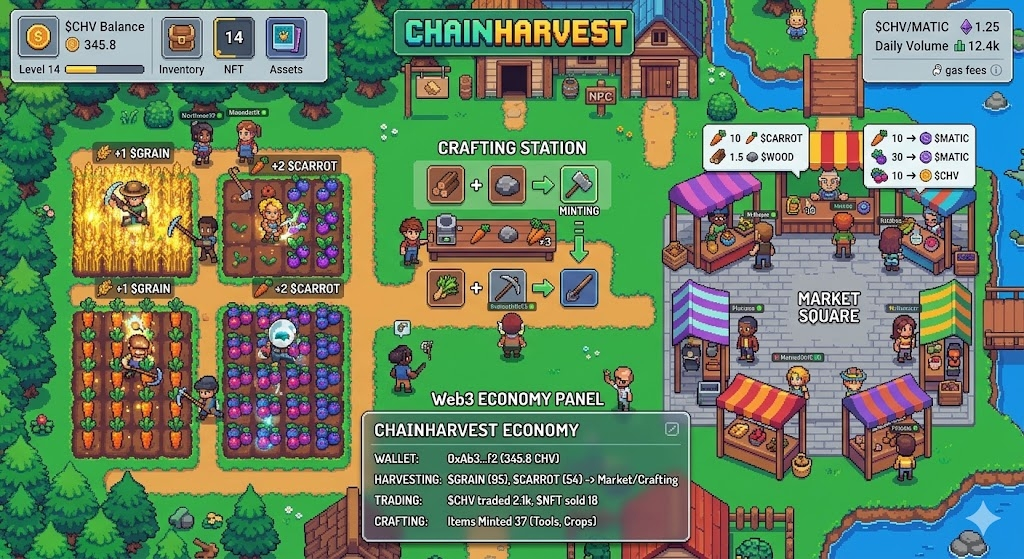
From everything I’ve explored in the Web3 gaming space, Pixels ($PIXEL) feels fundamentally different—and that’s exactly why I find it so compelling. Instead of chasing hype or overcomplicating blockchain mechanics, Pixels focuses on building something that actually works: a scalable, engaging, and economically meaningful gaming ecosystem.
What stands out to me first is its “game-first” approach. Built on the Ronin Network, Pixels delivers a smooth and accessible experience that doesn’t feel like a typical blockchain product. It feels like a real game—an open-world environment centered around farming, exploration, and creation. But behind this simplicity lies a well-structured system where every action contributes to a broader, player-driven economy.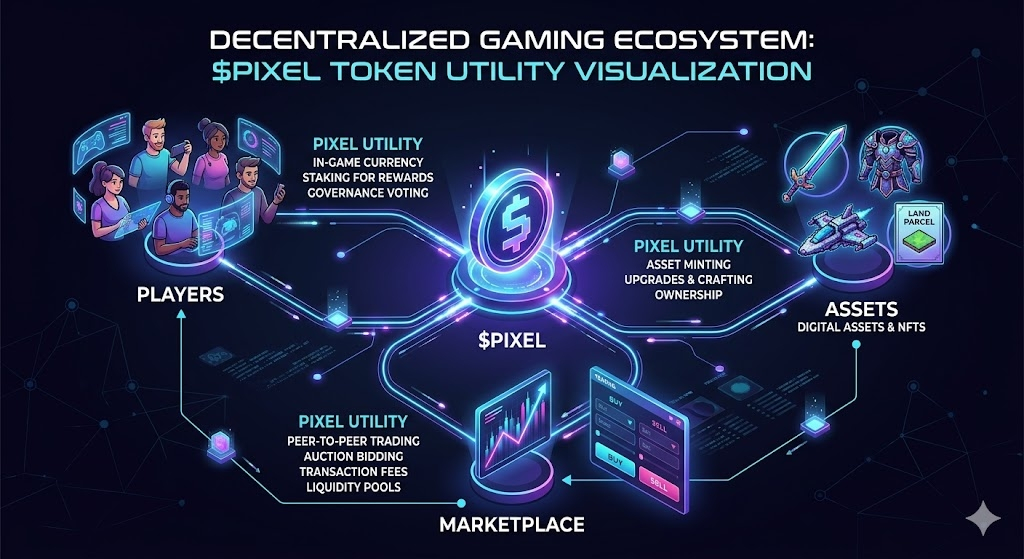
In my view, the real strength of Pixels lies in how it uses $PIXEL. This isn’t just another token designed for speculation. It functions as the backbone of the entire ecosystem. Whether it’s facilitating in-game transactions, enabling upgrades, or supporting governance, $PIXEL acts as a coordination layer that connects players, resources, and value. That shift—from token as a tradable asset to token as infrastructure—is something I believe will define the next phase of Web3.
Technically, the choice of Ronin Network is also a major advantage. With low fees and high throughput, it removes the friction that has limited many blockchain games in the past. Players can interact, trade, and progress without constantly thinking about transaction costs or delays. This creates a seamless experience that feels closer to Web2, while still maintaining the core benefits of decentralization and ownership.
Another reason I appreciate Pixels is its clear focus on scalability and user adoption. It’s not just a concept or a roadmap—it’s already demonstrating real traction with an active and growing player base. The in-game economy is functioning, and more importantly, it’s evolving. The team appears committed to continuous development, which is critical in a space where many projects lose momentum after initial hype.
What I find most impressive, though, is how naturally Pixels introduces the concept of ownership. Players are not just spending time—they’re creating value. Resources, assets, and progress all have significance within the ecosystem. This creates a more meaningful connection between the player and the game, something traditional gaming models have never fully achieved.
From my perspective, Pixels represents what Web3 gaming should aim to become: simple on the surface, powerful underneath. It proves that you don’t need to sacrifice gameplay to integrate blockchain, and you don’t need unsustainable incentives to build an active economy.
As the industry continues to evolve, I genuinely believe Pixels ($PIXEL) is setting a strong example. It’s not just building a game—it’s building a system where technology, economy, and user experience are aligned.
For me, that’s what makes Pixels worth paying attention to.