
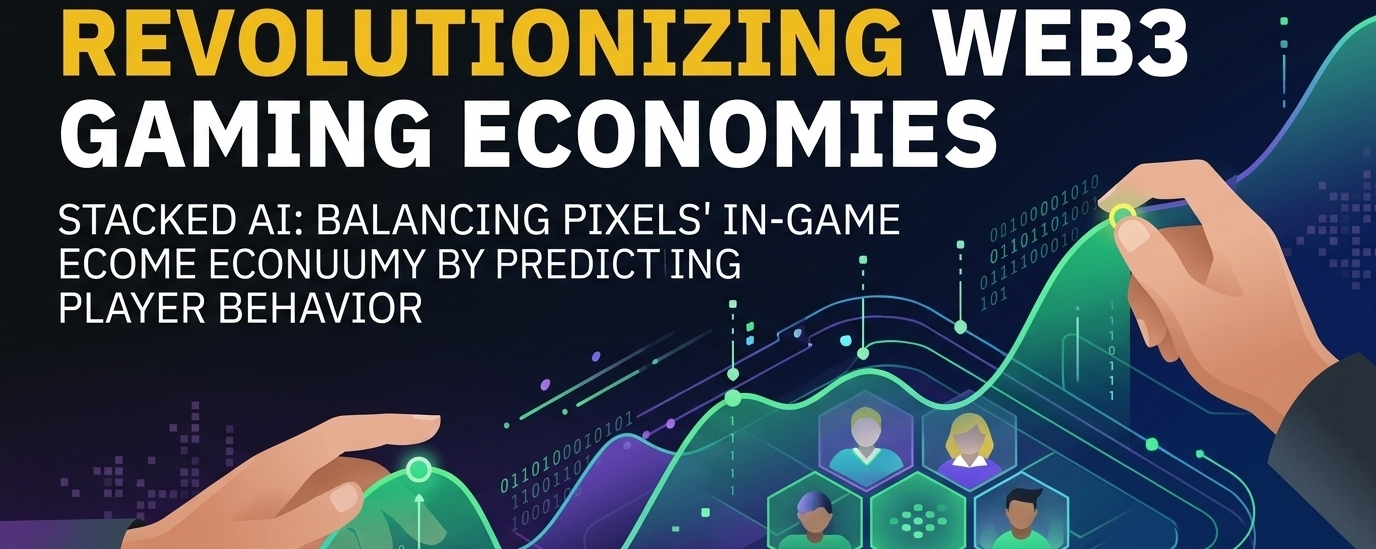


From what I’ve seen while spending time around @Pixels , Stacked isn’t really about predicting players in a strict, data-science sense it feels more like a system that continuously reads how people behave and adjusts before things get out of balance. In most Web3 games I’ve tried, reward systems are fixed. You know exactly what actions give you the highest return, and over time, players naturally optimize around that. The result is always the same: everyone farms the most efficient path, rewards get diluted, and the economy starts feeling unstable. I’ve personally played through that cycle more than once, and it becomes predictable after a while.
With Stacked, the experience feels different because the system doesn’t stay static. Instead of letting players fully exploit one strategy, it seems to respond to patterns like increased farming, resource hoarding, or sudden spikes in activity. I can’t see what’s happening behind the scenes, but from a player perspective, it feels like the game is quietly adjusting the environment based on how people are interacting with it. That alone changes how you approach the game, because there’s less certainty that one method will always remain the best.
What stood out to me is that this doesn’t feel like hard control it’s more subtle than that. Rewards don’t just suddenly disappear, but they don’t spiral out of control either. In other GameFi projects, I’ve noticed that once players figure out the most profitable loop, the system basically breaks under its own weight. Here, it feels like there’s an attempt to smooth those extremes before they become a real problem.
Another interesting effect is how it influences player mindset. When a system is completely predictable, you treat it like a formula. When it’s adaptive, you start paying more attention to timing, balance, and long-term decisions. I found myself thinking less about “max extraction” and more about maintaining steady progress, because the environment doesn’t feel like something you can fully game forever.
I wouldn’t go as far as saying it can perfectly predict behavior, because player actions can always be unpredictable, especially as more people join. But using AI in this way as a responsive layer that learns from activity makes more sense to me than just increasing or decreasing rewards manually. It creates a kind of feedback loop where the system evolves alongside the players instead of lagging behind them.
Of course, it’s still early, and these kinds of systems only really prove themselves over time. But from what I’ve experienced so far, Stacked doesn’t feel like a feature added for hype. It feels like an attempt to solve a problem that most Web3 games haven’t handled well keeping player behavior and the in-game economy from drifting too far out of sync. And if that balance holds, it could quietly play a big role in why PIXELS manages to last longer than most .
