
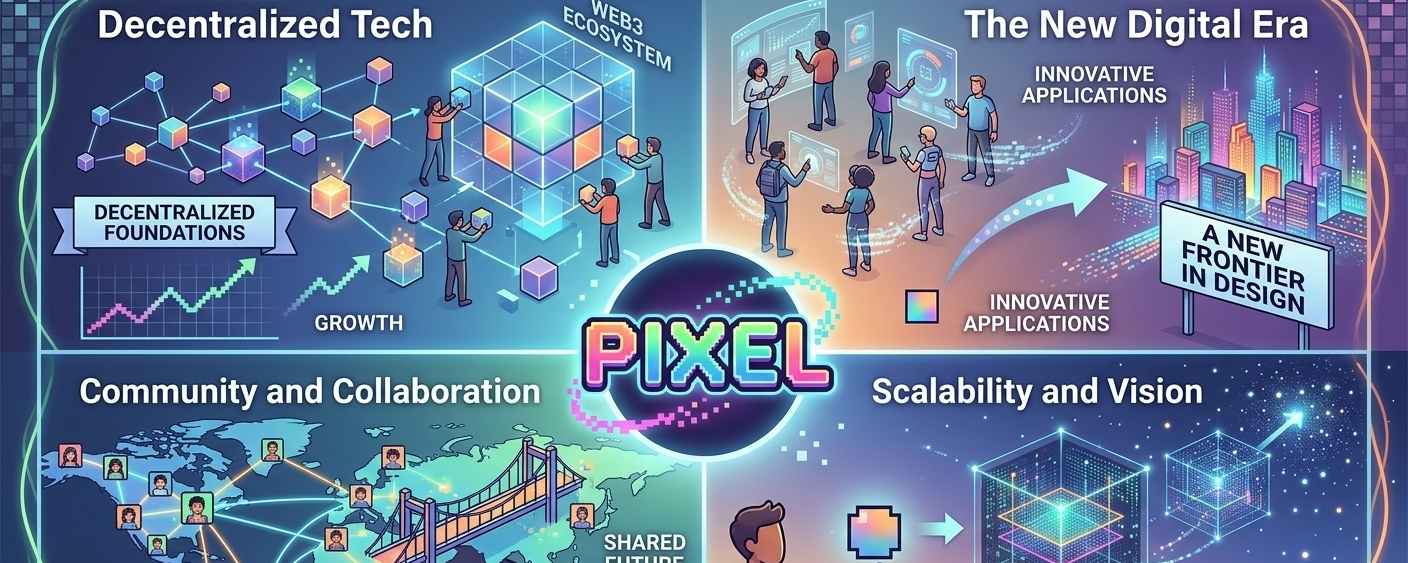
I think many individuals encounter a meme coin with a playful design and quickly scroll past it... That reaction is perFectly acceptable. Early stages often appear this way. If you take a moment to explore what PIXEL is genuinely creating — the gaming infrastructure on the blockchain, the mechanisms for a player-driven economy, and its approach to identity and ownership within an interactive world — it starts to seem less like just another token and more like a foundational element with a vibrant exterior. This reflects a broAder trend: significant innovations often don't make a big splash right from the start. Take Axie Infinity, which initially seemed like just a pet game until it demonstrated that millions could thrive within a blockchain ecoNomy... PIXEL resonates with me in a similar way. It’s not about the rising price — that’s not my primary concern right now — but rather the fundamental principles that are guiding it toward something substantial. The gaming industry is unique in that users are already accustomed to buying, trading, and valuing digital goods. The transition to true ownership feels less daunting in this context compared to finance or personal identity, as people inherently understand it. This gives PIXEL a significant advantage that many foundational projEcts would envy. What PIXEL offers is a genuine space for engagement within that economy. It’s not merely about possessing a token or staking and waiting for returns; it’s about conStructing a farm, establishing a business, and creating a presence. This fosters a different level of engagement and loyalty that doesn’t rely on artificial incentive schemes. I’m not predicting market peaks or troughs. What I want to emphasize is that the design approach appears to be forward-thinking, aiming five years ahead instead of just five weeks. In this industry, such foresight is surprisingly rare.
One aspect that often goes unnoticed is the land ownership mechanism... In PIXEL, land serves a practical purpose rather than merely being decorative. PlaYers can cultivate it, enhance it, rent it out to others, and earn rewards in a way that closely resembles real-world economies. This is not just a game feature; it is a system of property rights operating on the blockchain. Additionally, there is the guild structure. PIXEL has established coordination frameworks that allow players to pool resources, share land, and collaborate. This showcases decentralized organization within the game itself and is developing organically, driven by incentives rather than ideology. Many DAO models struggle to achieve such active participation, but PIXEL has seamlessly integrated it into the gameplay.
The crafting and resource economy is also noteworthy... Each item follows a supply chain: raw materials are collected, refined, exchanged, and transformed into finished products. This entire process is directed by players, without a central mint saturating the market. Scarcity is inherent, not artificially created. This distinction is important when considering long-term token circulation and the genuine accumulation of value.
One also important that the social component is often undervalued... PIXEL has cultivated genuine retention through a shared community identity. Players build reputations, form relationships, and create histories within the game world. This social fabric is incredibly difficult to replicate. You can duplicate a contract, but you cannot replicate a culture. When you combIne all these elements, what you end up with is not simply a game. It is a jurisdiction. It is a realm with its own economy, governance principles, property rights, and social customs. Such a phenomenon is not commonly encountered in the Web3 space.