
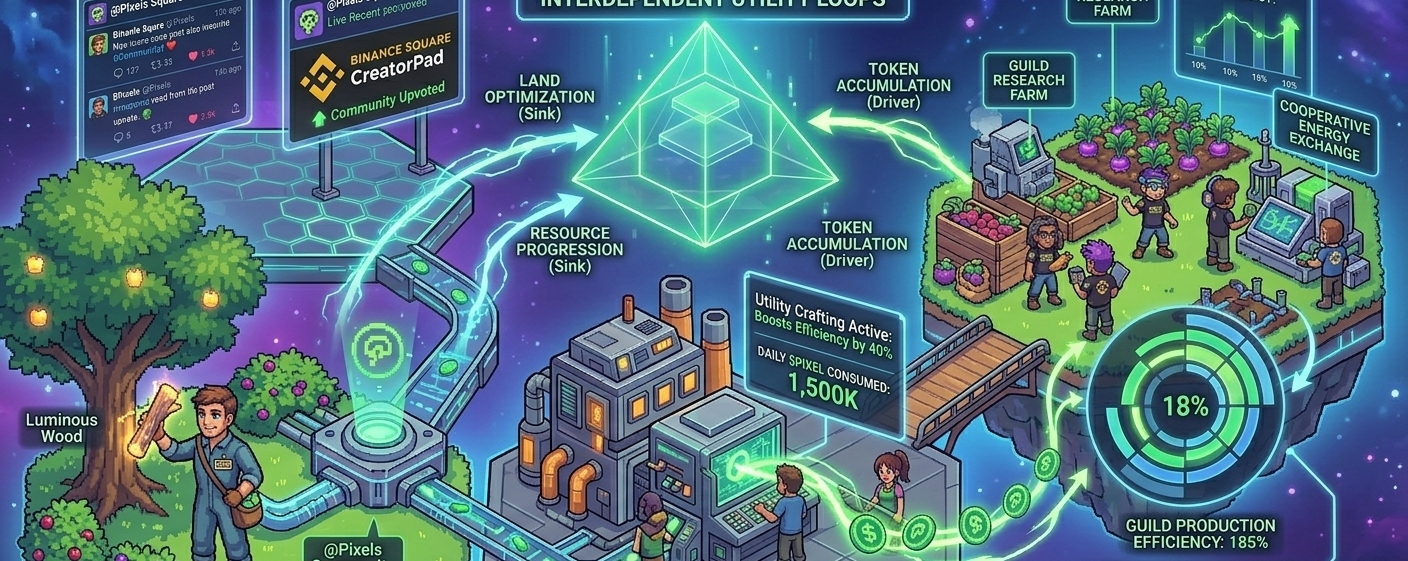

The rise of Web3 gaming has often been characterized by explosive short-term growth followed by unsustainable economic models. However, when we analyze @Pixels, it becomes evident that this project is breaking that mold by focusing on a deeper, multifaceted concept I like to call "Stacked" ecosystem utility. This isn't just about farming or casual crafting; it is about creating complex, interdependent economic loops that thrive on the $PIXEL token.
What truly differentiates Pixels from the pack is how resource management and land utility are intricately designed to serve as primary sinks and drivers for the entire ecosystem. Unlike P2E models that suffered from runaway token inflation, the @Pixels development team has prioritized a robust meta-economy that balances creation, consumption, and utility.
We can see this in the three core pillars that drives PIXEL value:
### 1. Sustainable Resource Management
In the initial phases, raw material gathering (like wood and berries) was straightforward. Now, the economic necessity of high-level crafting recipes means raw materials are inputs for more valuable assets. This creates an initial burn mechanism where the raw resources themselves have a monetary dynamic. Players are not just hoarding; they are actively consuming to progress.
### 2. High-Level Utility Crafting and Token-Sinks
This is the heart of the "Stacked" philosophy. Advancing in the game is not just a function of time spent; it requires $PIXEL. Whether a player is unlocking premium crafting stations, upgrading speed or efficiency, or utilizing advanced technology like the Miniturizer, PIXEL is the essential fuel. The crafting system ensures that as players desire more efficiency or access to high-tier assets, the demand for $PIXEL scales with their ambition. This moves $PIXEL utility beyond simple cosmetic purchases into critical-path gameplay functionality.
### 3. Integrated Land Dynamics and Community Cooperation
Land is not a passive asset in @Pixels. Guilds and communities are optimizing production. This brings deep economic interdependence. A landowner may specialize in farming, but they require resources (perhaps energy or crafting components) that only another player on another land type can provide. High-efficiency cooperation will be essential to compete in the broader meta-economy. The value of land itself will be driven by its productivity and its integration into these community-optimized supply chains.
The "Stacked" ecosystem proves that sustainable Web3 gaming requires moving past "Play-to-Earn" into "Play-and-Prosper," where the economy is driven by authentic player desire for progress and utility. By prioritizing this deep infrastructure, Pixels is defining the standard for how player-owned virtual economies can achieve long-term viability.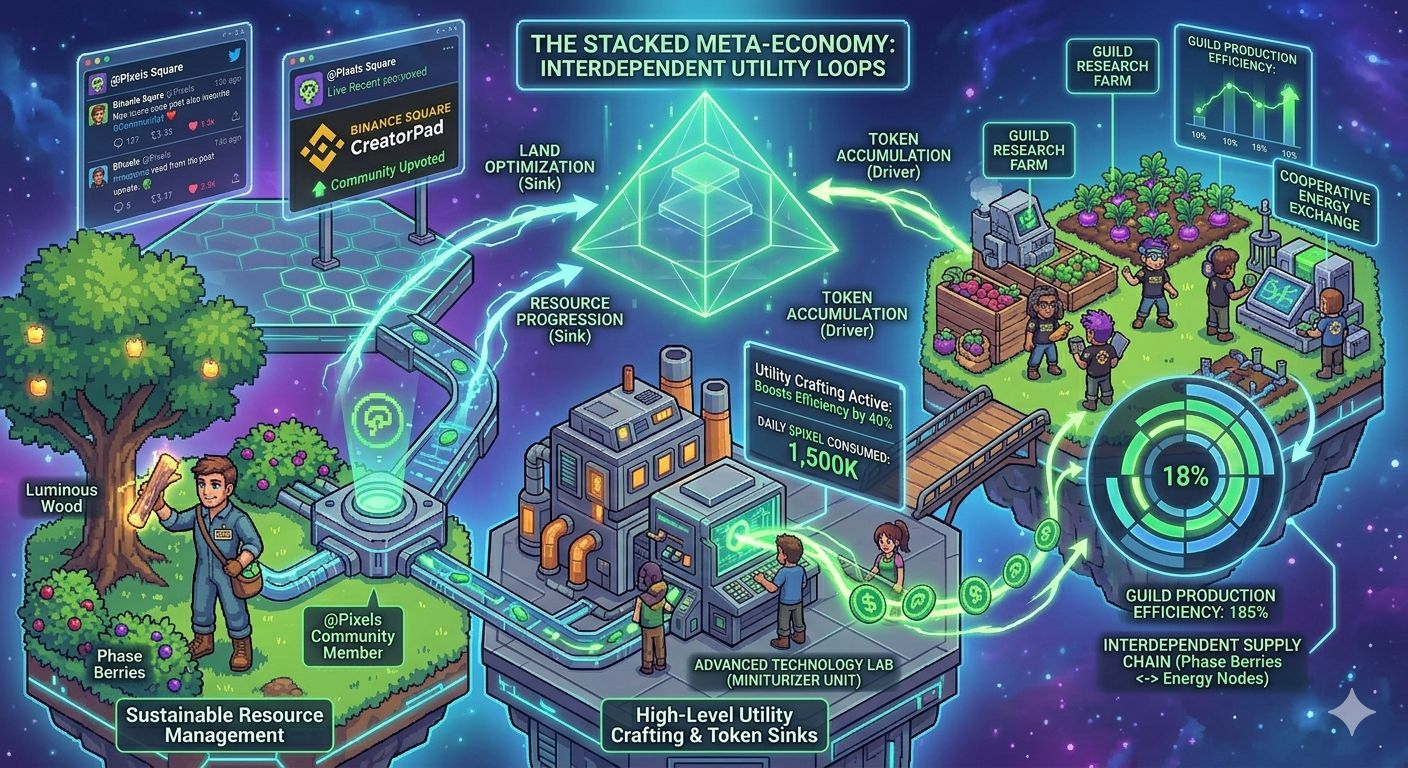
What are your thoughts on the meta-economy? How is your guild preparing for the next layer of complexity?