
I want to talk about a number that keeps getting mentioned in Pixels coverage without anyone actually stopping to examine what it means.
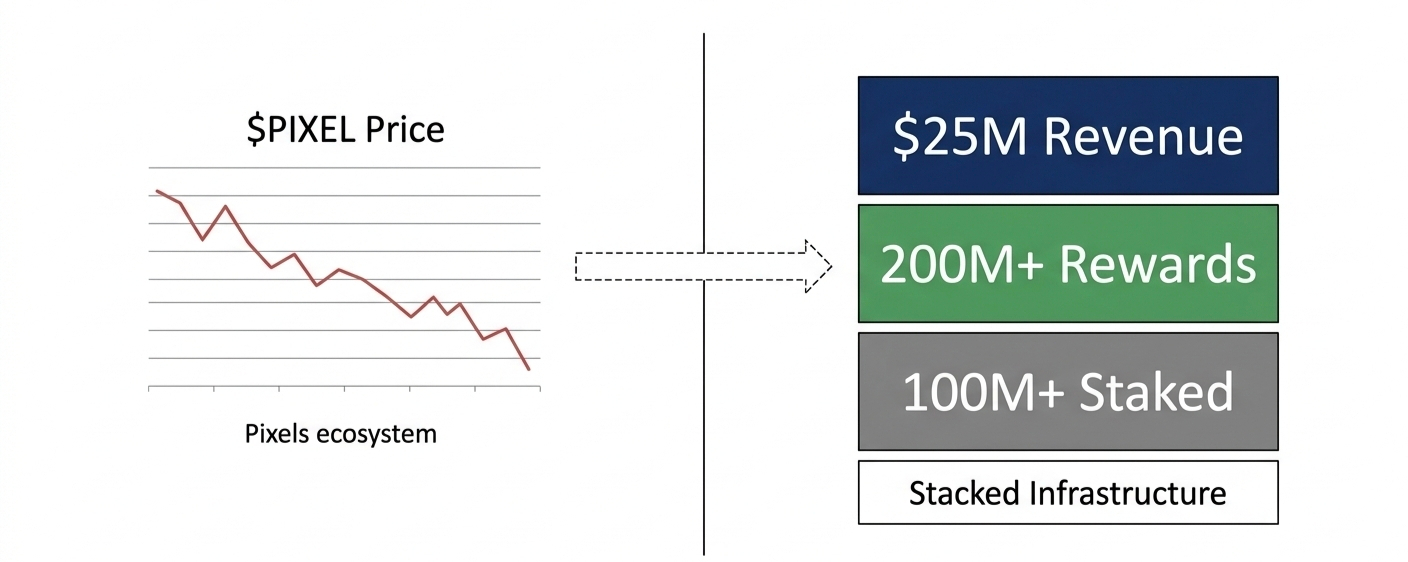
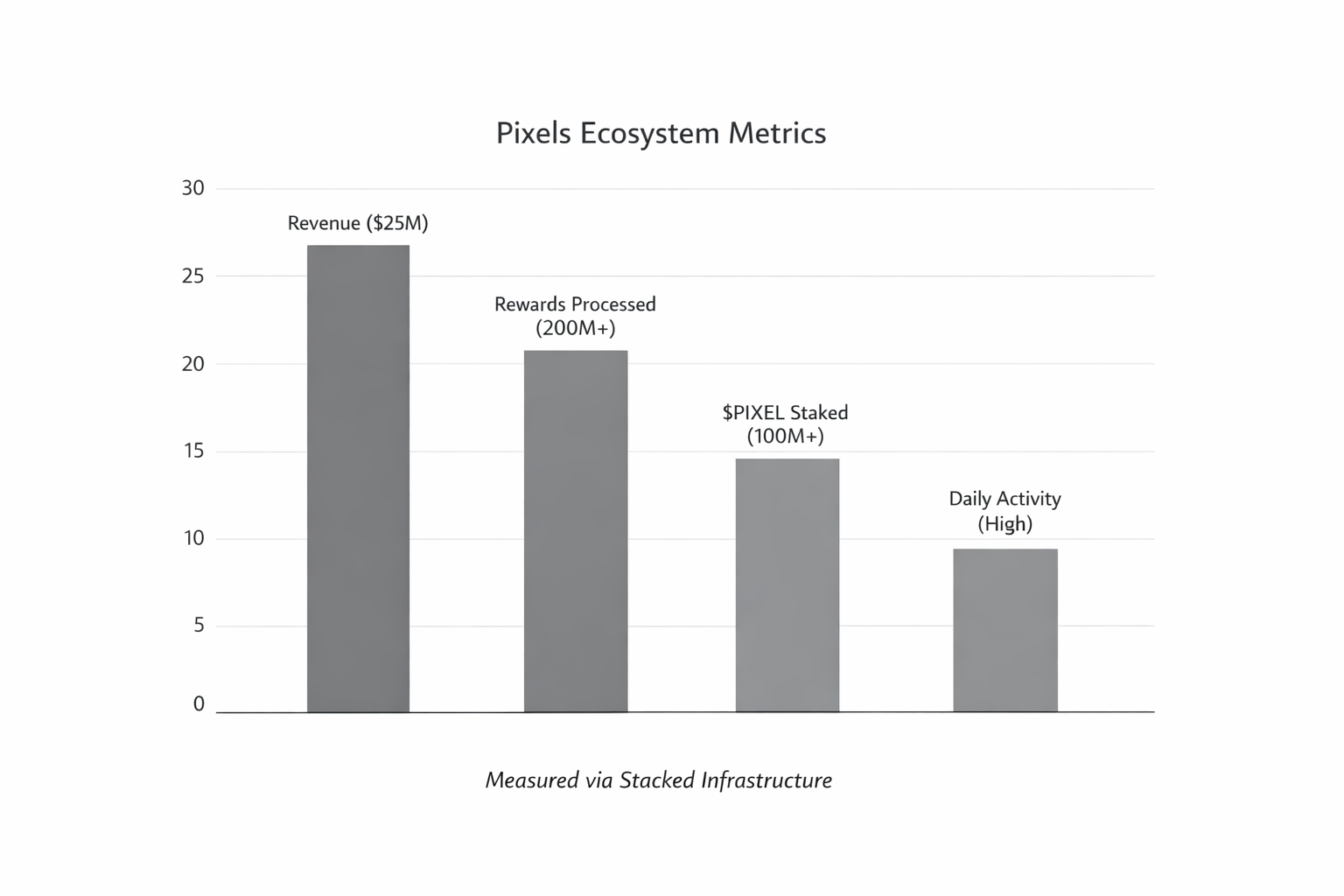
$25 million in revenue. Generated inside the Pixels ecosystem through Stacked-powered systems.
Most crypto gaming projects would put that number in a headline and move on. Pixels mentions it almost in passing — buried in product documentation, referenced briefly in ecosystem updates. That restraint is either very confident or very intentional. I think it is both.
Because $25 million in a Web3 game is not the same thing as $25 million in a traditional game. And understanding the difference tells you something important about where $PIXEL actually sits right now.
In traditional gaming, revenue is relatively straightforward. Players pay for games, expansions, cosmetics, battle passes. The money flows from player wallets to studio accounts. The relationship is clean and the metric is easy to interpret.
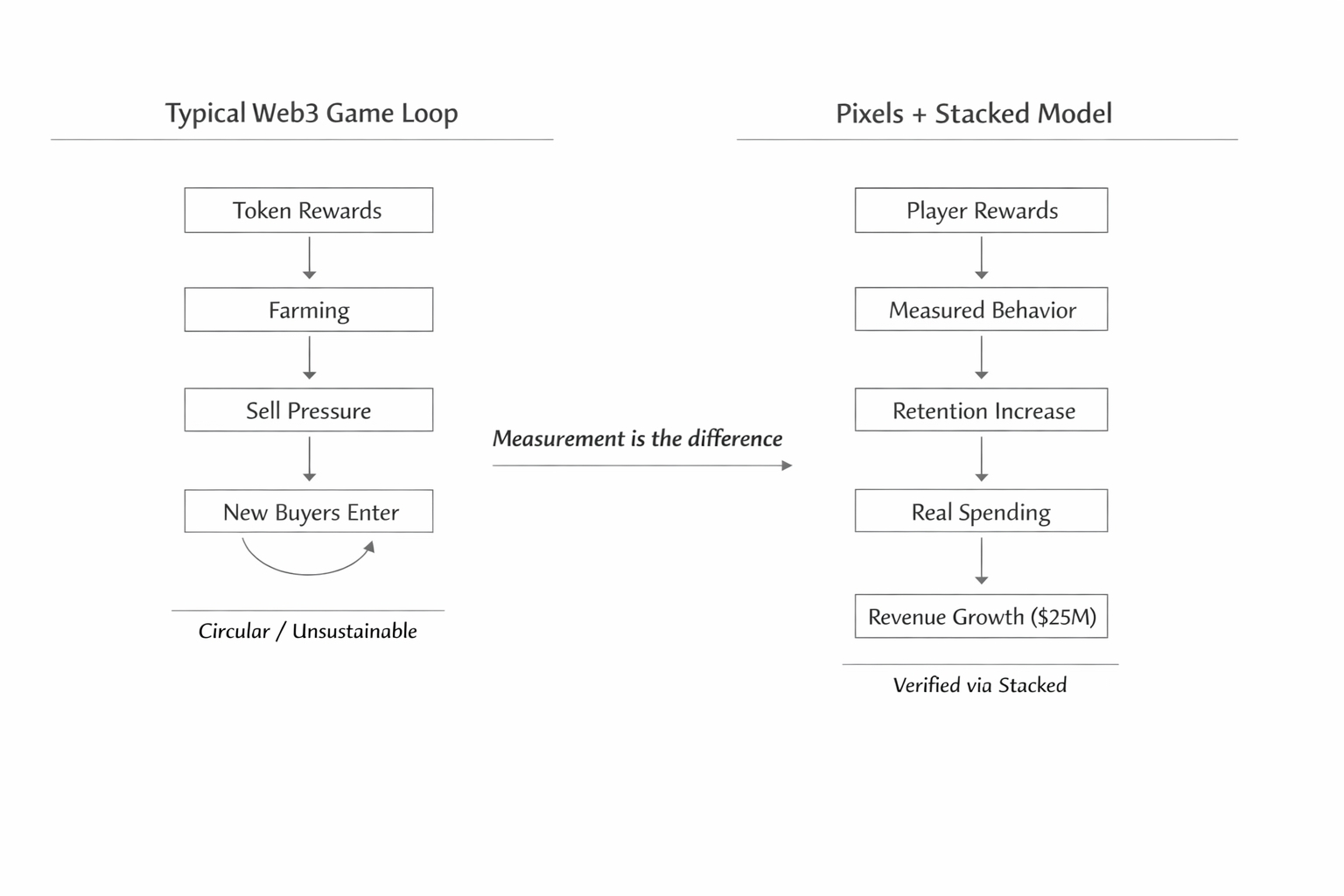
In Web3 gaming, revenue is complicated by the fact that token economies can inflate numbers artificially. A project can generate enormous transaction volume by designing incentives that push tokens around in circles — player farms token, token gets sold, new player buys token to farm, repeat. The gross numbers look impressive. The underlying value creation is zero or negative. The ecosystem is eating itself while the dashboard shows green.
PIXEL's $25 million does not come from circular token flows. It comes from Stacked-powered reward campaigns that were designed specifically to measure whether rewards produce real retention improvements, real revenue increases, real lifetime value growth. The Pixels team built the measurement infrastructure before they made the revenue claim. That ordering matters.
Think about what that actually required. To make a defensible revenue claim in Web3 gaming, you need to be able to separate genuine player spending from token speculation, identify which reward interventions actually changed player behavior versus which ones just temporarily spiked engagement metrics, and demonstrate that the value entering the ecosystem consistently exceeds the value leaving it.
Most Web3 gaming projects cannot do any of those three things because they never built the infrastructure to measure them. Pixels built Stacked specifically because they needed to measure them. The revenue figure is a byproduct of the measurement system, not a marketing claim layered on top of it.
Now consider what Pixels looks like by the numbers beyond that revenue figure.
Over 200 million rewards processed through the ecosystem. More than 100 million PIXEL tokens staked within weeks of the staking system launching. Daily active wallets that made Pixels one of the most active applications on Ronin by transaction volume — not during a hype cycle, but during ordinary gameplay. A CertiK security rating of 4.6, which matters more than most token holders acknowledge because smart contract vulnerabilities have destroyed more Web3 gaming projects than bad tokenomics have.
Each of those numbers individually is interesting. Together they describe something specific — a game ecosystem that has achieved genuine scale, not manufactured scale.
And here is the part that most PIXEL analysis misses entirely.
The token is currently trading at roughly 99% below its all-time high of $1.02. That fact gets interpreted two ways. Bearish interpretation: the project failed, the hype is gone, the token is broken. Bullish interpretation: the infrastructure matured while the price collapsed, creating a disconnect between fundamental development and market valuation.
I am not going to tell you which interpretation is correct. Token prices in crypto gaming are influenced by factors that have nothing to do with the quality of the underlying product — broader market sentiment, Bitcoin's price stability, sector rotation, unlock schedules. All of those headwinds are real for $PIXEL right now.
What I will say is that the $25 million revenue figure, the 200 million rewards processed, the 100 million tokens staked, and the Stacked infrastructure opening to external studios represent a different kind of evidence than price action does. Price action tells you what the market thinks today. Infrastructure tells you what was actually built while everyone was looking at the chart.
The Pixels team spent the period of maximum price pain building the measurement system, refining the economic model, launching staking, and opening the ecosystem to external games. That is not the behavior of a team managing a declining asset. It is the behavior of a team that believes the infrastructure they are building is worth more than the current price reflects.
Whether they are right is a question PIXEL holders will answer over the next twelve to eighteen months. But the evidence they have produced to support that belief is more concrete than almost anything else I have seen in Web3 gaming.
