
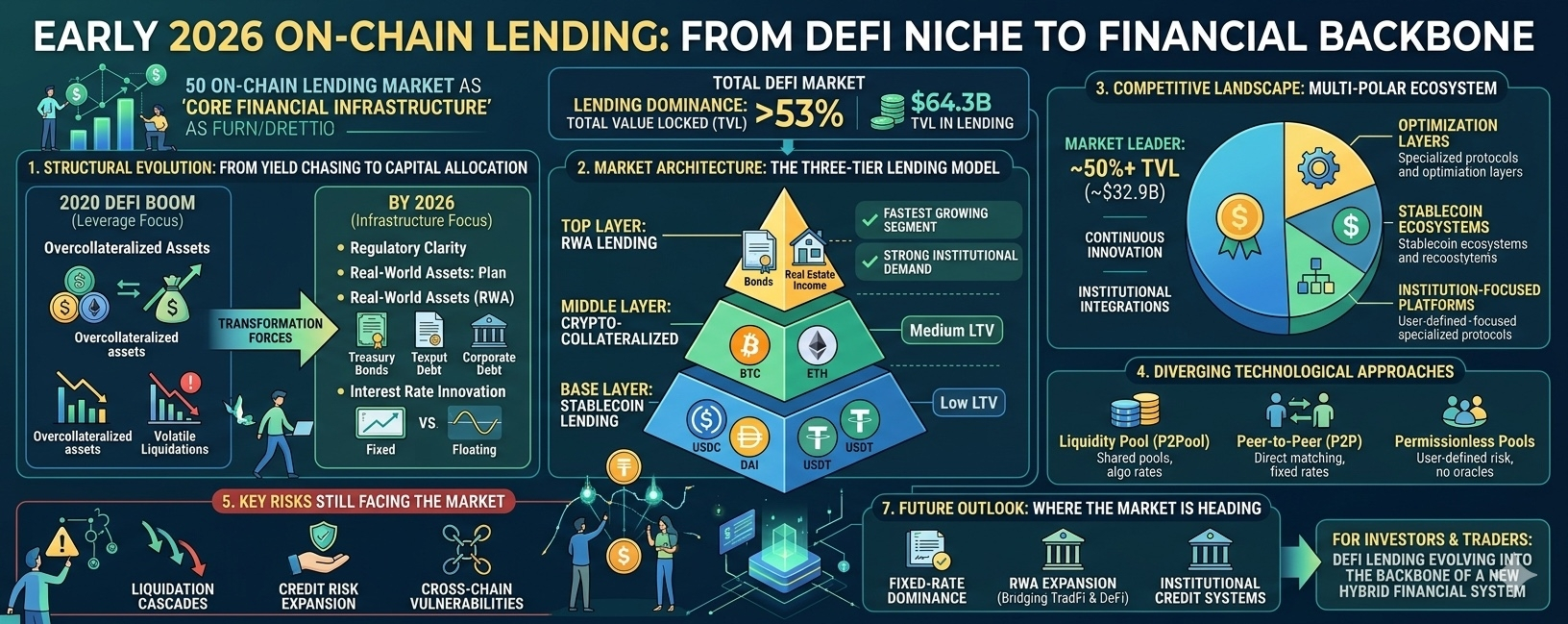
Sektor pinjaman on-chain telah secara tegas bertransisi dari niche DeFi yang spekulatif menjadi salah satu pilar paling penting dari sistem keuangan digital. Pada awal tahun 2026, protokol pinjaman menguasai lebih dari $64,3 miliar dalam total nilai terkunci (TVL)—lebih dari 53% dari seluruh ekosistem DeFi—menyoroti dominasi dan kematangan mereka.
Evolusi ini bukan hanya tentang skala. Ini mencerminkan pergeseran struktural yang lebih dalam: dari alat leverage kripto berisiko tinggi ke infrastruktur keuangan kelas institusi.
1. Evolusi Struktural: Dari Leverage ke Infrastruktur
Pada fase awal selama ledakan DeFi 2020, pemberian pinjaman on-chain terutama melayani pengguna crypto-natif yang mencari leverage. Modelnya sederhana:
Overcollateralize aset
Meminjam stablecoin
Reinvestasikan ke dalam strategi yang menghasilkan hasil
Meskipun sangat menguntungkan di pasar bullish, sistem ini terbukti rapuh selama penurunan. Peristiwa seperti crash pasar 2022 mengungkapkan:
Gelombang likuidasi
Posisi yang terlalu terlever
Risiko kontagion sistemik
Apa yang Berubah?
Pada tahun 2026, tiga kekuatan utama membentuk kembali sektor ini:
1. Kejelasan Regulasi
Kerangka kerja di wilayah utama meningkatkan jalur kepatuhan
Modal institusi mendapatkan kepercayaan untuk memasuki DeFi
2. Kebangkitan Aset Dunia Nyata (RWA)
Aset yang ter-tokenisasi seperti obligasi perbendaharaan dan utang korporat masuk ke DeFi
RWAs kini melebihi $18,5 miliar di pasar pinjaman
3. Inovasi Suku Bunga
Pergeseran dari suku bunga yang sepenuhnya mengambang
Munculnya model suku bunga tetap dan hibrida
Penyelarasan yang lebih baik dengan sistem keuangan tradisional
Transformasi ini menandai pergeseran dari “pengejaran hasil” → “alokasi modal.”
2. Arsitektur Pasar: Model Pemberian Pinjaman Tiga Tingkat
Ekosistem pinjaman on-chain modern beroperasi dalam hierarki terstruktur:
■ Lapisan Dasar: Pemberian Pinjaman Stablecoin
Aset: USDC, DAI, USDT
LTV: ~80–90%
Segmen risiko terendah
Mesin likuiditas inti DeFi
■ Lapisan Tengah: Pemberian Pinjaman yang Dijamin Crypto
Aset: BTC, ETH
LTV: ~50–70%
Risiko volatilitas yang lebih tinggi
Populer di kalangan pedagang dan arbitrase
■ Lapisan Atas: Pemberian Pinjaman RWA
Aset: obligasi perbendaharaan, pinjaman korporat, pendapatan real estate
Segmen yang tumbuh paling cepat
Permintaan institusi yang kuat
Fokus pada kepatuhan dan stabilitas
Sistem bertingkat ini mencerminkan pasar yang semakin matang di mana risiko terstratifikasi dan diberi harga lebih efisien.
3. Lanskap Kompetitif: Satu Raksasa, Banyak Spesialis
Struktur pasar paling baik dijelaskan sebagai:
“Satu pemain dominan + beberapa pesaing kuat.”
Pemimpin Pasar
Mengontrol sekitar 50%+ dari TVL pinjaman (~$32,9B)
Mempertahankan dominasi melalui:
Inovasi berkelanjutan
Ekspansi lintas rantai
Integrasi institusi
Pesaing yang muncul
Alih-alih bersaing secara langsung, protokol yang lebih baru sedang berspesialisasi:
Lapisan optimisasi yang meningkatkan efisiensi modal
Ekosistem stablecoin yang memanfaatkan strategi hasil
Platform yang berfokus pada institusi menawarkan solusi pinjaman yang sesuai
Ini menunjukkan ekosistem multi-polar, bukan pasar yang dimenangkan satu pihak.
4. Pendekatan Teknologi yang Berbeda
Inovasi dalam protokol pinjaman bercabang menjadi tiga model utama:
■ Model Pool Likuiditas (P2Pool)
Kumpulan modal bersama
Suku bunga yang digerakkan oleh algoritma
Likuiditas tinggi, mudah digunakan
Efisiensi modal yang lebih rendah
Terbaik untuk: pengguna umum dan likuiditas skala besar
■ Model Peer-to-Peer (P2P)
Pencocokan langsung pemberi pinjaman-peminjam
Suku bunga dan durasi tetap
Hasil yang lebih dapat diprediksi
Likuiditas terbatas
Terbaik untuk: kebutuhan pembiayaan terstruktur
■ Kumpulan Tanpa Izin
Tidak ada oracle, tidak ada pemerintahan
Pengguna menentukan parameter risiko
Desentralisasi maksimum
Risiko dan kompleksitas yang lebih tinggi
Terbaik untuk: pengguna tingkat lanjut yang mencari otonomi
5. Risiko Kunci yang Masih Menghadang Pasar
Meskipun telah matang, sektor ini membawa risiko kritis:
■ Gelombang Likuidasi
Penurunan harga yang tiba-tiba dapat memicu:
Likuidasi massal
Ketidakstabilan pasar secara luas
■ Ekspansi Risiko Kredit
Seiring pertumbuhan RWA:
Risiko default masuk ke DeFi
Risiko off-chain menjadi relevan
■ Kerentanan Lintas Rantai
Jembatan memperkenalkan:
Risiko kontrak pintar
Peluang eksploitasi
Risiko ini bertindak sebagai “plafon struktural” untuk pertumbuhan yang tidak terkontrol.
6. Institusionalisasi: Tren yang Menentukan
Perubahan terpenting pada tahun 2026 adalah partisipasi institusi.
Perilaku Regional Terpisah:
Asia: strategi berisiko tinggi yang didorong oleh ritel
Eropa/AS: fokus pada kepatuhan, adopsi institusi
Permintaan institusi:
KYC & solusi kustodi
Audit yang transparan
Instrumen hasil stabil
Ini secara fundamental membentuk kembali:
Profil pengguna
Toleransi risiko
Desain produk
7. Prospek Masa Depan: Ke Mana Pasar Menuju
Tiga medan pertempuran utama akan mendefinisikan fase berikutnya:
■ Dominasi Pemberian Pinjaman Suku Bunga Tetap
Prediktabilitas akan menarik institusi
Paparan terhadap volatilitas yang lebih rendah
■ Ekspansi RWA
Pemberian pinjaman yang didukung oleh perbendaharaan
Properti dan obligasi yang ter-tokenisasi
Jembatan TradFi dan DeFi
■ Sistem Kredit Institusi
Peringkat kredit on-chain
Pemberian pinjaman berbasis reputasi
Persyaratan jaminan yang dikurangi
Kesimpulan Akhir
Pasar pinjaman on-chain tidak lagi eksperimental—ia menjadi infrastruktur keuangan inti. Sementara satu pemain dominan terus memimpin, inovasi di seluruh RWA, pemberian pinjaman suku bunga tetap, dan integrasi institusi dengan cepat membentuk kembali lanskap kompetitif.
Bagi investor dan pedagang, peluang nyata tidak terletak pada hype jangka pendek, tetapi pada pemahaman transformasi yang lebih dalam ini:
Pemberian pinjaman DeFi sedang berkembang menjadi tulang punggung sistem keuangan hibrida yang baru—di mana crypto dan keuangan tradisional bertemu.