
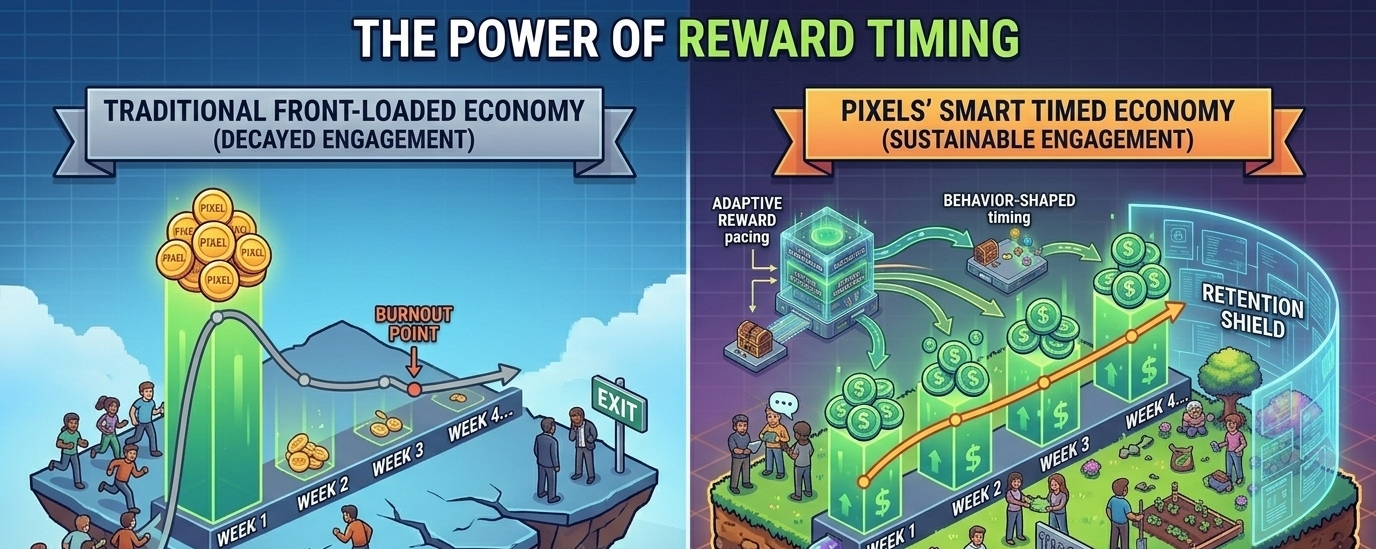


One thing I’ve realized after trying different Web3 games is that rewards alone don’t keep you playing when you receive them matters just as much, if not more.
In most systems I’ve experienced, rewards are predictable and front-loaded. You grind early, earn quickly, and for a short period it feels great. But after that, things slow down. The excitement fades, and so does the motivation to keep logging in. I’ve personally dropped out of games not because rewards disappeared completely, but because they stopped feeling meaningful over time.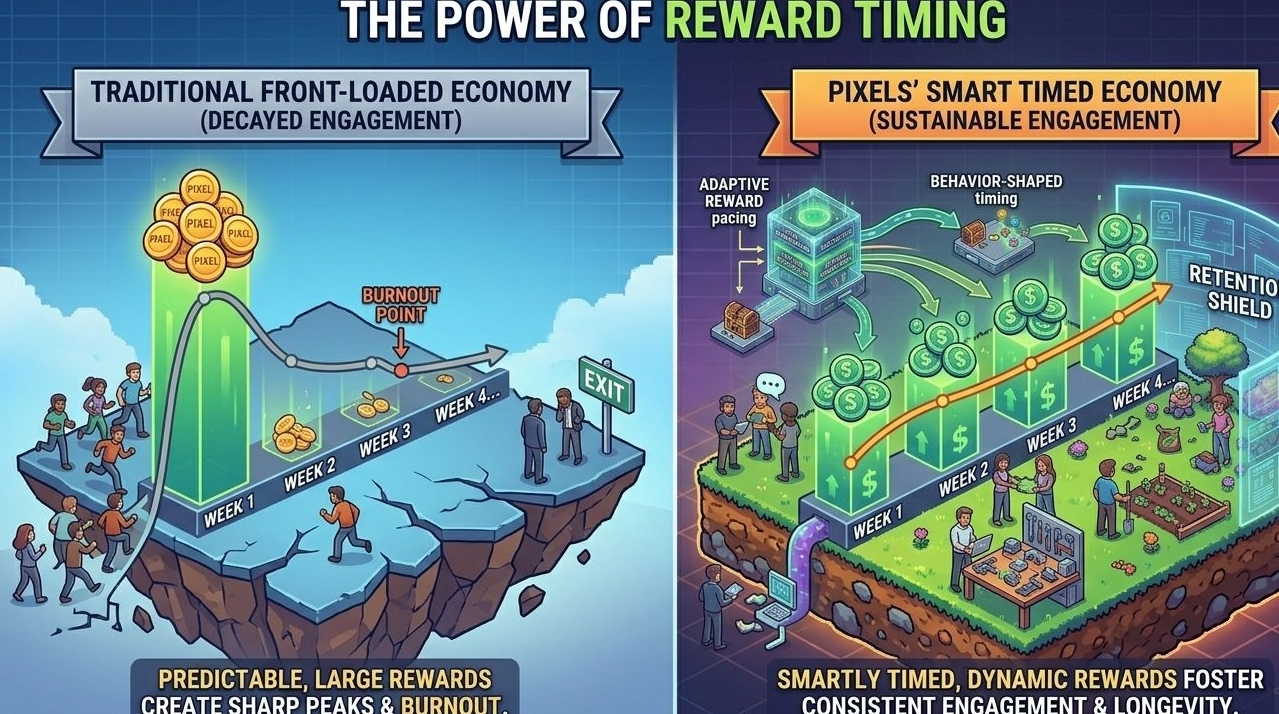
That’s where timing starts to matter.
With PIXELS, what stood out to me isn’t that rewards are necessarily bigger it’s that the experience doesn’t feel like a quick spike followed by a drop. Progress feels more spread out, more consistent. I don’t get the same “rush early, burnout later” pattern that I’ve seen in other GameFi projects.
It feels more balanced.
I can’t see exactly how things are being adjusted behind the scenes, but from a player perspective, it seems like the system is paying attention to how people engage when they log in, how often they return, and how long they stay active. Instead of pushing everything upfront, it feels like rewards are distributed in a way that encourages you to come back.
That subtle difference changes behavior.
When rewards are only about size, players rush to maximize them as quickly as possible. When timing is considered, the experience becomes more about consistency. I’ve noticed myself logging in regularly, not because I’m chasing a big payout, but because the progression feels steady and worth continuing.
Another thing this affects is burnout.
In traditional systems, once you’ve extracted the most valuable rewards, there’s not much reason to stay. But when rewards are spaced in a way that supports ongoing engagement, the game doesn’t feel “finished” as quickly. There’s always a reason to return, even if it’s for small progress.
That likely connects to retention in a big way.
If players don’t feel that sharp drop-off, they’re less likely to leave abruptly. And over time, that kind of consistency probably matters more than short bursts of high activity. It’s not about keeping players for a few intense days it’s about keeping them for weeks or months.
From my experience, @Pixels doesn’t feel like it’s trying to overwhelm players with rewards. It feels like it’s trying to pace them.
And that pacing even if it’s subtle might be one of the most important differences in how the system works.
Because in the long run, it’s not just about how much you give players.
It’s about when you give them a reason to come back.