
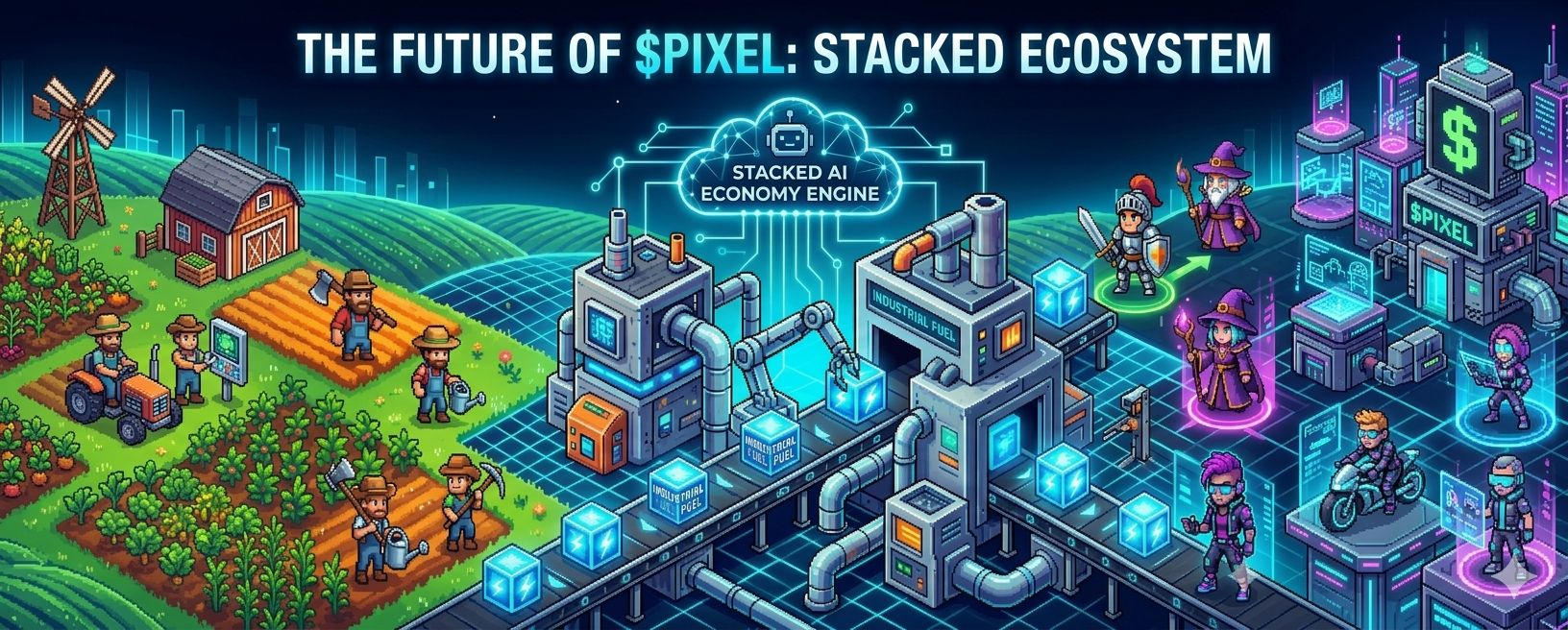
The Web3 gaming landscape is shifting, and @Pixels is leading the charge with its most ambitious phase yet. While many initially saw it as a simple social farming simulator, the introduction of Chapter 3: Industrial Expansion and the Stacked infrastructure has transformed it into a complex, sustainable economic engine on the Ronin Network.
The Power of the Stacked Ecosystem
The "Stacked" infrastructure isn't just a buzzword; it is an AI-driven reward engine designed to solve the biggest problem in Play-to-Earn: sustainability. By analyzing player behavior in real-time, Stacked ensures that rewards are distributed to genuine players rather than extractors. This creates a much healthier environment for the ecosystem, as utility is now tied to actual session depth and industrial contribution rather than mindless clicking.
Chapter 3 and Industrial Utility
With Chapter 3, we’ve seen the rise of "Unions" like the Wildgroves and Seedwrights, which add a layer of competitive social strategy. Players are no longer just individual farmers; they are part of a larger machine. The $PIXEL token has evolved into a vital "industrial fuel" required for managing complex supply chains and upgrading high-tier resources. This move toward an industrial model has successfully transitioned the game from a "click-to-earn" model to a "play-to-own" economy.
Why the Future Looks Bullish
What makes @Pixels unique in the current market is its ability to act as a platform. Through the Stacked SDK, other developers can now plug into this ecosystem, making this asset a cross-game incentive medium. As we move further into 2026, the scalability of this model suggests that we are only scratching the surface of what digital ownership can look like in a social metaverse.
Whether you are a land owner, a union strategist, or a casual explorer, the depth of this ecosystem is unmatched. The era of industrial gaming is here.