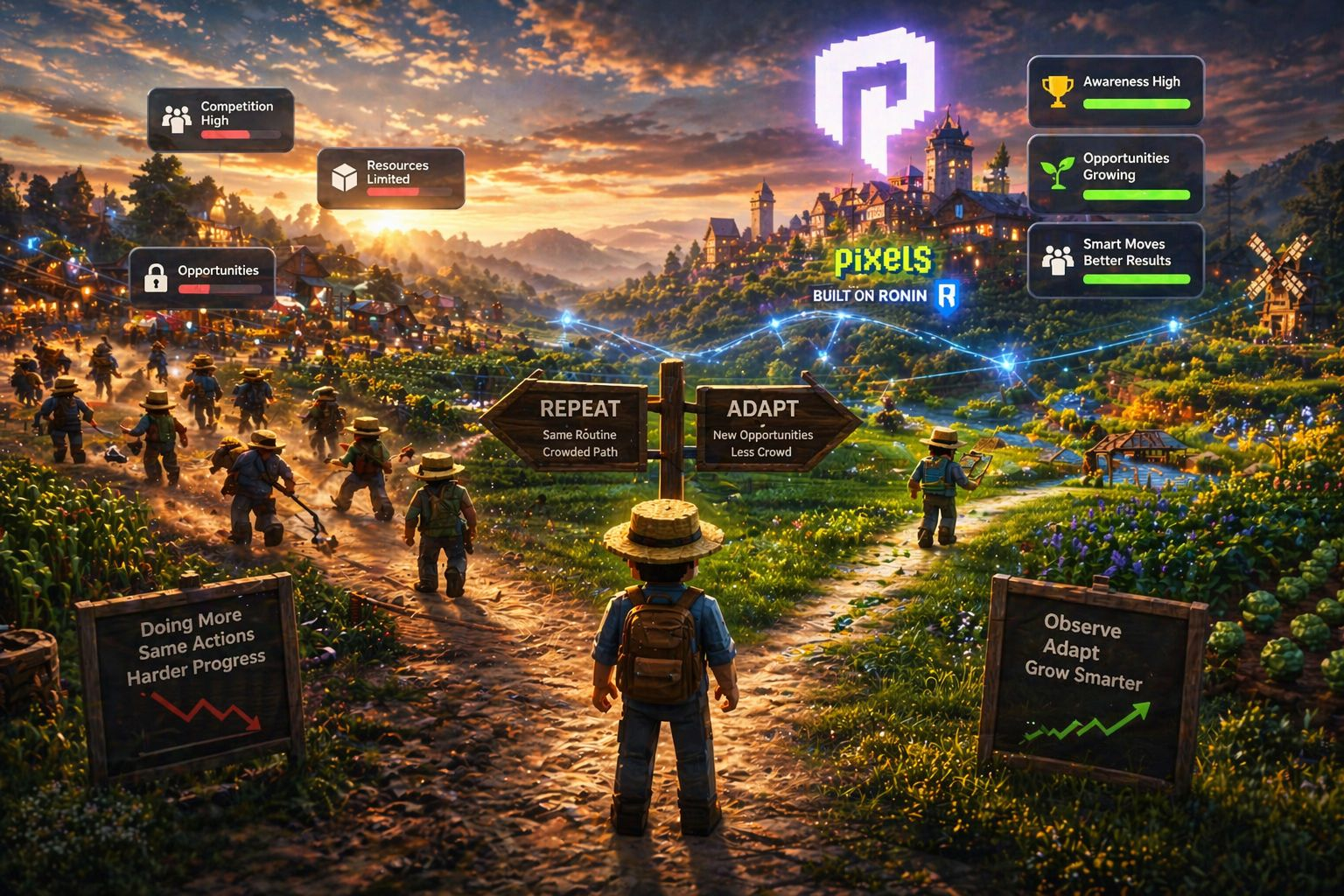
At first, everything feels equal inside Pixels @Pixels .You start like everyone else, learning the basics, following the same routines, and making steady progress. It feels fair. You put in time, you get results. You stay consistent, you move forward. For a while, that belief holds strong. But then something subtle begins to change, and most players don’t notice it when it starts. Nobody suddenly “falls behind.” There’s no clear moment where the game tells you that you’re doing something wrong. Instead, it happens quietly, almost invisibly, through small decisions that don’t feel important at the time.
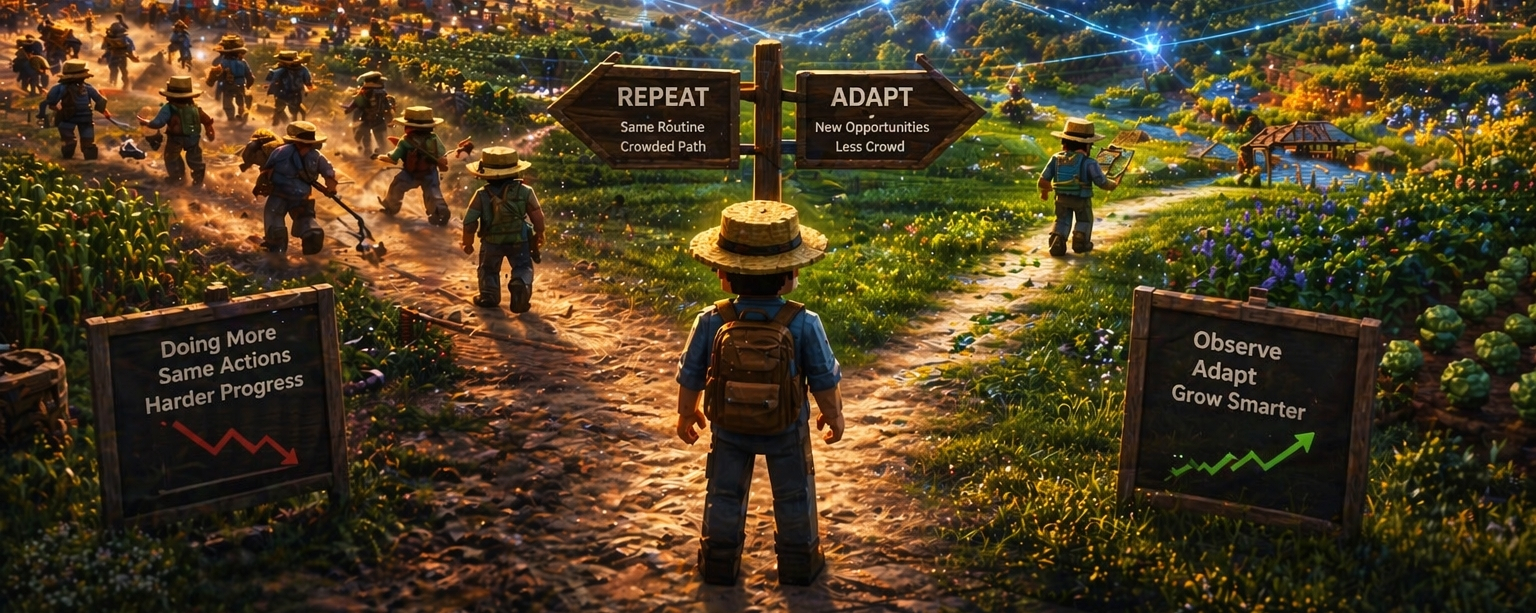
You keep doing what worked before. You repeat familiar actions because they feel safe. You follow the same paths because they’ve already proven to be effective. And without realizing it, you stop adapting. Meanwhile, other players begin to shift. Not dramatically, but just enough. They start paying attention to different signals. They notice which parts of the system are becoming crowded, which opportunities are fading, and which areas are slowly opening up. They don’t necessarily work harder, but they adjust sooner. And that small difference starts to compound over time.
In systems like this, especially ones built on Ronin Network, progress isn’t only about effort. It’s also about timing and awareness. Players who stay inside familiar routines often feel like they’re doing everything right, because technically, they are. But the system keeps evolving quietly beneath them. What worked yesterday doesn’t always work the same way tomorrow. And those who don’t notice that shift continue moving, just not as effectively as before.
The difficult part is that nothing feels broken. You’re still progressing. You’re still active. But the gap starts forming anyway. Not in a way that’s obvious day to day, but in a way that becomes clear over time. Other players begin pulling ahead, not because they had an advantage from the start, but because they responded differently as the system changed. They questioned routines, adjusted their focus, and moved toward what others were ignoring. It doesn’t look like a big move in the moment, but it builds into something meaningful.
Eventually, you start to feel it. Progress feels slower than it used to. Effort feels heavier. And that’s usually when players try to fix it by doing more of the same, which only keeps them inside the same loop. The real shift doesn’t come from increasing effort, but from changing perspective. From stepping back and asking whether the actions you’re repeating are still as valuable as they once were.
In the end, falling behind in Pixels isn’t about making one big mistake. It’s about not noticing small changes early enough. The system doesn’t punish you directly, but it quietly rewards those who pay attention. And that leads to a simple but uncomfortable question: are you still moving forward, or just repeating what used to work ?