
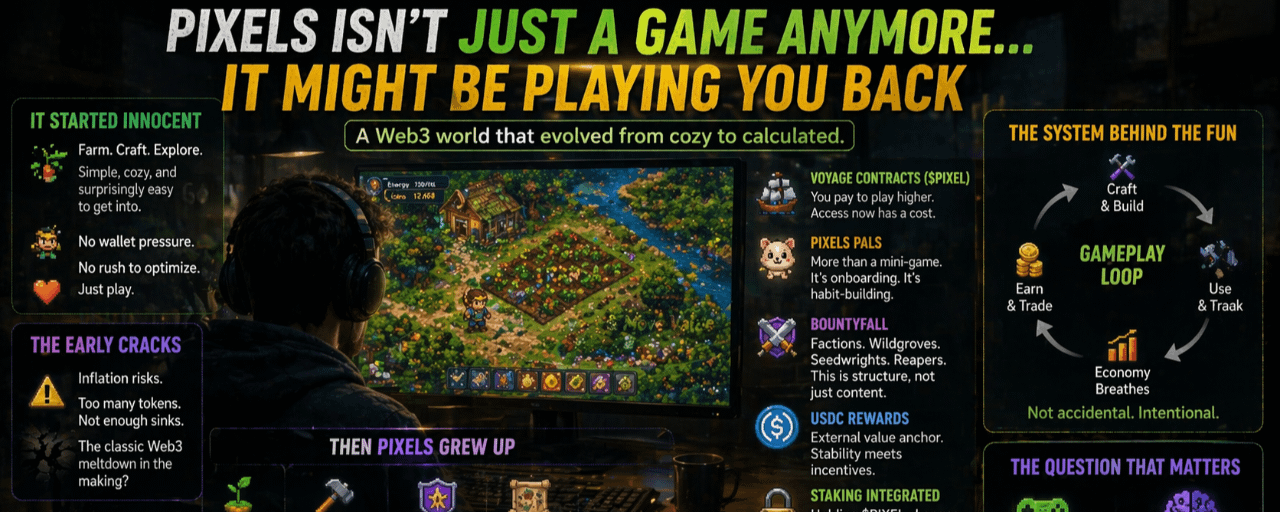
Saya tidak menyadarinya pada awalnya.
Saya hanya bertani. Mengklik. Membuat. Membiarkan loop membawa saya… seperti cara biasanya permainan ini. Tidak berbahaya. Rutinitas. Hampir meditatif.
Kemudian sesuatu terasa aneh.
Tidak rusak. Tidak membuat mual. Hanya… disengaja.
Saya pernah mengalami momen seperti ini sebelumnya dengan permainan Web3. Anda mulai menyadari bahwa “permainan” sebenarnya bukanlah permainan. Ini adalah ekonomi di bawahnya. Dan setelah Anda melihat itu, Anda tidak bisa tidak melihatnya.
Pixels berada tepat di tepi itu.
Karena di awal? Itu memiliki retakan. Yang nyata. Inflasi merayap masuk. Token menumpuk tanpa cukup tempat pembuangan. Ketakutan yang tenang dan akrab tentang “apa yang terjadi ketika saya selesai grinding?” Saya telah melihat cukup banyak proyek mencapai dinding itu… memudar perlahan, pemain yang menipis, lalu keheningan.
Pixels tidak runtuh. Itu menyesuaikan.
Dengan halus.
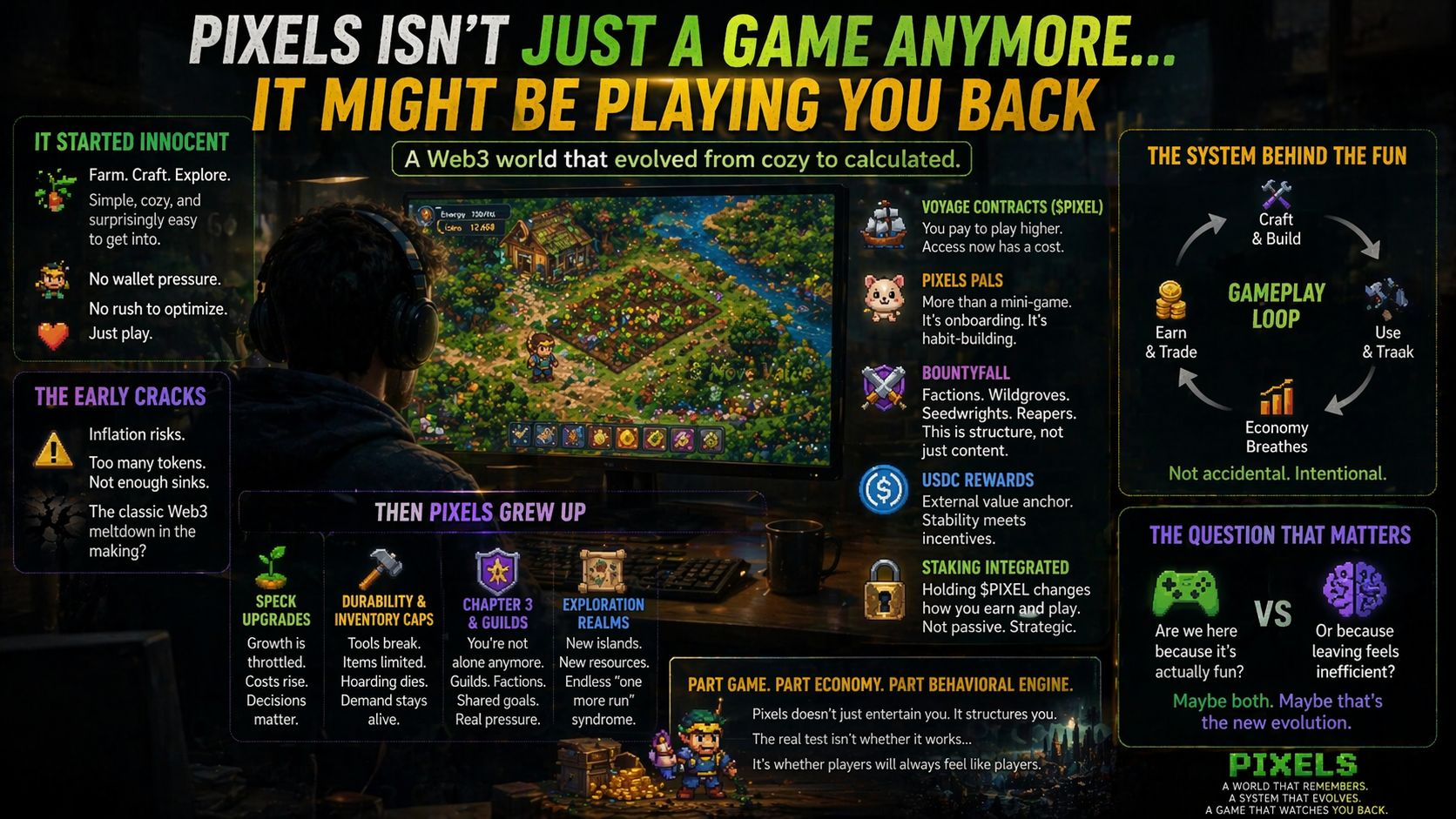
Ambil peningkatan Speck. Saya ingat berpikir, "oke, hanya sistem kemajuan lain." Tapi tidak... itu adalah pertumbuhan yang dibatasi. Kamu bisa memperluas, tentu saja, tapi itu akan menggigit kembali. Biaya meningkat. Keputusan menjadi penting. Itu bukan hanya desain, itu kontrol.
Sama seperti daya tahan.
Pada awalnya? Mengganggu. Jujur saja. Tidak ada yang suka alat mereka rusak. Tapi kemudian, itu terhubung... barang-barang yang rusak berarti barang-barang perlu diganti. Permintaan kembali. Ekonomi bernapas lagi. Ini adalah gesekan yang dirancang, dan anehnya... itu berhasil.
Batas inventaris? Bahkan lebih buruk di atas kertas. Saya benci batasan. Terasa membatasi. Tapi saya mengerti. Tidak ada penimbunan. Tidak ada pasokan mati yang duduk diam. Segalanya beredar.
Kerajinan. Gunakan. Hancurkan. Ulangi.
Lingkaran sederhana. Dengan sengaja kejam.
Dan kemudian Pixels mengubah arah.
Bab 3 tidak hanya menambahkan konten, itu mengubah nada. Saya ingat masuk dan menyadari saya tidak sendirian dengan cara yang sama lagi. Guild menjadi penting. Faksi menjadi penting. Kamu tidak hanya mengoptimalkan ladangmu... kamu berkolaborasi dengan orang-orang.
Itu adalah jenis tekanan yang berbeda.
Tiba-tiba bukan lagi "apa yang saya tanam?" Itu adalah "apa yang kita lakukan?" Pergeseran itu... menarikmu lebih dalam daripada hadiah token mana pun.
Wilayah eksplorasi juga tidak membantu dengan cara terbaik. Saya akan berkata pada diri sendiri, "satu pulau lagi," dan satu jam menghilang. Itu tidak kebetulan. Itu adalah gravitasi perilaku.
Dan kemudian mereka melangkah lebih jauh.
Kontrak perjalanan yang biayanya $PIXEL. Itu membuatku terhenti.
Kamu tidak hanya menghasilkan dari permainan lagi... kamu membayar untuk mengaksesnya. Itu adalah garis yang berani untuk dilalui. Bisa berjalan ke arah mana saja.
Cerita yang sama dengan Pixels Pals. Pada awalnya, saya pikir itu hanya sebagai hiasan. Sebuah mini-game sampingan. Terasa seperti gangguan.
Ini tidak.
Ini adalah onboarding. Ini adalah pengondisian. Saya telah melihat sistem seperti ini sebelumnya, masuk tanpa hambatan, tanpa dompet, transaksi mikro kecil di awal... membangun kebiasaan sebelum pemain bahkan menyadari mereka sedang membentuk satu.
Ini pintar. Mungkin sedikit terlalu pintar.
Dan sekarang Bountyfall.
Faksi. Wildgroves. Seedwrights. Reapers. Itu bukan hanya rasa, itu struktur. Kinerja kamu tidak terisolasi lagi. Itu terikat pada sebuah kelompok. Itu mengubah perilaku dengan cepat. Orang-orang berkoordinasi. Bersaing. Lebih peduli.
Kemudian kamu menambahkan imbalan USDC...
Di situlah saya benar-benar berhenti menggulir dan memperhatikan.
Karena sekarang Pixels tidak hanya mengedarkan tokennya sendiri. Itu menambatkan nilai secara eksternal. Mencampur imbalan stabil ke dalam sistem dinamis? Itu cara untuk menenangkan volatilitas... tetapi juga meningkatkan taruhannya.
Ini bukan hanya ekonomi permainan lagi. Ini mulai terlihat seperti yang dikelola.
Tambahkan staking ke dalam gameplay... dan sekarang memegang $PIXEL tidak pasif. Itu mengubah cara kamu bermain. Cara kamu menghasilkan. Di mana kamu menempatkan dirimu.
Itu bukan desain kasual.
Itu adalah arsitektur.
Jadi ya... menyebut Pixels "hanya sebuah permainan" terasa malas pada titik ini.
Ini adalah sesuatu yang lain.
Sebagian permainan. Sebagian ekonomi. Sebagian lapisan sosial. Sebagian mesin perilaku yang diam-diam mendorongmu untuk tetap satu siklus lagi, satu tugas lagi, satu keputusan lagi.
Dan inilah di mana saya terjebak.
Karena saya tidak berpikir itu pada dasarnya buruk. Sejujurnya, itu mungkin diperlukan jika kamu ingin sesuatu bertahan di ruang ini. Sistem longgar rusak. Sistem ketat bertahan.
Tapi ada garisnya.
Dan saya terus bertanya-tanya di mana letak Pixels di dalamnya.
Apakah kita di sini karena itu benar-benar menyenangkan... lingkaran tanpa tekanan yang hanya terasa baik untuk kembali?
Atau apakah kita di sini karena sistem dirancang begitu baik sehingga pergi terasa tidak efisien?
Saya tidak memiliki jawaban yang jelas.
Mungkin keduanya.
Mungkin itu adalah evolusi nyata... permainan yang tidak hanya menghiburmu, tetapi juga membentukmu.
Dan jika itu tempat Pixels menuju, maka pertanyaan yang lebih besar bukanlah apakah itu berhasil...
Ini adalah apakah pemain masih akan merasa seperti pemain...
atau sesuatu yang lebih dekat dengan peserta dalam sistem yang tidak sepenuhnya mereka kendalikan.