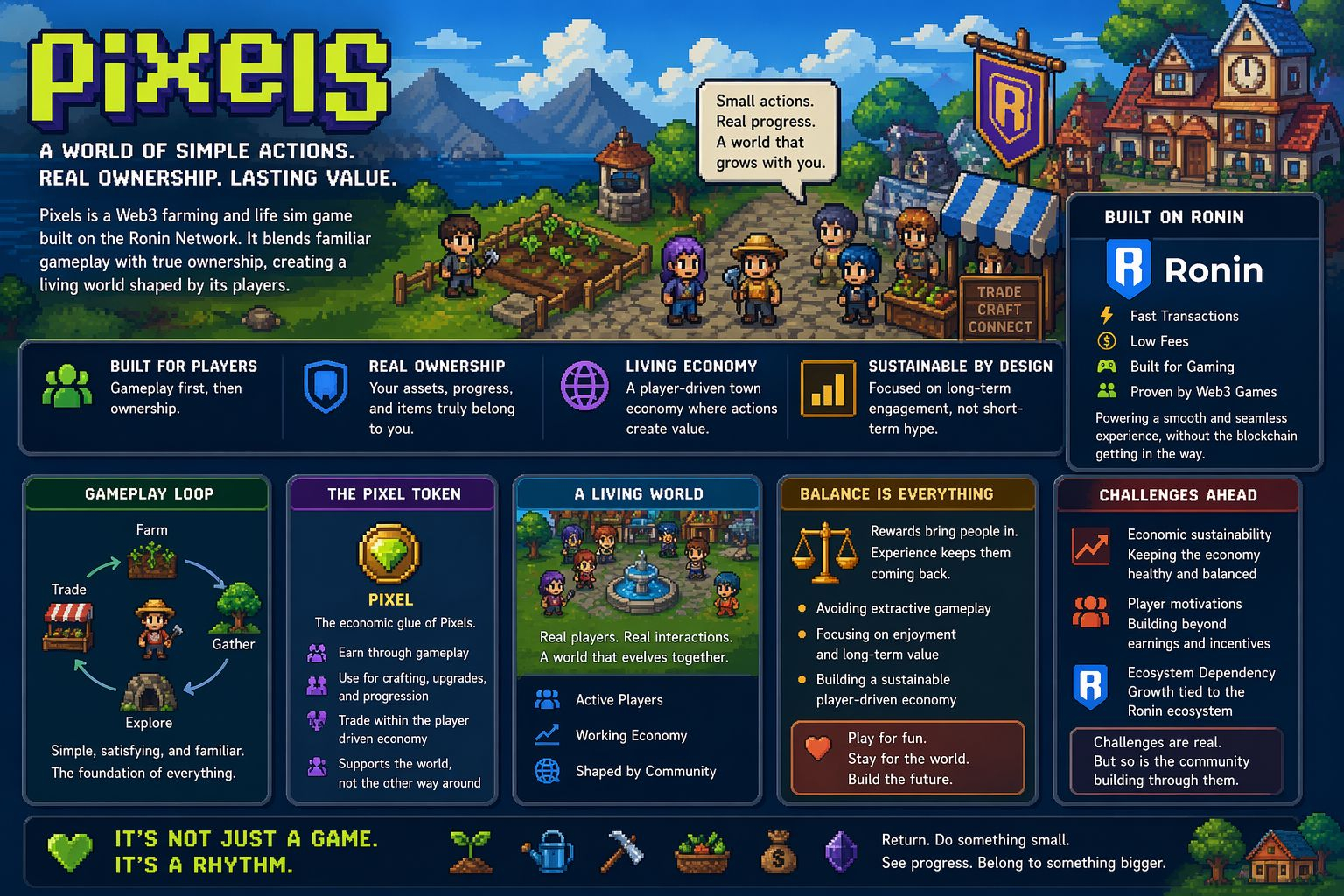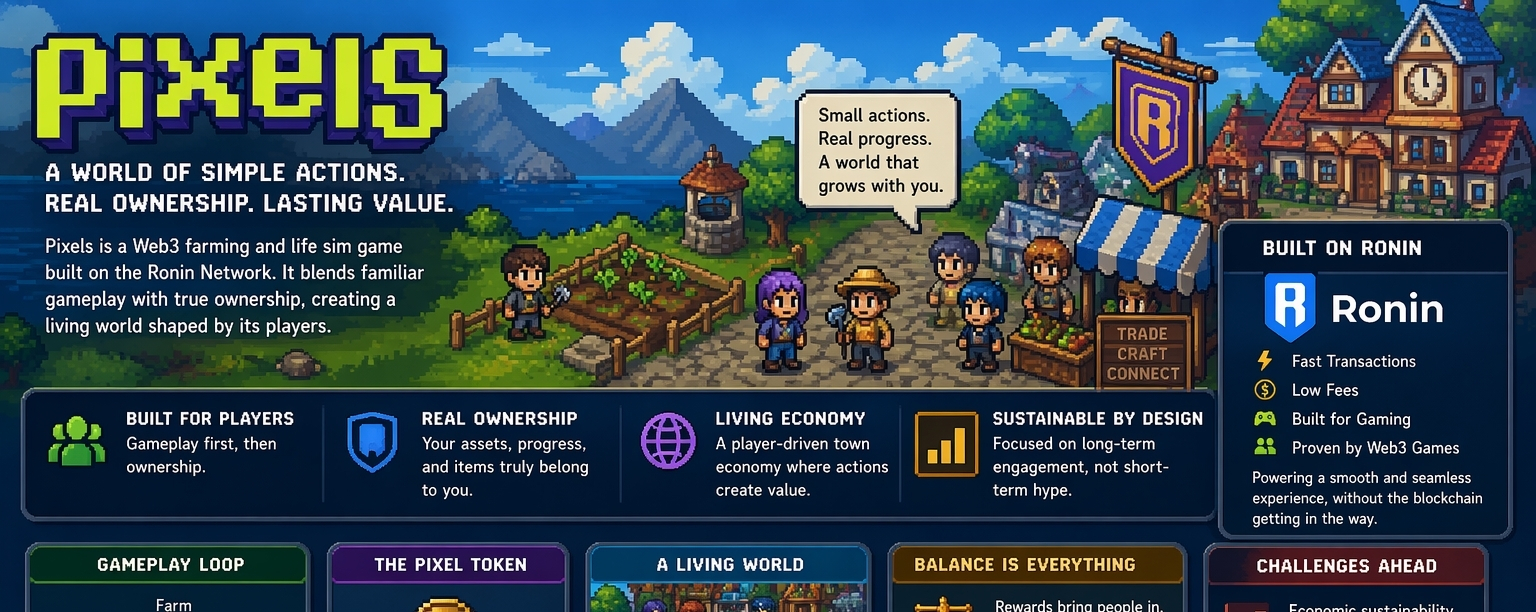
Saya menyadari sesuatu tentang diri saya — setiap kali keadaan menjadi terlalu gaduh, saya cenderung beralih ke rutinitas sederhana. Bukan untuk melarikan diri, tetapi untuk merasakan kembali kontrol. Tindakan kecil, diulang seiring waktu, di mana kemajuan tidak berteriak tetapi muncul dengan tenang. Perasaan yang sama, mengejutkan, adalah apa yang Pixels coba ciptakan di dalam ruang yang biasanya berjalan dengan hype dan kecepatan.
Pixels tidak dimulai dengan teknologi. Ini dimulai dengan perilaku. Kebanyakan game blockchain kesulitan karena mereka mulai dengan token dan ekonomi, lalu mencoba membungkus gameplay di sekitarnya. Hasilnya sering terasa hampa — seperti kamu tidak benar-benar bermain, hanya berpartisipasi dalam sistem yang dirancang untuk mengekstraksi atau mengedarkan nilai. Pixels mendekati masalah dari arah yang berbeda. Mereka membangun loop yang familiar terlebih dahulu — bertani, mengumpulkan, menjelajahi, berdagang — dan baru kemudian memperkenalkan kepemilikan dan nilai sebagai lapisan di bawahnya. Dalam cara tertentu, ini memperlakukan game seperti ekonomi kota kecil daripada instrumen keuangan. Orang-orang datang, melakukan hal-hal sederhana, berinteraksi dengan orang lain, dan seiring waktu, tindakan tersebut menciptakan sistem yang hidup.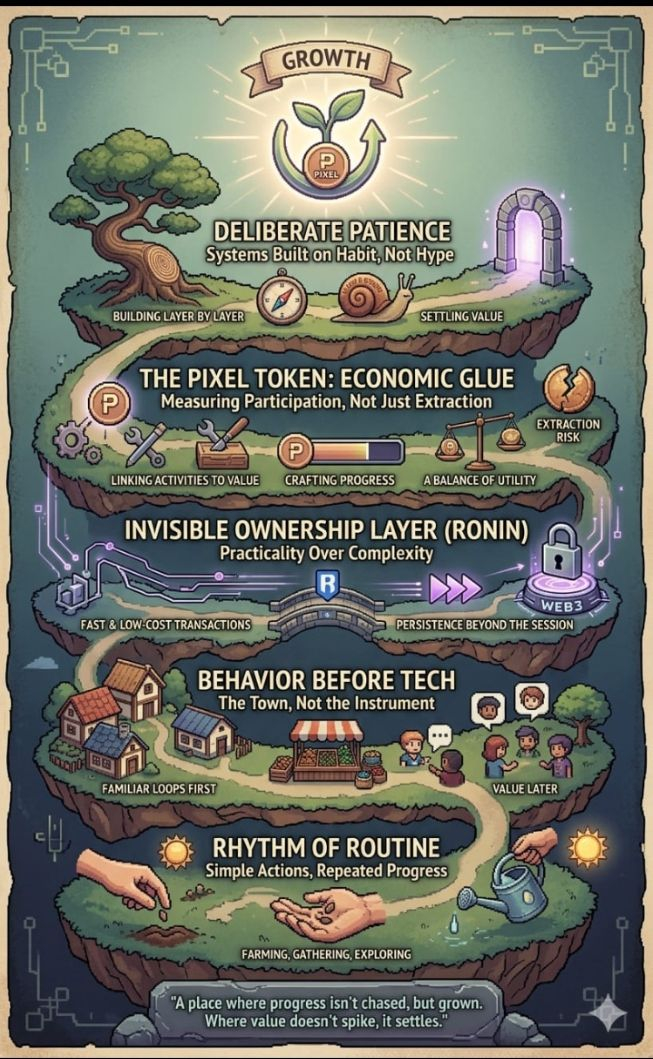
Pilihan desain ini terhubung erat dengan di mana permainan dibangun. Pixels berjalan di Ronin Network, sebuah rantai yang dibentuk oleh eksperimen sebelumnya dalam permainan blockchain, terutama Axie Infinity. Alih-alih fokus pada kompleksitas teknis, Ronin memfokuskan pada praktik. Transaksi cepat, biaya rendah, dan infrastrukturnya sudah akrab bagi pemain yang telah berinteraksi dengan permainan Web3 sebelumnya. Apa yang penting di sini bukan seberapa canggih teknologi terdengar, tetapi seberapa tidak terlihat saat digunakan. Ketika seorang pemain menanam tanaman, memperdagangkan item, atau mendapatkan sesuatu di Pixels, pengalaman tersebut tidak terasa seperti berinteraksi dengan blockchain. Itu terasa seperti bermain game biasa, sementara kepemilikan dengan tenang ada di latar belakang.
Keseimbangan antara visibilitas dan invisibilitas adalah di mana Pixels mencoba untuk bertahan. Sistem on-chain penuh cenderung memperlambat permainan, sementara sistem off-chain sepenuhnya menghilangkan rasa kepemilikan yang nyata. Pixels berada di suatu tempat di tengah. Permainan itu sendiri berjalan lancar, seperti dunia online kasual mana pun, tetapi aset, kemajuan, dan ekonomi terhubung kembali ke rantai dengan cara yang memberikan keberlanjutan di luar sesi permainan. Ini tidak berusaha untuk membuktikan sebuah poin teknis. Ini berusaha untuk mempertahankan perasaan sambil menambahkan lapisan makna baru di bawahnya.
Peran token PIXEL cocok dalam struktur ini dengan hati-hati, meskipun tidak tanpa ketegangan. PIXEL bertindak sebagai semacam perekat ekonomi di dalam permainan, menghubungkan aktivitas dengan nilai. Pemain bertani, membuat, dan menjelajah, dan tindakan ini memberi makan ke dalam sistem yang lebih luas di mana sumber daya dapat diperdagangkan atau digunakan untuk kemajuan. Token ini tidak dimaksudkan untuk mendominasi pengalaman, tetapi selalu hadir di latar belakang sebagai ukuran partisipasi dan utilitas. Tantangannya, seperti pada sistem serupa lainnya, adalah menjaga keseimbangan di mana token mendukung dunia daripada mengambil alihnya. Jika pemain mulai melihat setiap tindakan hanya dalam istilah ekstraksi, pengalaman berisiko runtuh ke dalam pola yang sama seperti yang terlihat pada permainan Web3 sebelumnya.
Apa yang membuat Pixels agak berbeda adalah bahwa ia sudah beroperasi sebagai lingkungan yang berfungsi daripada konsep yang menunggu untuk dibangun. Ada pemain nyata yang masuk, berinteraksi, memperdagangkan, dan membentuk dunia. Ekonomi ada, meskipun masih mencari keseimbangannya. Ini penting karena banyak proyek tetap teoritis terlalu lama, bergantung pada janji daripada aktivitas. Pixels, sebaliknya, sudah diuji dalam waktu nyata oleh komunitasnya sendiri. Itu tidak menjamin kesuksesan, tetapi menciptakan umpan balik yang tidak pernah didapatkan oleh proyek spekulatif murni.
Pada saat yang sama, risikonya tidak tersembunyi. Setiap sistem yang memperkenalkan hadiah yang terkait dengan aktivitas menghadapi masalah keberlanjutan. Jika terlalu banyak peserta hanya fokus pada penghasilan, ekonomi internal dapat menjadi tidak stabil. Inflasi, pengurangan keterlibatan, dan penurunan nilai dapat mengikuti dengan cepat. Pertanyaan yang lebih dalam adalah apakah pengalaman inti cukup kuat untuk menarik perhatian bahkan ketika hadiah berfluktuasi. Jika pemain terus masuk karena mereka menikmati dunia itu sendiri, sistem memiliki peluang untuk menstabilkan. Jika tidak, ia menjadi tergantung pada insentif konstan, yang jarang bertahan.
Ada juga ketergantungan yang lebih luas pada ekosistem Ronin. Sementara Ronin menyediakan dasar yang kuat untuk permainan, ini masih merupakan lingkungan yang relatif terkontrol dibandingkan jaringan blockchain yang lebih besar. Pertumbuhan untuk Pixels sebagian terkait dengan seberapa baik ekosistem ini berkembang dan menarik pengguna baru. Jaringan yang berkembang menguntungkan setiap proyek di dalamnya, tetapi yang stagnan dapat membatasi pengalaman yang dirancang dengan baik.
Ke depan, Pixels tidak terasa seperti proyek yang mengejar ekspansi cepat dengan biaya berapa pun. Arah proyek ini tampak lebih lambat, lebih terencana, hampir tradisional dalam ritmenya. Alih-alih membanjiri pengguna dengan kompleksitas, ia membangun lapisan demi lapisan, fokus pada interaksi, rutinitas, dan akrab. Pendekatan ini mungkin tidak menghasilkan lonjakan perhatian yang tiba-tiba, tetapi memiliki kekuatan tersendiri. Sistem yang dibangun berdasarkan kebiasaan cenderung bertahan lebih lama daripada sistem yang dibangun berdasarkan hype.
Apa yang paling mencolok bukanlah teknologi, token, atau bahkan ekonomi. Ini adalah ritme. Tindakan kembali, melakukan sesuatu yang kecil, dan melihat kemajuan bertahap. Dalam ruang yang sering didorong oleh urgensi dan spekulasi, Pixels bersandar pada kesabaran. Dan anehnya, itu mungkin menjadi ide terpentingnya.