
What grabbed me about Stacked is it doesn’t just slap Web3 jargon on an ordinary rewards app. It feels like the team actually learned from the messiness of launching games. Most early play-to-earn systems looked exciting, but they all crashed into the same wall: rewards got too easy to farm, bots sucked out way too much value, and suddenly the game economy was rewarding extraction, not real participation. Stacked stands out for me because it doesn’t aim to just pour out more rewards. Instead, it tries to make them sharper, genuinely useful, and sustainable.
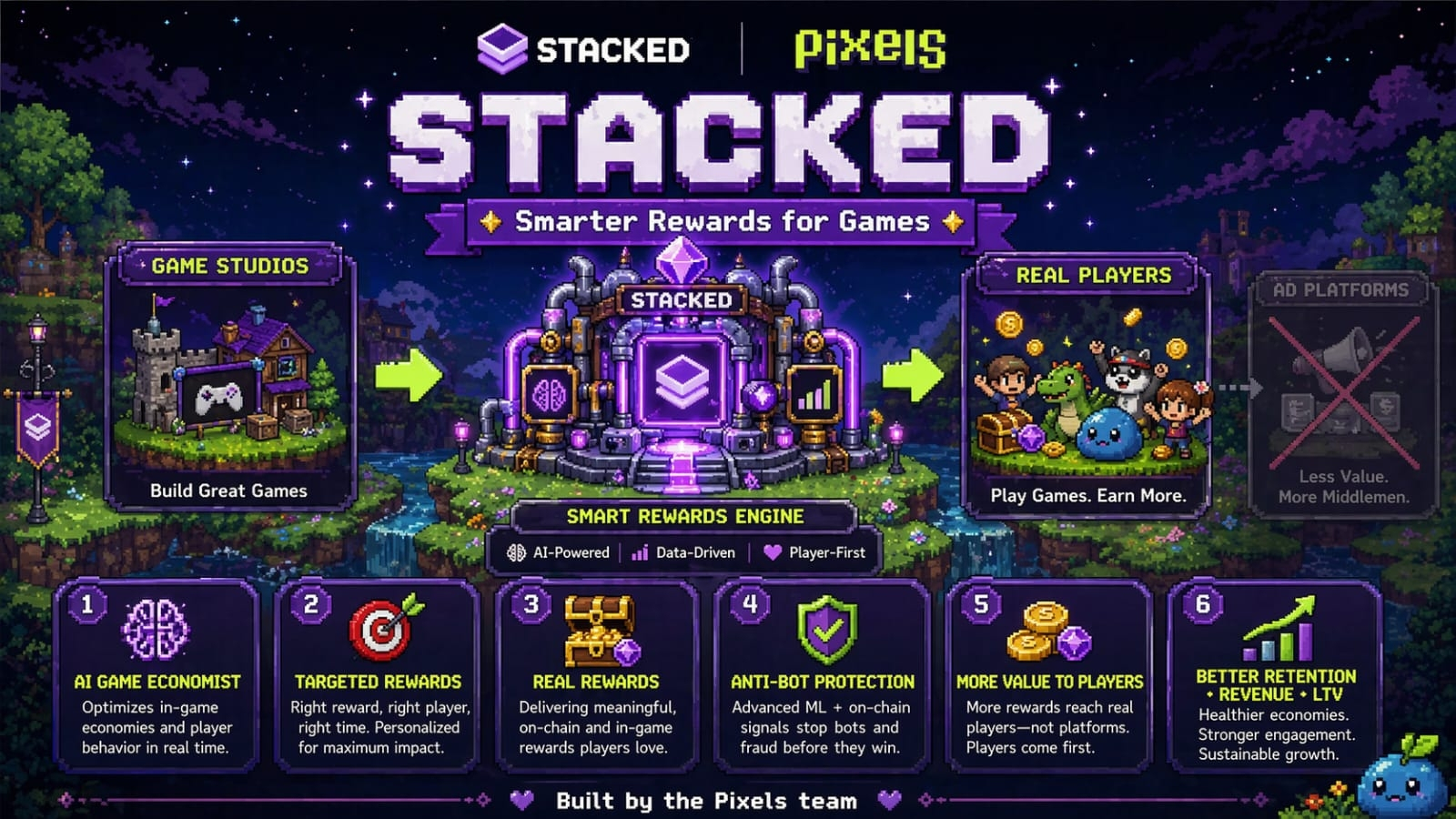
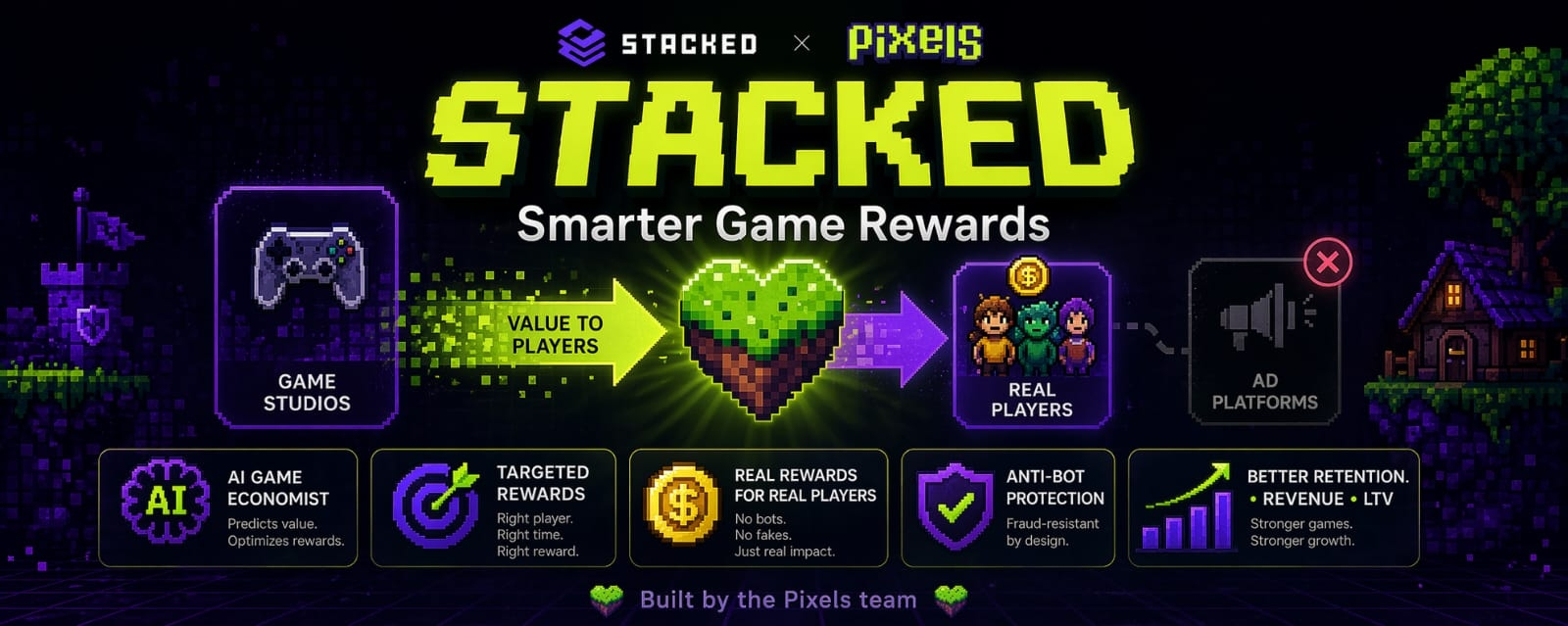
The gist of Stacked is pretty simple it’s a reward-driven LiveOps engine for games, built by the Pixels team, and it uses an AI game economist up top. But that pitch really pops when you think about what it’s solving. Game studios already spend tons trying to grow paying to attract, keep, and engage users. Most of that value vanishes into ad platforms and traditional marketing. Stacked flips this logic. Rather than shoving that spend out the door, it asks, “Can we direct more of it straight into the hands of people actually showing up, participating, and making games better?”
That shift is a big deal. In sloppy systems, rewards usually get spread too wide and mostly spark quick activity, not lasting quality or a stronger economy. With Stacked, rewards aren’t just tossed at everyone. They’re targeted to the right player at the right moment, and measured against stuff that matters like retention, revenue, and lifetime value. For me, that’s a way more grown-up approach to game incentives it treats rewards like levers for healthier behavior, not just freebies.
The AI layer is key. A lot of products love to talk about AI, but here it’s actually doing real work. The AI game economist lets studios dig into player groups, spot churn patterns, and figure out which reward experiments are next.The system doesn’t just check if users drop off; it asks things like why players leave during critical retention windows, what loyal folks do before becoming long-term fans, or which game mechanics truly boost engagement. That’s the kind of insight that turns reward design from guessing into smart decision making.
Honestly, what makes Stacked credible is it wasn’t born as some academic exercise. It came out of years of trial-and-error with live games inside the Pixels ecosystem. That’s huge. Anyone can draw up reward systems on paper. Surviving real world use where bots, farming, abuse, and loophole-seeking players run wild is another thing. The fact this system works across Pixels games sends a strong signal: this isn’t just a pitch, it’s a model battle-tested under pressure.
That’s also why Stacked feels like it has a real moat. The magic isn’t flashy. It’s the stuff you can’t copy overnight: fraud prevention, anti-bot tech, behavioral data at scale, and real-world knowledge of rewards in adversarial environments. Plenty of teams launch quests or promo campaigns, but few can build a reward engine that survives when users try to game it. In crypto gaming, that’s everything the difference between compounding systems and ones that just blow up.
I also think Stacked makes PIXEL more central, but with way more flexibility.The token stays core, but the system is designed so rewards aren’t locked to just one type. At launch, users see PIXEL rewards across the Pixels and Stacked environment, but over time, it’s set up to handle multiple rewards. Smart move it keeps things from being too narrow and lets the ecosystem grow while anchoring it at a clear center.
The best idea here, though, is economic, not technical. Stacked is built on the simple belief that more of the money studios spend on growth should actually reach players, not just disappear into ads. If you’re already spending to get and keep players, why not plug more of that into meaningful in-game actions? Players get real rewards for stuff that matters. Studios get a crystal-clear read on whether those rewards move the needle. The whole system gets easier to judge, because reward flow hooks directly into real behavior not marketing guesswork.
What I appreciate most: Stacked doesn’t try to romanticize play-to-earn.It’s not chasing hype. It’s trying to keep what worked in play-to-earn and cut out what made it fragile. Real rewards require a system that can separate good signals from noise that seems to be the heart of this project. Not bigger, louder incentives. Not wider emissions. Just more discipline in connecting player actions, studio spending, and the long-term health of the ecosystem.
Honestly, that’s why I think Stacked could be the Pixels team’s most important creation. Not because it’s another shiny new layer, but because it treats game rewards as actual infrastructure. And if you ask me, infrastructure is how lasting value gets built in most digital ecosystems.