


When I first read about the new VIP tiering system in @Pixels , I did not see it as just another reward update. At first glance, it looks simple: players spend PIXEL inside the game, earn VIP Score, and move through higher tiers. But the more I looked at the structure, the more it felt like Pixels is trying to make loyalty more dynamic, more measurable, and more connected to real in-game participation.
That is important because many games treat VIP status like a fixed label. A player pays, receives a badge, unlocks some perks, and the system mostly stays still after that. Pixels is taking a slightly different route. With four new VIP tiers, the game is not only rewarding spending. It is also building a system where player activity, token use, and long-term engagement are tied together more directly.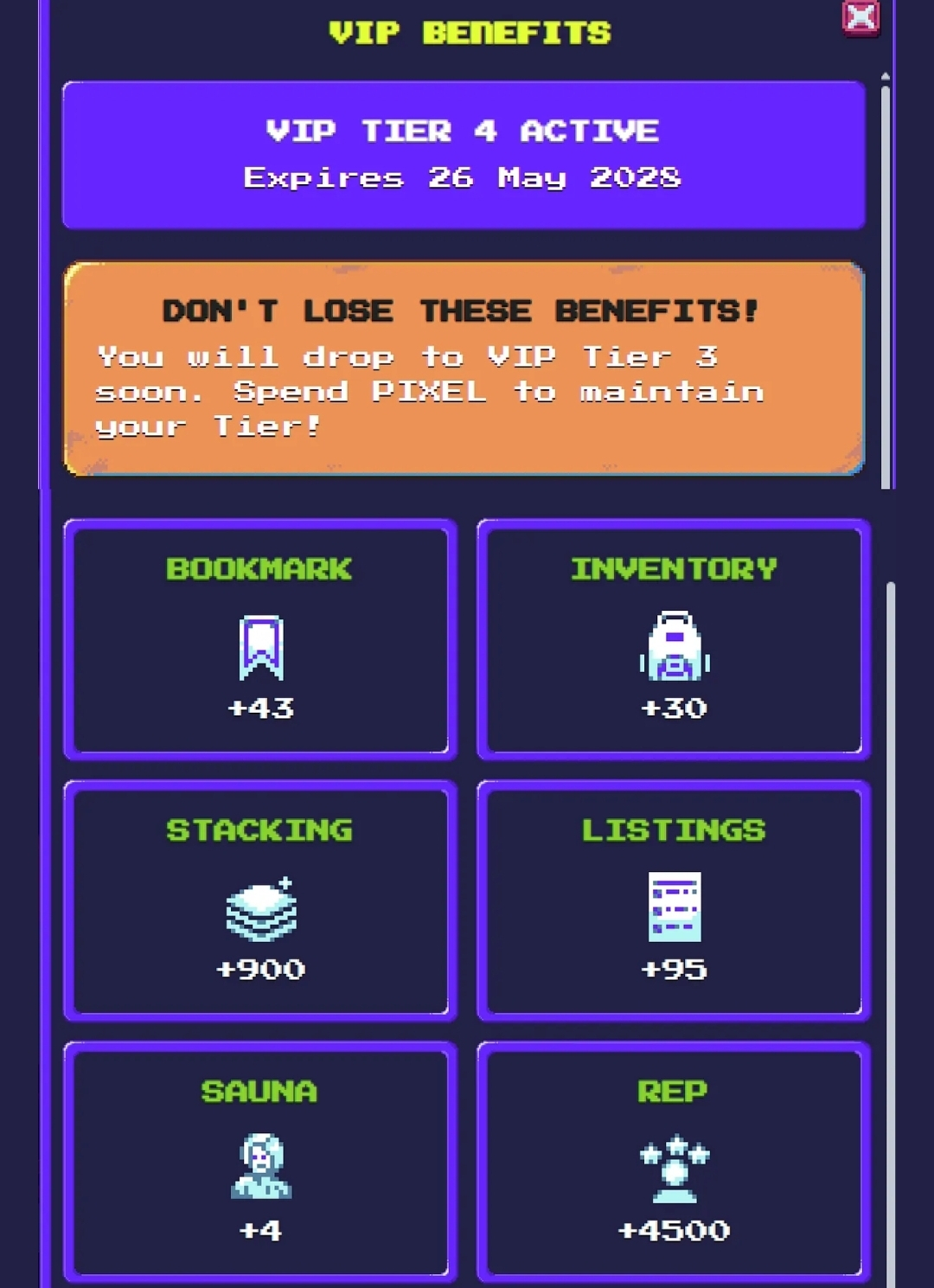
The basic design is easy to understand. Players build a VIP Score through PIXEL spending inside the game. More spending adds more points to that score, and when the score crosses a required threshold, the player moves up instantly. That instant upgrade matters because games work best when actions feel connected to results. A player does something, the system responds, and the progress becomes visible.
But the part that caught my attention most is the score decay. The VIP Score naturally decreases by a small amount each day. This one detail changes the system from a one-time purchase into an ongoing participation model. It means VIP status is not only about what a player did once. It also reflects whether the player continues to stay active inside the Pixels economy.
To explain it simply, imagine a player who regularly plays Pixels and spends PIXEL on in-game activity. Under this new system, that spending does not just disappear after the transaction. It becomes part of a visible loyalty path. The player can climb through tiers, unlock stronger benefits, and see their participation reflected inside the game interface.
At the same time, Pixels does not make the system too harsh. There is downgrade protection. After reaching a new tier, players cannot drop tiers for seven days. I think this is a smart balance because it gives players room to enjoy what they earned. A system that removes progress too quickly can feel stressful, but a system with no decay at all can become inactive and meaningless over time.
After seven days of inactivity, accounts can degrade by multiple tiers. That may sound strict, but from an economy-design perspective, it makes sense. If higher VIP tiers are meant to represent active loyalty, they should not be permanently held by accounts that are no longer participating. A live game economy needs its reward layers to stay connected to current behavior, not only past spending.
Another important detail is that active VIP players do not drop below Tier 1. This protects the base value of VIP membership. It tells players that while higher tiers require continued activity, the foundation of their VIP status remains respected as long as the VIP membership is active.
The 30-day renewal grace window also feels practical. Players can take breaks. People become busy. Not every pause means someone has left the ecosystem forever. By giving expired VIPs 30 days to return and reclaim their status, Pixels creates a softer bridge between inactivity and permanent loss. That makes the system feel more human.
What I find most interesting is how PIXEL spending becomes more than a simple transaction here. It becomes a signal. It shows which players are actively putting value back into the game. In that sense, the VIP system is not only about perks. It is also about identifying participation patterns inside the economy.
This matters because Pixels is not just a casual reward loop. It is a player-driven environment where activity, resources, marketplace behavior, and progression all connect with each other. When a token has a direct role inside that loop, the design has to be careful. Spending should feel useful, not forced. Rewards should feel meaningful, not artificial.
The four new tiers help create more space between different types of VIP players. A single VIP level can feel too flat because it places everyone in the same category. More tiers allow Pixels to recognize different levels of commitment. A casual VIP player and a highly active player no longer need to be treated exactly the same.
That can improve the overall experience if the benefits are balanced well. Players get a clearer path to climb. The game gets a better way to reward deeper engagement. The economy gets a more structured method for separating short-term participation from consistent loyalty.
Still, the success of this system will depend on execution. The decay rate must feel fair. The tier thresholds must feel reachable. The benefits must be useful enough to matter, but not so strong that non-VIP players feel completely pushed aside. These are the real tests for any live economy.
From my personal view, the strongest part of this update is that Pixels is making loyalty feel alive. It is not just giving players a fixed badge and leaving it there. It is creating a score that moves with activity. It rewards players who continue to participate, while still giving protection through the seven-day downgrade shield and the 30-day renewal window.
That balance is what makes the system worth paying attention to. Pixels is not simply asking players to spend. It is trying to build a feedback loop where spending, status, activity, and rewards all support each other.
For me, this VIP upgrade is less about status and more about structure. It shows how Pixels is thinking about long-term retention inside its game economy. A good VIP system should not only reward the biggest spenders. It should make active players feel recognized, give them a reason to stay involved, and keep the economy moving without making the experience feel unfair.
In the end, Pixels is turning VIP status into something more active than a badge. It becomes a living score, shaped by participation, protected by fair guardrails, and connected to how players actually use the game.
That is why this update matters. Pixels is not only upgrading VIP tiers. It is redefining what loyalty means inside its economy.
