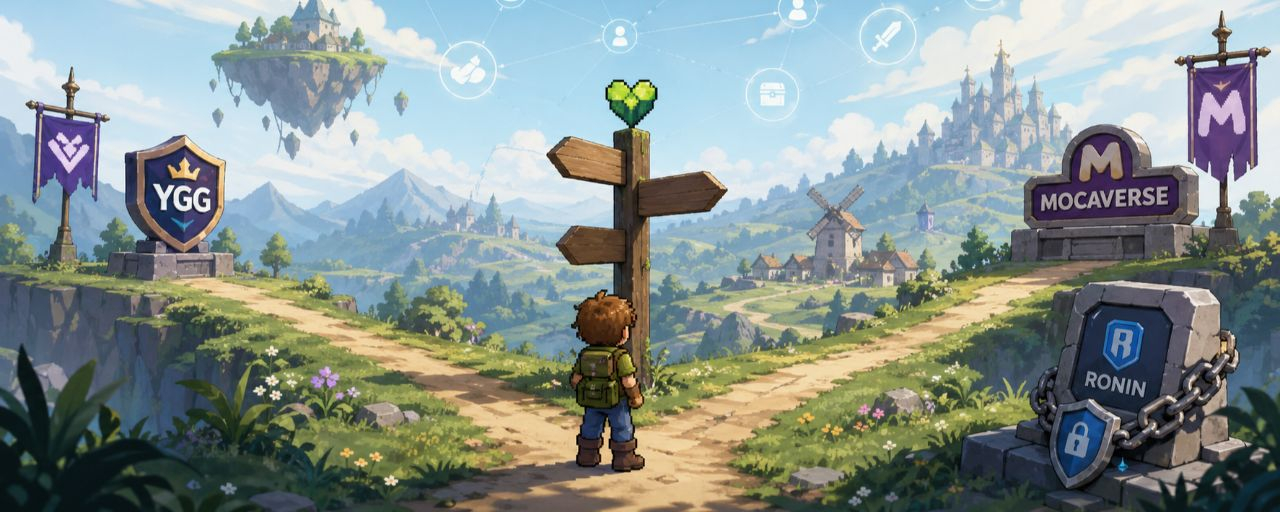
Honestly, the first time I read the figure of over 90 web3 projects integrated into the Pixels ecosystem, my initial reaction was impressed, but almost immediately followed by a slight unease. Not because Pixels is doing something wrong, but because in crypto, a lot of partnerships doesn't automatically mean stronger, sometimes it actually means resources are being spread thin in a way that looks beautiful from the outside but is hollow on the inside. That said, Pixels is still one of the very few GameFi projects that has survived and kept growing, so it's worth sitting down and analyzing where these strategic relationships are actually taking the project.
The partnership with YGG is the one I personally find the most genuinely promising out of everything Pixels is doing. YGG, Yield Guild Games, is not an unfamiliar name to anyone who's been in the GameFi market since 2021 or earlier; they're one of the largest and most influential web3 guilds, with a player network spread across Southeast Asia, particularly the Philippines and Vietnam. Pixels teaming up with YGG to bring more guilds into the game means Pixels is deliberately targeting an organized, disciplined player base, and more importantly one that has the potential for longer retention compared to solo players who only showed up for an airdrop. This is a smart direction if Pixels genuinely wants to build a sustainable in-game economy rather than just optimizing for short-term DAU numbers. But the risk here is that YGG itself is in the middle of restructuring after its old scholar model essentially collapsed entirely in the wake of the Axie cycle, so the actual influence YGG can bring to Pixels depends heavily on how well YGG manages its own recovery going forward.
Mocaverse is a different story altogether. Pixels has deep integration into Mocaverse's loyalty and reward system, and Mocaverse is built by Animoca Brands, one of the largest web3 investment names in the world. The beauty of connecting with the Mocaverse ecosystem is that Pixels gets access to a user community already comfortable with web3 culture, already has wallets, already has experience, and doesn't need to be explained from scratch what NFTs or tokens are. This is a significantly higher quality user base compared to traditional gamers who have never touched crypto before. However Pixels needs to be careful, because being too deeply dependent on an external ecosystem like Mocaverse also means that if Animoca or Mocaverse runs into any issues, whether around liquidity, strategic direction, or simply losing the market's attention, Pixels will be affected in ways that are very hard to control.
Then there's Ronin Network, the blockchain Pixels runs on and the foundation that everything in the game depends on. Pixels currently has around 166 thousand daily active users and has crossed the one million cumulative user milestone, and most of that growth happened after migrating to Ronin, which shows that migration decision was at least technically and cost-wise correct. Ronin actually suits Pixels far better than Ethereum mainnet because of lower transaction fees and a smoother user experience for gaming. But Ronin is still a relatively centralized blockchain compared to other L2s, and Ronin's history with the 625 million hack in 2022 is still a mark that isn't easy to erase from the community's memory. If Ronin faces any further security incidents, even minor ones, Pixels will take the first hit.
Pixels is sitting in a pretty interesting position right now, no longer a small project but not yet large enough to generate its own narrative without leaning on partners. That network of 90+ integrations, if managed well, is a genuine competitive advantage, but if it's just a number on paper it will quickly be seen through by the market. Pixels has proven its staying power across years of difficulty; the question now is whether the team has the capacity to turn these strategic relationships into real value for players and for people holding PIXEL assets. @Pixels $PIXEL #pixel $APE $API3