

I’ve followed Pixels long enough to see why people talk about it, but I don’t think the interesting part is the usual Web3 pitch
Not the token
Not the marketplace
Not the promise of ownership
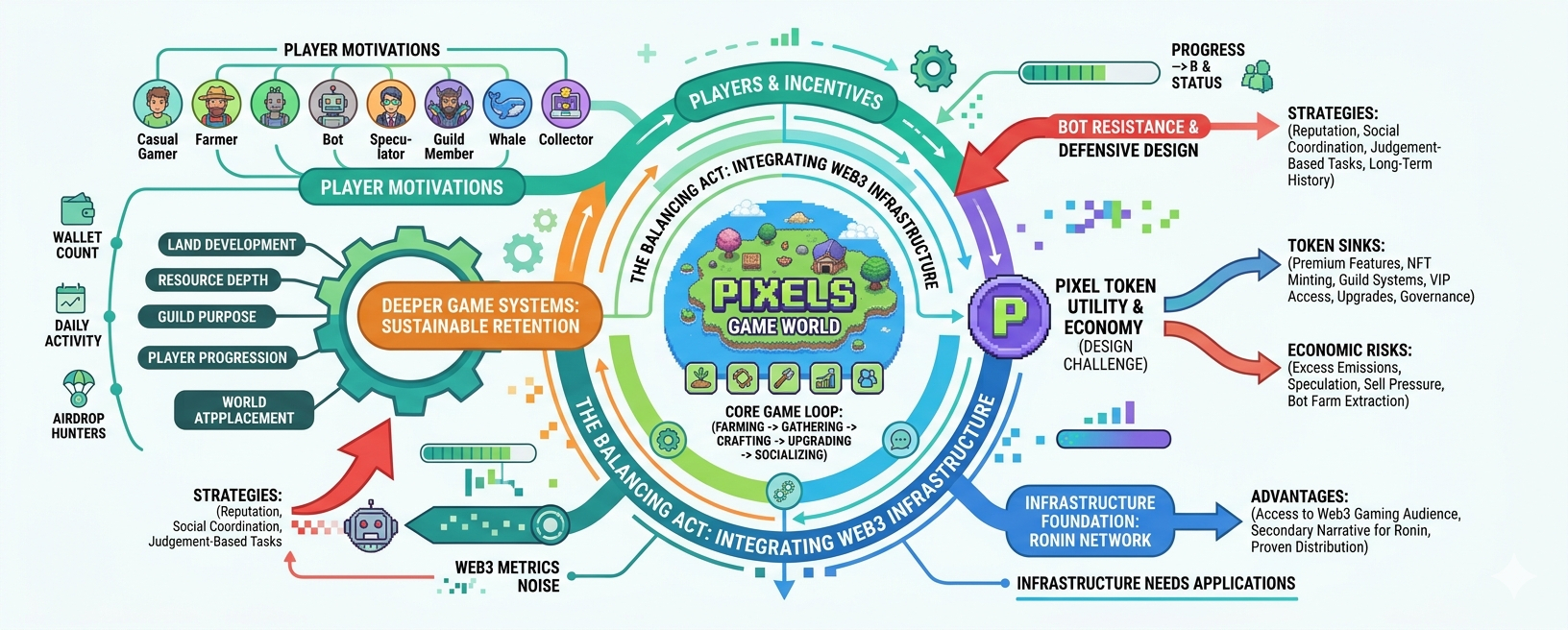
The interesting part is that Pixels tries to make blockchain infrastructure disappear into a game loop that ordinary players already understand. Farming. Crafting. Gathering. Upgrading. Socializing. Coming back tomorrow because something still needs doing
That sounds simple. It is also harder than most crypto gaming teams admit
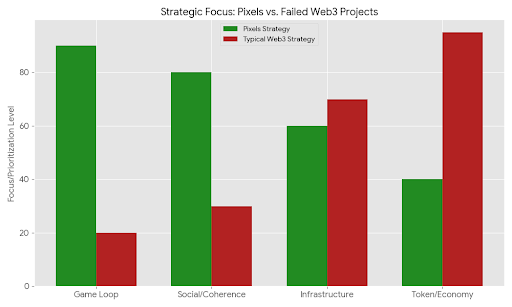
A lot of Web3 games have started from the wrong end of the system. They begin with a token model, an NFT collection, a marketplace, and a roadmap full of economy diagrams. Then, somewhere near the bottom of the plan, there is supposed to be a game
I’ve seen this fail
Players can smell it quickly. They open the product and realize the “game” is just a reward machine with a user interface. Click here. Claim there. Stake this. Mint that. Maybe there is some art. Maybe there are quests. But the center is missing
Pixels is more interesting because its center is easier to recognize
You enter a pixel-art world. You farm. You collect resources. You craft items. You improve your land. You interact with other players. The loop is not revolutionary, but it is coherent. It feels like a game before it feels like an economy
That distinction matters
The gaming industry has already proven that small loops can create strong attachment. Players do not always need cinematic drama or complex combat. Sometimes they need a patch of land, a few goals, and visible progress. A crop grows. A building improves. A resource becomes useful. A routine forms
Pixels understands that kind of engagement. It is casual, but not empty. It gives the player small reasons to return, and small reasons are often more durable than grand promises
The project runs on Ronin, which was a smart infrastructure decision. Ronin already had a Web3 gaming audience because of Axie Infinity. That gave Pixels access to users who understood wallets, NFTs, digital assets, and token economies. It also gave Ronin something it needed badly: another serious game that was not Axie
That part should not be overlooked. Infrastructure needs applications. A chain can market itself as gaming-focused forever, but if only one major game matters, the story gets stale. Pixels gave Ronin a second narrative. Softer. More casual. Less combat-driven. Easier to explain
For Pixels, Ronin brought distribution and cultural fit. For Ronin, Pixels brought fresh activity and proof that the network could support more than one kind of game
That is good infrastructure strategy
But infrastructure does not solve product problems by itself. It only gives the product a better place to run
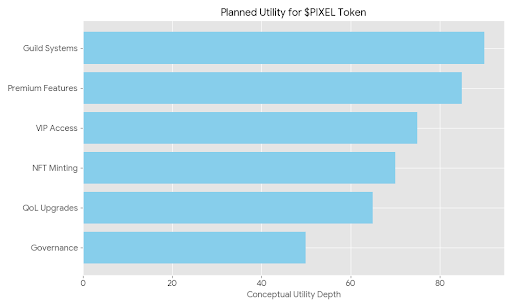
PIXEL, the token, is where the design challenge gets more complicated. It is supposed to support utility across the Pixels ecosystem: premium features, NFT minting, guild systems, VIP access, quality-of-life upgrades, and governance. On paper, that sounds reasonable
In practice, game tokens are brutal to manage
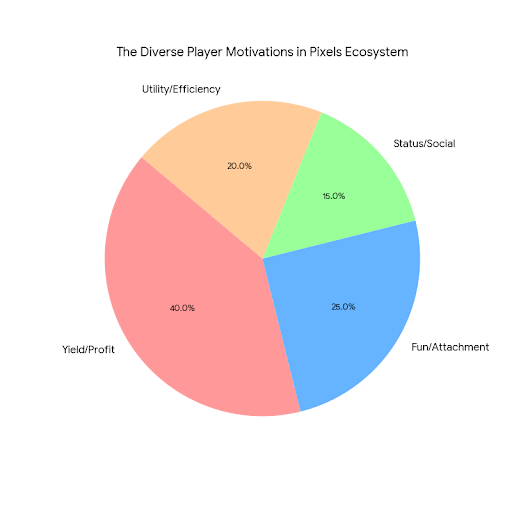
You are not just designing for players. You are designing for farmers, bots, speculators, guilds, collectors, casual users, whales, and people who will leave the second the reward rate drops. They do not all want the same thing. Some want fun. Some want yield. Some want status. Some want liquidity
The reality is messier than the pitch deck
A token can bring attention, but it also changes player behavior. Once rewards have market value, every action becomes measurable in financial terms. That can pull a game out of balance fast. Suddenly people are not asking whether a system is enjoyable. They are asking whether it is profitable
That is dangerous for a farming game
The charm of a game like Pixels depends on rhythm and attachment. You tend land because it feels like yours. You craft because progress feels good. You participate because the world feels active. If the token becomes too loud, that atmosphere starts to crack
This is the line Pixels has to walk
The game needs PIXEL to matter, but not so much that it takes over the experience. The token needs sinks, but spending cannot feel like punishment. Premium features need value, but they cannot make ordinary players feel like second-class citizens. Land needs utility, but not so much that the game becomes inaccessible to new users
It’s a hard balance
Older play-to-earn games often got this wrong. They treated earning as the main product. That worked for a while because financial incentives are powerful. People will show up for rewards. They will grind. They will optimize. They will invite others
Then the rewards shrink
And the room empties
That is not a community. That is a temporary labor market
Pixels has a better shot because it has something beyond the reward layer. The farming world gives players a reason to care before they think about the token. That does not guarantee success, but it gives the system more resilience than a pure extraction loop
Still, I would not confuse early traction with long-term health
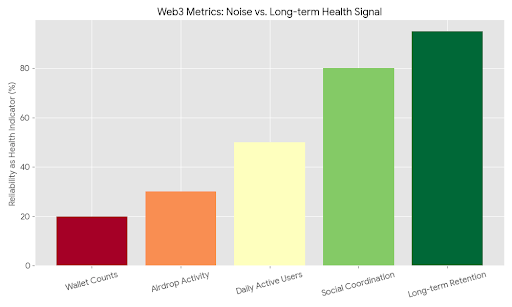
Web3 metrics are noisy. Wallet counts can mislead. Daily activity can be inflated by incentives. Bots can make a product look busier than it is. Airdrop expectations can turn users into professional task-completers. This happens across the industry
Pixels is not exempt
The real test is retention after the obvious rewards fade. Do people still come back? Do they care about their land? Do they craft because the system is useful? Do guilds form for real coordination instead of reward farming? Does the economy produce demand, or only emissions
Those are the questions that matter
This is why deeper gameplay systems are essential. Farming alone is not enough forever. Crops need to feed crafting. Crafting needs to support trade, quests, upgrades, events, and progression. Land needs to become more than a decorative container. Social systems need purpose. Guilds need jobs
A good game economy is not a pile of features. It is a network of dependencies
When one action creates demand for another, the world starts to feel alive. When every action exists only to produce a token reward, the world starts to feel mechanical
Pixels seems to understand this, especially with its later focus on resource depth, land progression, crafting, and industry systems. That is the right direction. It is also where design mistakes become more expensive
Add too much complexity, and casual players leave
Keep things too shallow, and committed players get bored
Increase rewards, and extractors flood in
Reduce rewards, and the community complains
Every lever moves something else
That is the part people underestimate. A Web3 game is not just a game plus a token. It is a game, an economy, a community, a marketplace, and an incentive system all running at the same time. Break one layer and the others feel it
Bots make the problem worse
Any system that pays real value for repeatable actions will attract automation. This is not surprising. It is not even especially clever. If a task can be scripted and the output can be sold, someone will script it
Traditional games fight bots because they hurt fairness. Web3 games fight bots because they also damage monetary systems. Automated accounts can drain rewards, distort metrics, increase sell pressure, and make honest players feel stupid for playing normally
Account bans help, but they are not a strategy by themselves
The better defense is design. Reward behavior that is harder to fake. Long-term progression. Social coordination. Contextual crafting choices. Land development. Guild activity. Reputation. Anything that requires judgment, history, or relationships is harder to automate than a simple click loop
Harder. Not impossible
There is no magic fix here, despite what vendors and protocol people like to claim
Pixels is valuable as a case study because it is operating inside these constraints in public. It has enough scale to expose the problems. It has enough game design to be more than a token farm. It has enough Web3 infrastructure to test whether ownership and open economies can improve a casual game rather than distort it
That makes it worth watching
The community layer is another challenge. In a normal game, players complain about balance changes because they affect fun. In a Web3 game, balance changes can also affect asset values. That changes the emotional temperature of every update.
A crop adjustment is not just a crop adjustment
A land utility change is not just a design patch
A reward change is not just a tuning decision
People may have money on the line, and that makes everything louder
This creates a strange job for the developer. Build the game. Manage the economy. Communicate with token holders. Keep casual players comfortable. Fight bots. Support marketplaces. Maintain infrastructure. Avoid overpromising. Ship updates anyway
No wonder so many teams collapse into slogans
Pixels has not solved all of this. I would be suspicious of anyone claiming it has. But it has made one good architectural choice from the start: the experience is understandable without the blockchain explanation
That is where more Web3 games should begin
The infrastructure should support the game, not become the game. Ownership should add depth, not friction. Tokens should create useful coordination, not replace fun. Marketplaces should serve player activity, not become the main activity
I am skeptical of most Web3 gaming hype because the industry has repeatedly confused liquidity with loyalty. A rising token can make everything look healthy. It can hide weak retention, shallow gameplay, and bad economic design.
But I am still optimistic about the infrastructure
Open assets can be useful. Player-owned economies can be useful. Portable identity can be useful. Shared marketplaces can be useful. Community governance can be useful in limited, well-designed areas
Useful does not mean automatic
Pixels is one of the better examples of a project trying to make those ideas feel less abstract. Not perfect. Not finished. But grounded in a game loop that people can understand without needing to decode a financial system first
That gives it a chance
The next phase is the real test. Pixels has already shown it can attract attention. Now it has to prove it can sustain meaningful play. That means deeper systems, better token sinks, stronger bot resistance, healthier spending behavior, and a world players care about even when the market is quiet
That last part matters most
If people only stay when rewards are high, the system is fragile. If they stay because the world has become part of their routine, Pixels has something more durable
For now, I see Pixels as a practical experiment wearing the skin of a cozy farming game. It is not the grand solution to blockchain gaming. It is not proof that tokens belong in every game
It is more useful than that
It is a working test of whether Web3 infrastructure can support a game without suffocating it. And after watching this industry chase one oversized promise after another, that kind of modest, difficult experiment feels much more interesting
