

Some games only get more interesting the longer you watch them. Pixels is one of those rare cases.
At first glance, it looks simple and accessible. You log in, farm, trade, improve your routine, and make progress without feeling heavily restricted. That open design is part of what makes it appealing.
But the more I paid attention, the more I felt there was another layer underneath it.
Open access is only the beginning.
Players can engage in dozens of ways, yet not every action carries equal long-term weight. Some choices build real momentum that compounds over weeks and months. Others feel productive in the moment but fade quickly once the daily loop resets, leaving little behind.This quiet distinction is what makes Pixels fascinating.
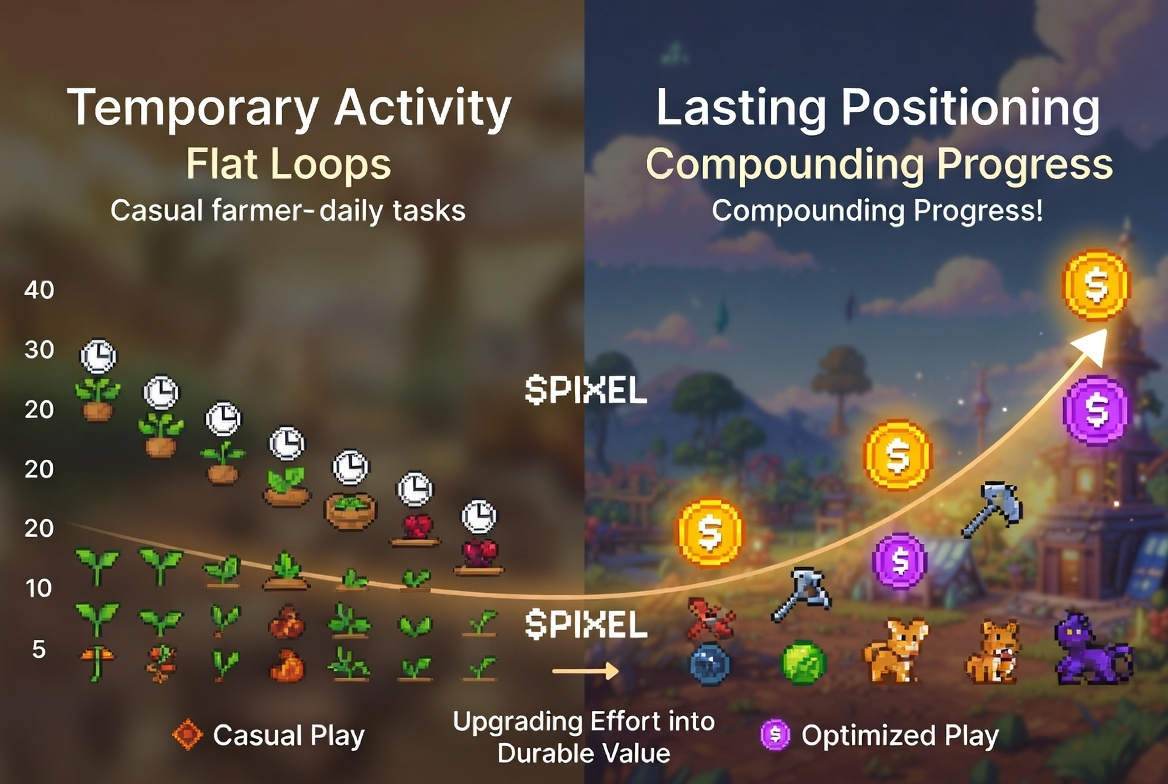
Two players can spend similar time in the same world and still end up in very different positions later. One gradually builds stronger advantages, better opportunities, or more efficient progress. Another stays active but remains inside routines that repeat without much change.
That suggests the real divide may not be free vs paid.It may be temporary activity vs lasting positioning.
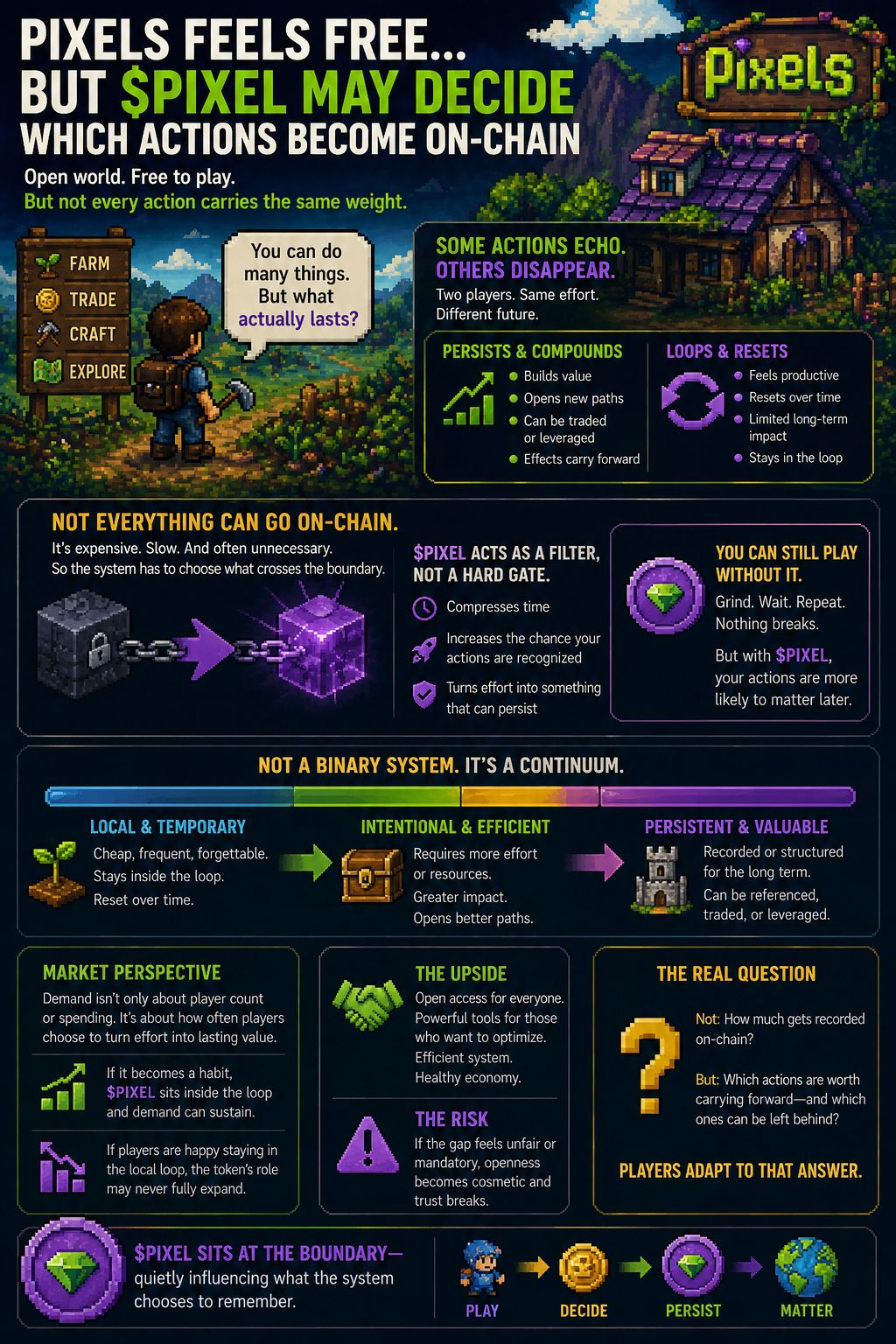
On the surface, it feels open. You can log in, farm, trade, improve your loop over time, and keep progressing without heavy pressure to spend. It gives the impression that all actions inside the game carry similar weight.
But I don’t think they do.Some actions seem to create momentum.Others disappear the moment they’re finished.
You start noticing this when two players put in similar effort but end up with very different outcomes. Not just in rewards but in persistence.
One player’s progress seems to stack, carry forward, or open future opportunities. The other remains stuck in repeatable loops that look productive today but leave little behind tomorrow.
In Pixels, $PIXEL feels closely aligned with the shift from ordinary gameplay into meaningful, lasting value helping committed players turn consistent effort into durable advantages while still letting casual farmers enjoy the world freely.
It’s a delicate balance, and not an easy one to maintain. Get it right, and you build real stickiness. Miss it, and the gap between casual fun and meaningful progress can erode trust quickly.
That’s why Pixels keeps revealing new layers the longer you watch it. It’s less about replacing a job with gaming income and more about creating a living world where behavior, choice, and positioning shape your outcomes.
Still one of the more thoughtful experiments in Web3 gaming.