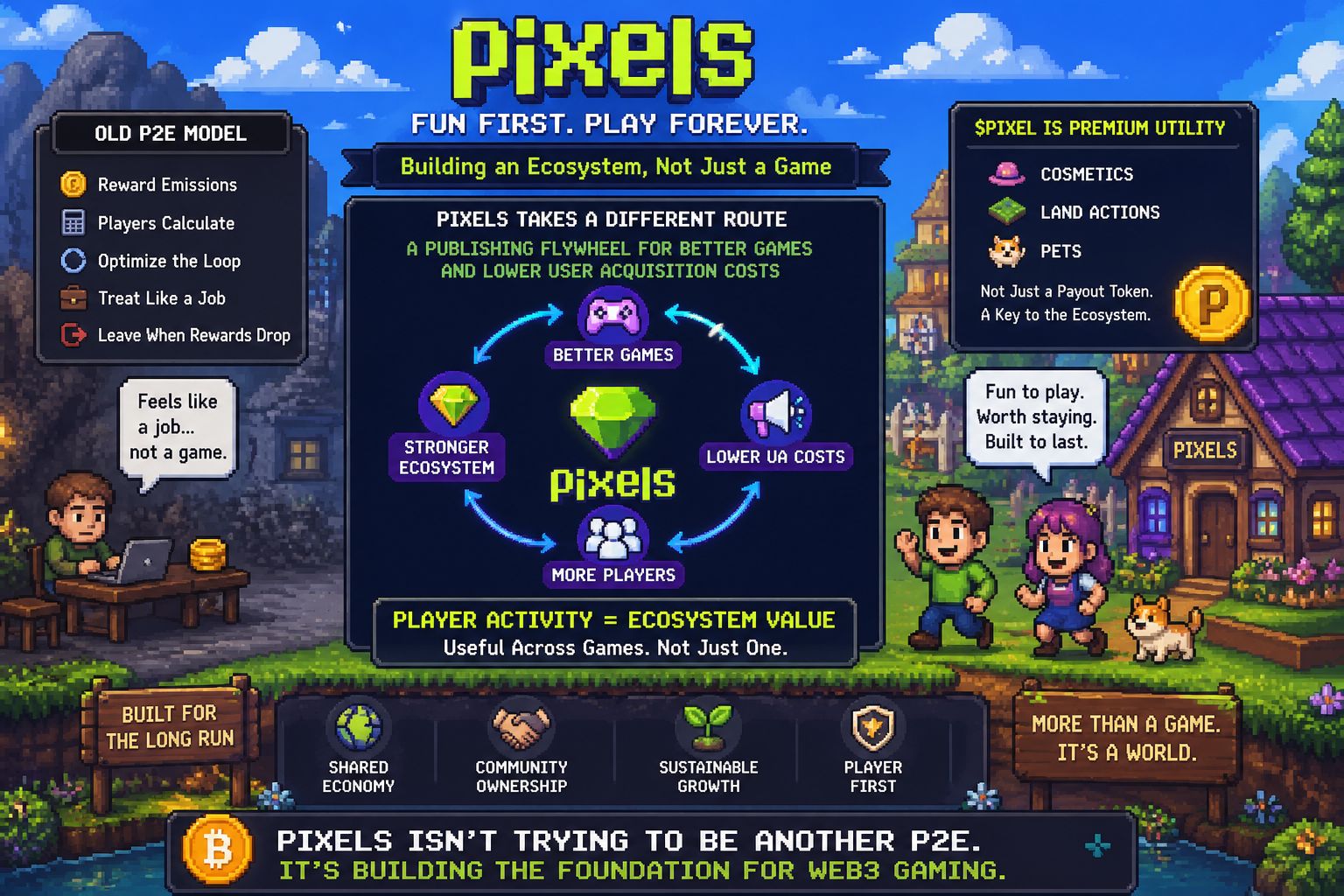
Strategi ekosistem Pixels terasa berbeda dari P2E lama karena tidak terlihat seperti permainan yang hanya bertahan pada emisi hadiah. Model lama itu memiliki aroma yang familiar: para pemain datang, menghitung penghasilan, mengoptimalkan loop, dan perlahan-lahan memperlakukan permainan seperti pekerjaan kecil dengan grafik yang lebih baik, menyebabkan perhatian menghilang saat pembayaran melemah. Pixels mencoba jalur lain di mana bagian yang menarik bukan hanya farming atau quest, tetapi cara proyek ini memposisikan dirinya lebih luas dari sekedar satu permainan. Whitepaper-nya membingkai filosofi "Fun First" dan flywheel penerbitan yang dibangun di sekitar permainan yang lebih baik dan biaya akuisisi pengguna yang lebih rendah, mengalihkan fokus dari "Berapa banyak yang bisa diperoleh pemain hari ini?" menjadi "Bagaimana kita membuat aktivitas pemain berguna di seluruh ekosistem?" Ini mengubah perasaan proyek sepenuhnya, terutama karena $PIXEL dianggap sebagai utilitas premium untuk kosmetik, aksi tanah, dan hewan peliharaan alih-alih token pembayaran dasar. Akhirnya, Pixels terasa layak untuk diperhatikan bukan karena telah memecahkan permainan Web3, tetapi karena kurang terobsesi dengan "earn first" dan lebih fokus pada membangun alasan yang nyata bagi pemain untuk tetap bertahan.