
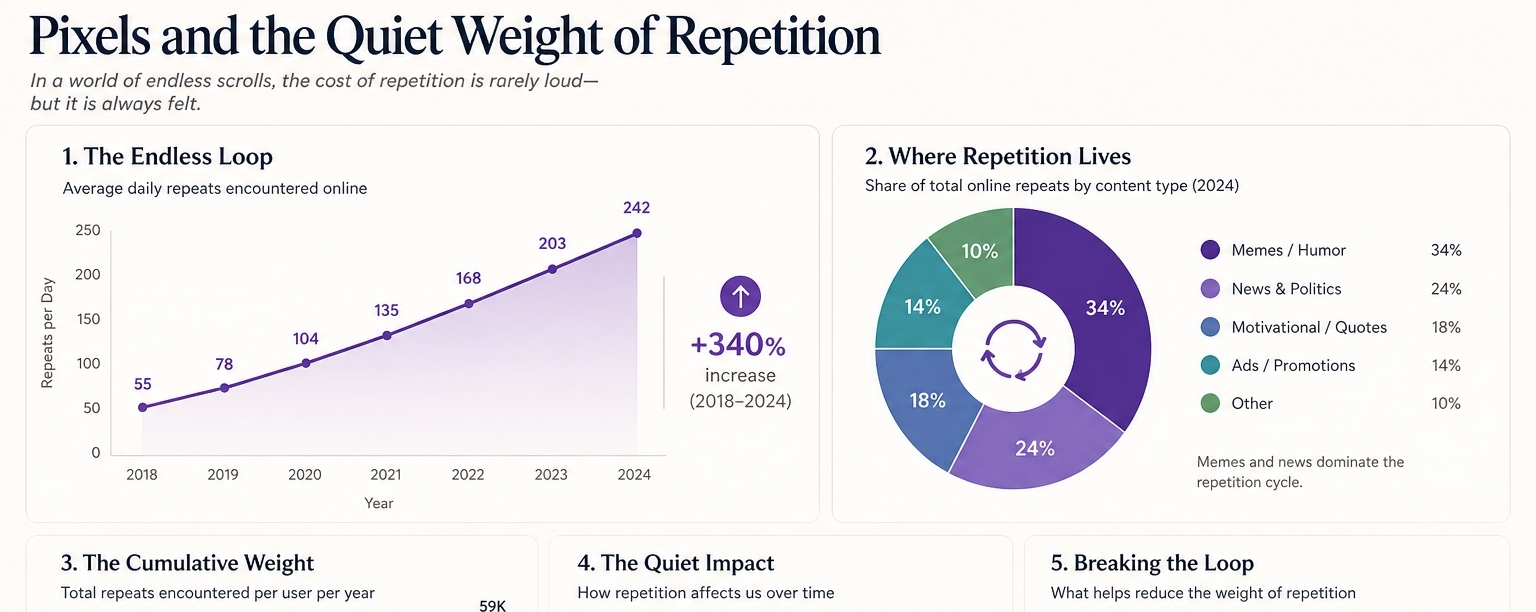
Pixels sits in front of me like something that doesn’t want to argue for itself. It’s just there. A world with soil, movement, small tasks, quiet repetition. You plant something, you come back, you collect it. You walk a little, see other players doing roughly the same thing, no one rushing you, no one really explaining why any of it should matter beyond the fact that it exists and keeps going.
I’ve been watching it like that, without trying to force meaning onto it too quickly. Because I’ve seen what happens when meaning gets forced in this space. Everything starts sounding bigger than it is. Ownership, economies, freedom—words that feel heavy until you actually spend time inside the system and realize most of your experience comes down to loops that either feel tolerable or don’t.
Pixels feels like it’s built from that awareness, or at least from the aftermath of it.
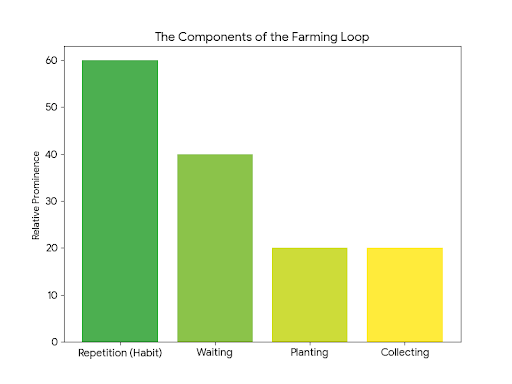
The farming loop is simple in a way that almost feels stubborn. It doesn’t try to hide what it’s doing. You repeat actions. You wait. You return. That kind of honesty is rare, but it also creates a problem. When something is that exposed, you can’t escape the question of why you’re doing it. There’s no spectacle to distract you. No illusion carrying you forward. Just habit, slowly forming or slowly breaking.
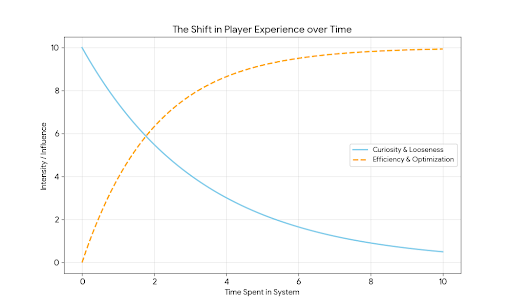
I keep noticing how quickly habit turns into something else. At first, it feels calm. You settle into it. There’s a kind of softness in doing the same thing without pressure. But give it time, and people start measuring. They start optimizing. They start comparing. That’s when the tone shifts. What felt like a place becomes something closer to a system you manage.
That shift doesn’t happen loudly. It creeps in through small decisions. Someone finds a faster way to farm. Someone else scales it. Suddenly the loop isn’t just a loop anymore, it’s a path with better and worse versions. Efficiency starts replacing curiosity. The world doesn’t change visually, but it feels different.
Pixels hasn’t fully hardened into that yet, and maybe that’s why it still holds attention. It feels unfinished in a way that leaves space. People are still figuring it out, still moving through it without fully locking into patterns. But I’ve seen how temporary that phase is. The moment enough people settle in, the system starts revealing what it really rewards.
And that’s always the part I care about more than what it says.
The social layer adds another kind of tension. You’re not alone, even when you’re doing something repetitive. You see others passing by, working their own plots, existing in the same quiet loop. It creates this low-level sense of presence that makes the world feel less empty. But shared space brings its own problems. People don’t just exist next to each other—they influence each other. They shape behavior, even without trying.
Give it enough time, and that influence starts to organize itself. Informal hierarchies, unspoken expectations, subtle competition. What began as casual proximity can slowly turn into something structured, even rigid. Not because the system demanded it directly, but because people tend to build patterns wherever there’s room.
Creation sits somewhere in the middle of all this. The idea of making something inside the world, leaving a mark, shaping a space—it sounds meaningful, and sometimes it is. But I’ve watched that idea get flattened before. Creation becomes output. Output becomes expectation. And eventually, it stops feeling like expression and starts feeling like contribution to something that keeps asking for more.
Pixels still feels like it’s resisting that, at least partially. There’s a looseness to it. Things don’t feel over-defined. You’re not constantly being told what matters most. But that looseness is fragile. It can disappear the moment the system starts tightening around growth, around metrics, around keeping people engaged at any cost.
That’s where most projects change.
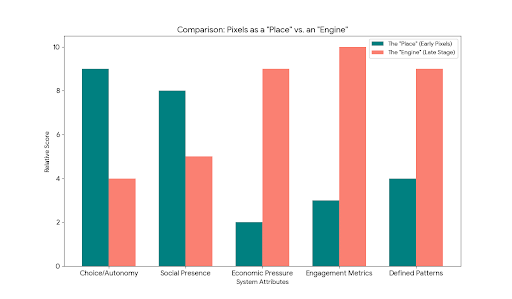
They start out trying to be places, and end up becoming engines.
I don’t think Pixels is immune to that. If anything, its simplicity makes it more exposed. There’s not much to hide behind. When pressure comes—more users, more demand, more attention on whatever economy sits underneath—it will have to decide what it really is. A space people drift through, or a structure they’re pulled into.
I don’t expect a clean answer. These things rarely resolve neatly. They evolve in small, uneven ways, usually reacting to problems rather than anticipating them. What matters is whether the experience still feels like something you choose, or something that quietly starts choosing for you.
Right now, Pixels feels like it’s still in that early, uncertain space. Not proving itself, not collapsing either. Just existing, letting people move through it, letting patterns slowly form. That’s enough to keep it interesting, at least from a distance.
Not because it’s doing something extraordinary, but because it hasn’t fully revealed what it becomes once people stop wandering and start staying.