In the fast-moving world of Web3, attention shifts quickly—but value tends to stay where engagement is real. That’s exactly why Pixels has started to stand out. It isn’t just another blockchain game promising rewards; it’s building a digital economy where time, strategy, and consistency actually matter.
This article breaks down what Pixels is, how its economy works, and how it aligns with responsible trading and ecosystem practices similar to those encouraged by platforms like Binance.
What is Pixels?
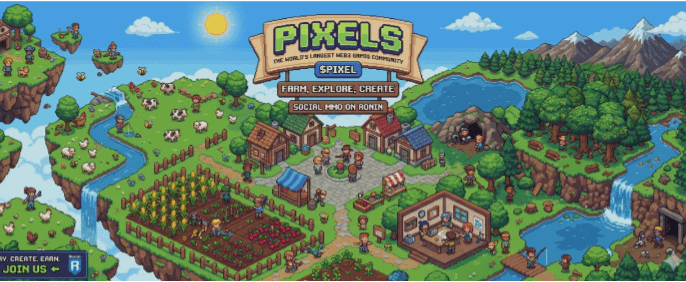
Pixels is a blockchain-based farming and social simulation game built on the Ronin network. At first glance, it feels familiar—plant crops, expand land, interact with others. But underneath, there’s a deeper system: every action has economic value.
Players don’t just “play”—they participate in an economy.
Crops can be traded
Resources can be monetized
Time investment can translate into real rewards
That’s where the phrase “value never sleeps” comes from. Even when you’re offline, the ecosystem keeps moving.
Why Pixels is Gaining Attention
Most Web3 games struggle with one major issue: they reward early users, then collapse under inflation or lack of engagement. Pixels approaches this differently.
1. Real Utility Over Hype
Instead of focusing only on token price, Pixels builds value through:
Resource scarcity
Player-driven markets
Long-term progression
This reduces the “pump and dump” cycle seen in many crypto games.
2. Consistent Player Activity
The game rewards daily interaction, not just one-time investment. This creates:
Stable demand
Organic growth
Stronger community retention
3. Balanced Token Economy
Unlike unsustainable reward systems, Pixels gradually adjusts rewards based on activity. This aligns with Binance’s general principles of:
Avoiding artificial price manipulation
Encouraging sustainable tokenomics
Promoting transparency
The Psychology Behind Its Success
Pixels works because it taps into human behavior:
Progress Feels Personal
When you upgrade land or grow crops, it feels earned—not bought. That emotional connection increases retention.
Small Wins Keep You Hooked
Frequent, smaller rewards trigger consistency. Instead of chasing one big payout, players stay active daily.
Ownership Changes Mindset
When assets are truly yours (on-chain), you treat them differently. You think long-term instead of short-term.
How Value is Created in Pixels
Value in Pixels doesn’t come from speculation alone—it comes from activity.
Time → Resources
The more you play, the more assets you generate.
Resources → Trade
Assets can be sold or exchanged within the ecosystem.
Trade → Liquidity
An active marketplace ensures value circulation.
This cycle keeps the economy alive 24/7—even when individual players log off.
Binance-Aligned Principles in Pixels
While Pixels is not Binance itself, its structure reflects several responsible ecosystem practices often emphasized in Binance guidelines:
1. Sustainability Over Quick Profit
Short-term hype is risky. Pixels focuses on long-term engagement instead.
2. Fair Participation
Rewards are tied to effort, not just capital. This reduces inequality between players.
3. Risk Awareness
Like any crypto-related platform:
Earnings are not guaranteed
Token values can fluctuate
Users should avoid over-investing
4. Transparency
Game mechanics and reward systems are visible and understandable, reducing hidden risks.
Risks You Should Not Ignore
Even strong projects carry risks. Pixels is no exception.
Token volatility – Prices can rise or fall quickly
Market dependency – Player interest drives value
Time investment – Rewards require consistent effort
A balanced mindset is key. Treat it as a game with potential upside—not a guaranteed income source.
Strategy: How to Approach Pixels Smartly
If you’re starting out, avoid common mistakes.
Start Small
Don’t rush into buying expensive assets.
Focus on Daily Consistency
Regular activity often beats aggressive spending.
Reinvest Wisely
Use in-game earnings to grow gradually instead of cashing out too early.
Stay Updated
Game economies evolve. Adapt your strategy as the system changes.
Final Thoughts
Pixels represents a shift in Web3 gaming—from hype-driven projects to value-driven ecosystems.
It works because:
Players stay active
The economy is balanced
Rewards are tied to real engagement
In a space where many projects fade quickly, Pixels shows that when a system is built around human behavior and sustainable mechanics, value doesn’t just appear—it stays.
And that’s why, in Pixels, value truly never sleeps.