
When I first started looking into AI-related crypto projects, I kept running into the same problem. Almost every project sounded exciting at first, but the deeper I researched, the more disconnected they felt from actual AI infrastructure. Most were either simple AI wrappers with tokens attached or speculative narratives built around buzzwords like “agents” and “decentralized intelligence.”
As a trader, I’ve learned that hype alone never lasts. Eventually the market asks harder questions. Who is actually using the product? Does the infrastructure solve a real problem? And most importantly, does value flow back into the ecosystem in a sustainable way?
That mindset is what made me pay attention to $OPEN Ledger.
At first, I almost ignored it because the AI + blockchain sector has become crowded very quickly. Every week there seems to be another project claiming it will power the future of autonomous agents or decentralized AI systems. But after spending time researching OpenLedger, I started viewing it less as another narrative trade and more as an infrastructure experiment worth watching closely.
What caught my attention was the idea of building blockchain infrastructure specifically for AI participation instead of trying to force AI applications onto systems originally designed only for finance or payments.
I think that distinction matters.
Most blockchains today were built around DeFi, transfers, or general smart contracts. AI systems operate differently. They require constant data exchange, model coordination, agent execution, and scalable interactions between applications. If AI agents become a real part of the digital economy in the future, the infrastructure supporting them will probably need to look very different from traditional blockchain systems.
That’s where @OpenLedger becomes interesting to me.
The project focuses on monetizing data, models, and agents directly on-chain. In simple terms, it’s trying to create an ecosystem where AI-related assets can interact economically inside blockchain infrastructure instead of remaining locked inside centralized platforms.
From a market perspective, I think this idea is arriving at the right time.
AI is no longer just a trend for tech companies. It’s becoming infrastructure itself. Businesses are integrating AI tools into workflows, developers are building autonomous systems, and open-source models are improving rapidly. At the same time, crypto has been searching for stronger real-world use cases after years dominated by speculation.
That overlap creates an opportunity for projects like OpenLedger.
I also think the project’s compatibility with Ethereum standards matters more than people realize. One of the biggest reasons infrastructure projects fail is because developers don’t want to abandon existing ecosystems. OpenLedger positioning itself around wallets, smart contracts, and Layer 2 compatibility lowers some of that friction.
Still, I try to stay realistic about the risks.
The AI infrastructure sector is becoming extremely competitive. Large centralized companies like OpenAI and Google already dominate huge parts of the AI market. On the crypto side, multiple projects are chasing similar narratives around decentralized compute, AI agents, and machine economies.
That means execution matters far more than branding.
For me, one of the most important questions is whether the token itself captures meaningful value or whether all the value stays at the application layer. Crypto investors are becoming much smarter about this issue. In previous cycles, almost any strong narrative attracted liquidity. Now traders are asking whether network activity actually creates sustainable demand for the token.
I think OpenLedger’s long-term success depends on real adoption, not temporary hype. The network would need developers building useful AI applications, agents performing real tasks, and users interacting with the ecosystem consistently even during weaker market conditions.
That’s not easy.
Decentralized AI infrastructure still faces major challenges around scalability, efficiency, and competition from centralized systems. There’s also the possibility that enterprises may prefer traditional cloud providers over blockchain-based coordination layers for practical reasons.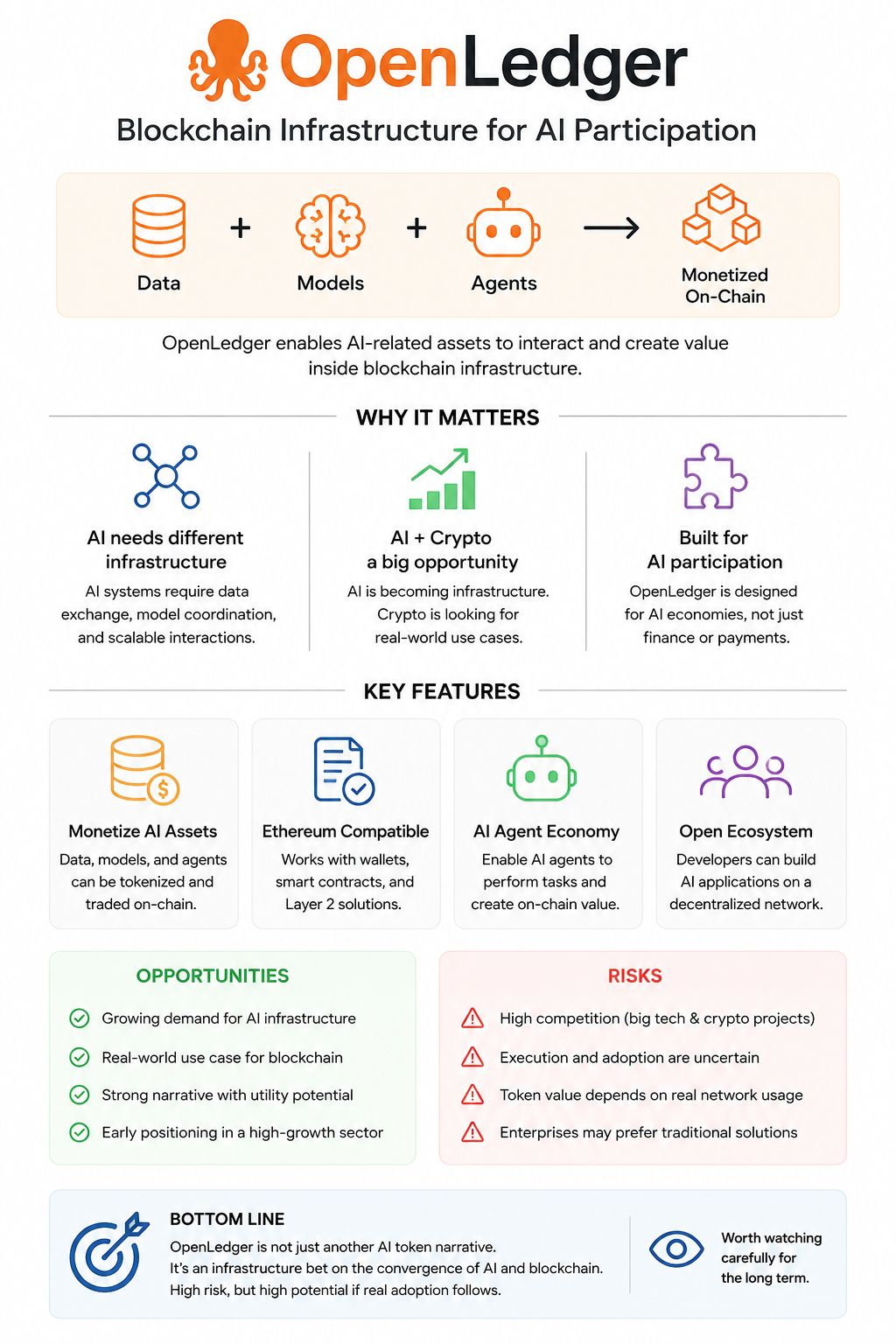
But even with those concerns, I think OpenLedger represents something more serious than the average AI token narrative currently circulating in the market.
After researching the project, I came away viewing it less as a short-term speculative trade and more as a long-term infrastructure bet on the convergence of AI and blockchain technology.
I’m not treating it as a guaranteed winner because this sector is still early and highly uncertain. But I do think projects focused on building real infrastructure for AI economies deserve attention, especially as the market moves beyond simple speculation and starts looking for sustainable utility.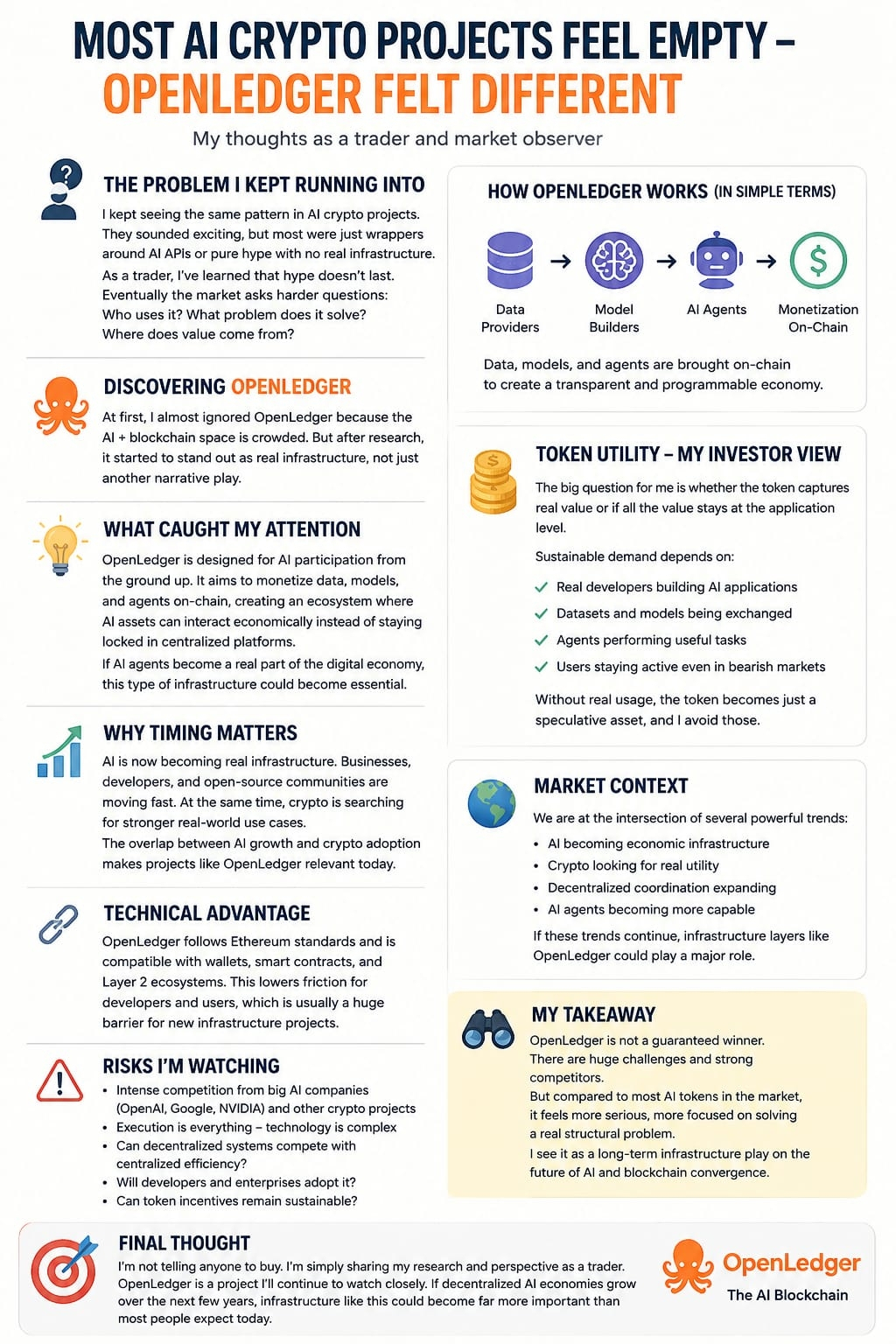
For now, #OpenLedger feels like one of those projects worth keeping on my watchlist carefully rather than blindly chasing. If decentralized AI ecosystems continue growing over the next few years, infrastructure layers like this could end up becoming much more important than most traders currently expect.