@OpenLedger I have been thinking deeply about something lately, and honestly, the more I observe the AI industry, the more I feel that most people are looking at the wrong layer of the revolution. Everywhere I look, the conversation revolves around visible progress. People are obsessed with larger models, faster responses, autonomous agents, automated workflows, smarter reasoning systems, and endless productivity promises. Every week there is another breakthrough, another company claiming to build the future, and another narrative trying to convince the market that artificial intelligence is evolving faster than ever before. But despite all of this momentum, I keep feeling that the most important transformation may not happen at the surface level at all. I think the real shift may happen underneath everything, inside the infrastructure layer that controls how intelligence is created, updated, distributed, rewarded, and economically connected across digital ecosystems. That is exactly why @OpenLedger has remained in my mind far longer than most AI-related projects I usually come across in Web3.
To be honest, I normally become skeptical whenever I hear phrases like “AI-native blockchain” because the industry has reached a point where almost every project tries to attach itself to the AI narrative in one way or another. In many cases, the technology remains exactly the same while only the branding changes. But the more I studied OpenLedger’s direction, the more I realized that the interesting part may not be the marketing phrase itself. What actually stands out is the possibility that OpenLedger is attempting to rethink the relationship between intelligence, contribution, attribution, and ownership from the ground up. And I think that is a much larger conversation than simply building another AI product or another blockchain ecosystem.
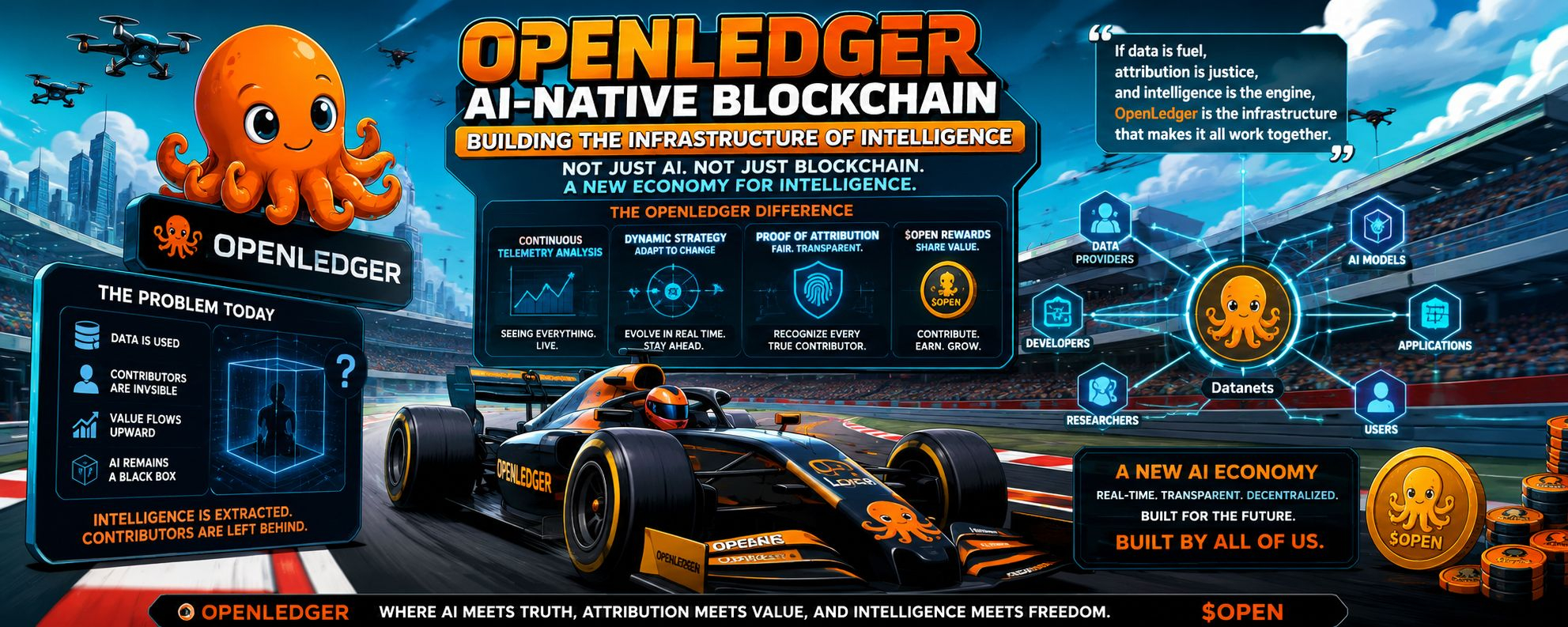
When I look at the current AI economy honestly, one contradiction becomes impossible to ignore. Modern artificial intelligence is fueled by massive amounts of human-generated value every second. Conversations, public knowledge, behavioral patterns, feedback loops, creativity, emotional reactions, cultural trends, research, and digital interactions continuously feed intelligent systems across the internet. Yet despite contributing enormous value to these models, most individuals remain invisible inside the economic structure surrounding AI. The systems absorb human intelligence constantly, but the actual contributors rarely receive transparency, attribution, or ownership proportional to the value they help create. In many ways, today’s AI economy resembles a giant extraction machine where contribution flows upward while visibility and economic control remain concentrated at the top.
And this is where OpenLedger begins to feel genuinely different to me. Instead of treating AI as a closed black box that simply consumes information and generates outputs, the project appears to be exploring the idea that intelligence itself should become traceable, dynamic, and economically aware. The concept around Datanets especially caught my attention because it suggests a system where AI continuously interacts with live environments rather than functioning as a static model frozen in time. That distinction may sound subtle at first, but I actually think it changes the entire philosophy behind machine intelligence. Traditional AI models are often trained on historical information before being deployed into environments that evolve constantly. But reality itself does not stay still long enough for static intelligence to remain fully reliable forever. Markets shift overnight. Narratives evolve within hours. Human behavior changes continuously. Information becomes outdated at incredible speed. In a world moving this quickly, the ability to adapt in real time may eventually become more important than simply having larger computational scale.
This is why I keep returning to the idea that OpenLedger may not simply be building another blockchain network. I think the project may actually be exploring whether AI infrastructure itself can evolve into a continuously adaptive economic environment where intelligence, attribution, and incentives remain connected at all times. And honestly, if that concept ever works at scale, the implications could become much larger than most people currently realize. Because once contribution becomes measurable, ownership inevitably enters the conversation as well. If AI systems can identify how data and participation influence outcomes, then contributors are no longer just passive users interacting with technology. They become active economic participants inside the intelligence layer itself. That possibility could fundamentally reshape how future AI economies operate.
At the same time, I do not think this direction is simple at all, and that is probably what makes it so interesting. The deeper I think about decentralized attribution systems, the more difficult questions begin appearing in my mind. Can human contribution truly be measured fairly without oversimplifying value itself? Are all forms of intelligence even quantifiable in the first place? What happens if systems become so focused on optimization and measurement that complexity eventually overwhelms usability? And perhaps even more importantly, can decentralized AI infrastructure realistically compete against centralized entities already controlling enormous computational resources, massive datasets, and dominant market positions? These are not small obstacles. In fact, they may become some of the defining technological and economic questions of the next decade.
Still, history repeatedly shows that infrastructure shifts often begin quietly before the majority fully understands their importance. Most people focus on applications because applications are visible. Infrastructure usually remains invisible until entire industries become dependent on it. I think this is why projects like OpenLedger deserve more attention than they currently receive. Not because everything is already solved, and not because the future is guaranteed, but because the project appears to be asking the right questions before the rest of the industry is forced to confront them seriously. The AI economy cannot scale forever while ignoring attribution, contribution, transparency, and ownership. Eventually those issues become too important to remain hidden underneath closed systems.
Another reason why OpenLedger continues to stand out to me is because it approaches AI less like a finished product and more like an evolving environment. I think this mindset shift matters enormously. For years, the dominant AI model has been relatively one-directional: humans provide inputs, the system produces outputs, and the underlying process remains mostly invisible. But OpenLedger’s direction suggests something much more interactive and economically connected. Intelligence no longer behaves like a static tool existing outside the ecosystem. Instead, it becomes part of a constantly moving network where data, participation, incentives, and adaptation continuously influence one another in real time. That is a radically different way to think about artificial intelligence infrastructure.
And honestly, I believe this may eventually become one of the defining philosophical shifts inside the entire AI industry. The future may not simply belong to the companies building the smartest isolated models. It may belong to the ecosystems capable of creating sustainable intelligence economies where contribution, transparency, and adaptation exist together. Because intelligence itself does not emerge from nothing. It emerges from environments, interactions, incentives, and continuous information exchange. The projects that understand this early may ultimately shape how AI integrates into society far more deeply than projects focused only on short-term output performance.
Of course, none of this guarantees success for OpenLedger. Building infrastructure-level technology is incredibly difficult, especially when it involves both blockchain coordination and artificial intelligence systems simultaneously. The technical challenges alone are enormous. Adoption challenges may become even harder. Markets move unpredictably, narratives shift constantly, and many ambitious infrastructure projects fail long before their vision fully matures. But despite all those risks, I still think OpenLedger represents something much more meaningful than a temporary AI trend. To me, it feels like an early attempt to redesign the invisible economic architecture underneath machine intelligence before centralized systems dominate it completely.
And maybe that is the most important part of all. The project is forcing people to think beyond outputs and begin questioning the structure underneath intelligence itself. Who contributes to AI? Who owns the value it creates? Who controls the infrastructure powering future intelligence systems? And can decentralized networks eventually create fairer economic relationships between humans and machine intelligence? Those questions may end up shaping the next era of technology far more than most people currently realize.
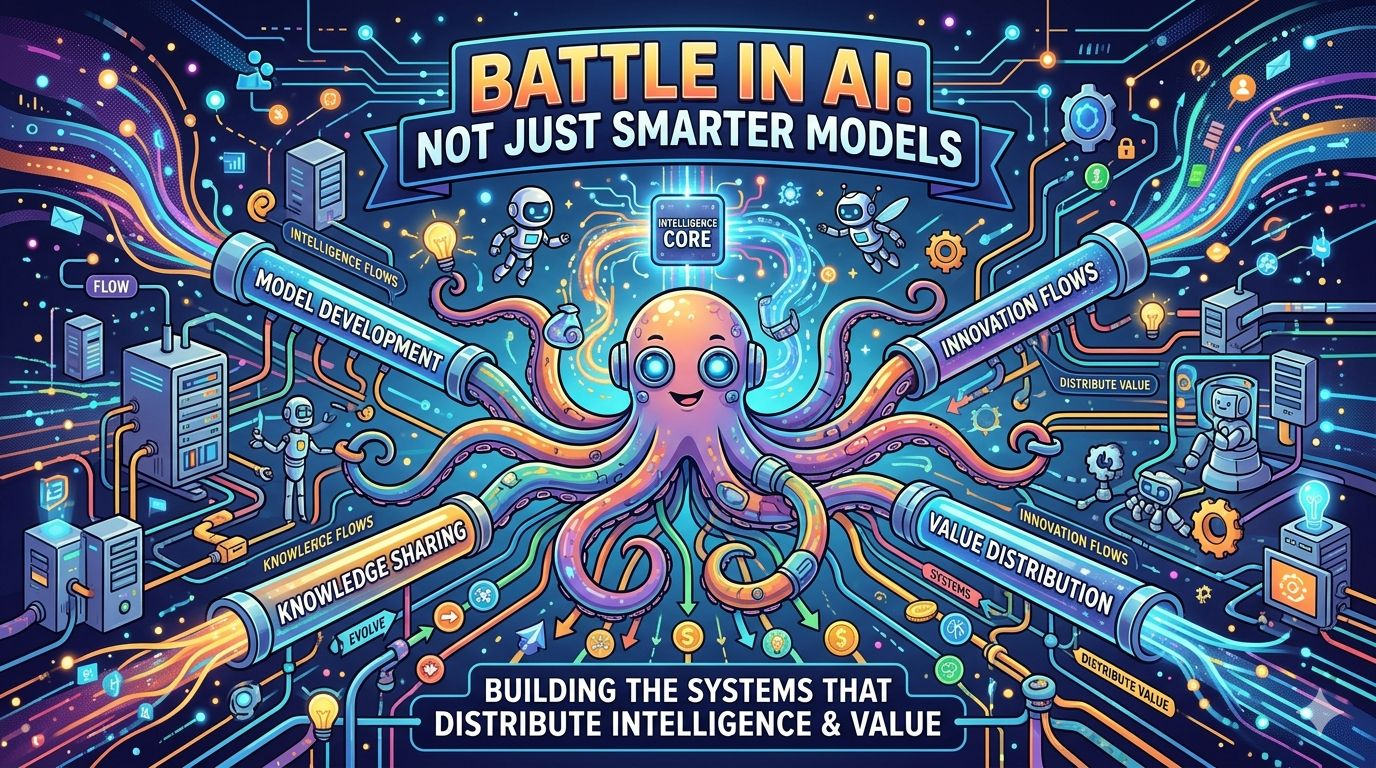
That is why I keep feeling that @OpenLedger may eventually matter for a very different reason than the market currently expects. Not because it attached itself to the AI narrative early. Not because it promised unrealistic hype. But because it recognized something many people are still overlooking: the future battle in artificial intelligence may not only be about building smarter models. It may be about building the systems that determine how intelligence itself flows, evolves, and distributes value across the digital world.