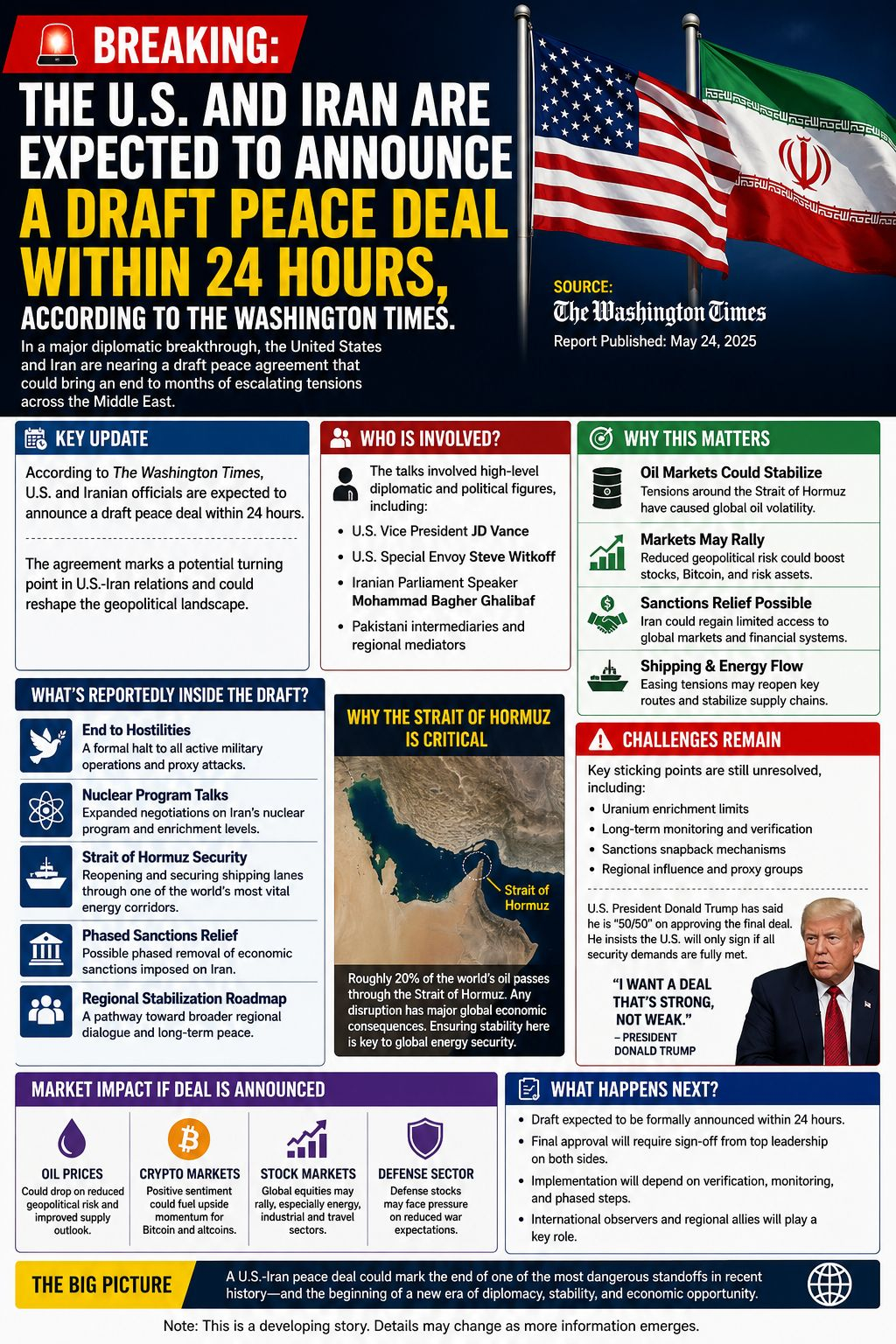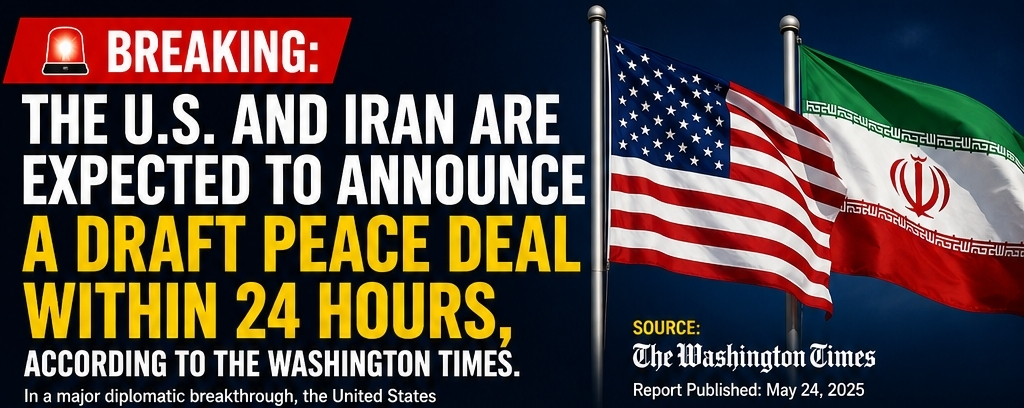
Reports indicate that the United States and Iran could announce a draft peace agreement within the next 24 hours, marking what may become one of the most consequential diplomatic breakthroughs in the Middle East in years. According to multiple sources, including , negotiators from both sides have reportedly approved a preliminary framework that is now awaiting final political sign-off.
The proposed agreement follows weeks of intense behind-the-scenes negotiations involving senior U.S. officials, Iranian leadership figures, and regional mediators. Reports suggest that key figures such as Vice President JD Vance, special envoy Steve Witkoff, Iranian Parliament Speaker Mohammad Bagher Ghalibaf, and Pakistani intermediaries played central roles in advancing the talks.
Why This Matters
A finalized peace framework could dramatically reshape global geopolitical dynamics:
Oil markets could stabilize after months of volatility tied to tensions around the Strait of Hormuz.
Risk assets including Bitcoin and equities may rally if investors interpret the agreement as reducing the probability of broader regional conflict.
Sanctions relief discussions could eventually reopen parts of Iran’s economy to global markets.
Shipping and energy supply chains may normalize if restrictions around Hormuz are eased.
The Strait of Hormuz remains one of the world’s most strategically important energy corridors, handling a significant share of global oil shipments. Any long-term de-escalation would likely reduce fears of supply disruptions that have pressured commodity markets for months.
What’s Reportedly Inside the Draft
While the full terms remain undisclosed, reports indicate the framework could include:
A formal end to active hostilities
Expanded negotiations on Iran’s nuclear program
Reopening and securing shipping lanes through Hormuz
Possible phased sanctions relief
A roadmap toward broader regional stabilization talks
However, significant sticking points reportedly remain, especially regarding uranium enrichment limits and long-term enforcement mechanisms. President Donald Trump has publicly stated he is still “50/50” on approving the final deal, emphasizing that Washington would only sign an agreement that fully satisfies U.S. security demands.
Market Implications
Financial markets are already reacting to the possibility of de-escalation:
Oil traders are closely watching for confirmation of Hormuz reopening guarantees.
Crypto markets could benefit from improved macro sentiment and reduced geopolitical risk premiums.
Defense and energy sectors may see sharp repositioning depending on the final terms.
If confirmed, this agreement would represent a major diplomatic pivot after months of escalating confrontation that shook global markets and heightened fears of a wider regional war.
Still, investors should remain cautious. Diplomatic negotiations at this stage are highly sensitive, and last-minute disagreements could still derail the process before official signatures are secured. #iran #US #TRUMP #news #BREAKING