
Something about AI projects has been bothering me lately.
Most of them talk about the same thing.
Better answers.
Faster agents.
Smarter automation.
More powerful outputs.
And of course, outputs matter. That is what users see first. If an AI model gives a useful answer or an agent completes a task, people naturally focus on the result.
But I think the bigger question is not only what AI produces.
The bigger question is what happened before that output appeared.
Where did the data come from?
Who contributed to the training process?
Which model created the result?
How did the system improve over time?
And when value is created, who should actually benefit from it?
This is where @OpenLedger caught my attention.
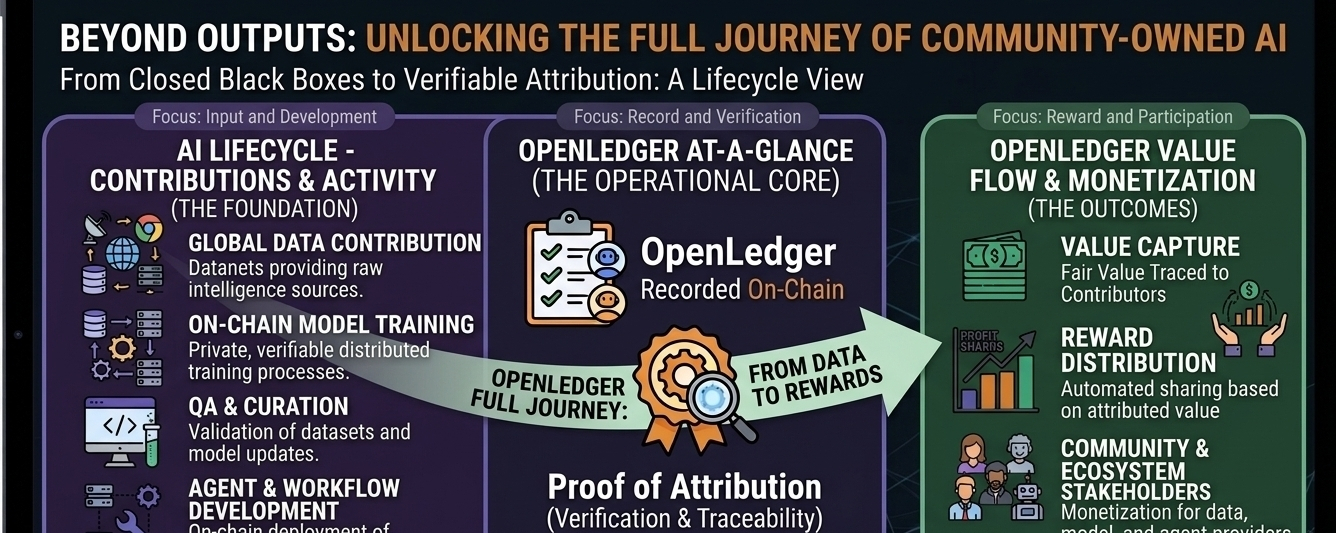
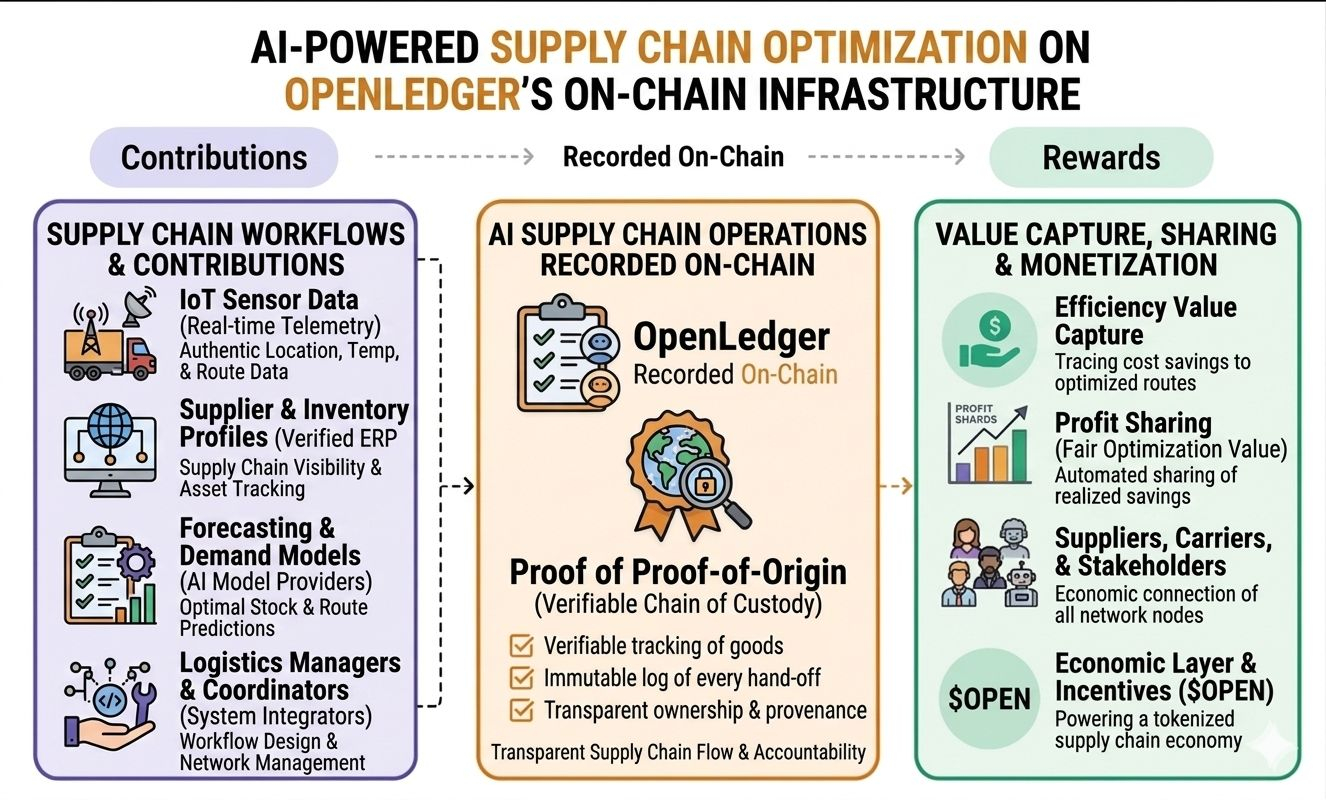
Because OpenLedger does not seem to be focused only on the final AI output. It is looking at the full journey behind AI — from data and model training to inference, attribution, agents, and rewards.
That difference feels important.
In most AI systems, the user only sees the surface. You type something, the model responds. You run an agent, it performs an action. But the entire process behind it stays hidden like a black box.
And maybe that is the problem.
If AI keeps becoming more important in business, finance, Web3, content, automation, and decision-making, then the hidden layers behind AI cannot stay ignored forever.
OpenLedger’s approach feels different because it tries to make these layers more traceable. If data helped shape a model, that contribution should not disappear. If a community improves a dataset, that effort should not become invisible. If an AI agent creates value later, the system should have a way to understand where that value came from.
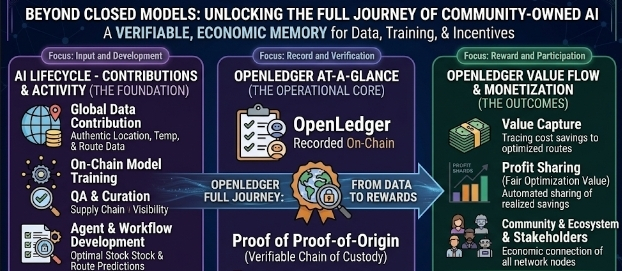
This is where Proof of Attribution becomes meaningful.
It is not just about tracking data for the sake of tracking. It is about connecting contribution with value. Without attribution, AI becomes powerful but unfair. The output may look impressive, but the people behind it remain unseen.
And this is where $OPEN becomes part of the bigger picture. If OpenLedger can connect data, models, agents, and rewards into one ecosystem, then $OPEN can support participation and value flow across that AI economy.
Of course, this is not easy.
Tracking contribution is difficult. Measuring the value of data is difficult. Open systems can face low-quality inputs, incentive gaming, and governance challenges. Not every part of the AI journey can be perfectly measured.
But still, I think OpenLedger is asking the right question.
Most AI projects are trying to make the output look better.
@OpenLedger is asking what the output is built on, who helped create it, and how value should move afterward.
Maybe that is the real shift.
AI should not only become faster and smarter. It should also become more accountable.
And maybe the future of AI will not be judged only by the quality of its answers, but by how clearly we can see the journey behind those answers.
That is why #OpenLedger feels interesting to me.
It is not just looking at AI as an output machine.
It is looking at AI as a full economic system — where data, models, agents, contributors, and rewards are connected together.