

Okay… let me say one thing honestly at the beginning.
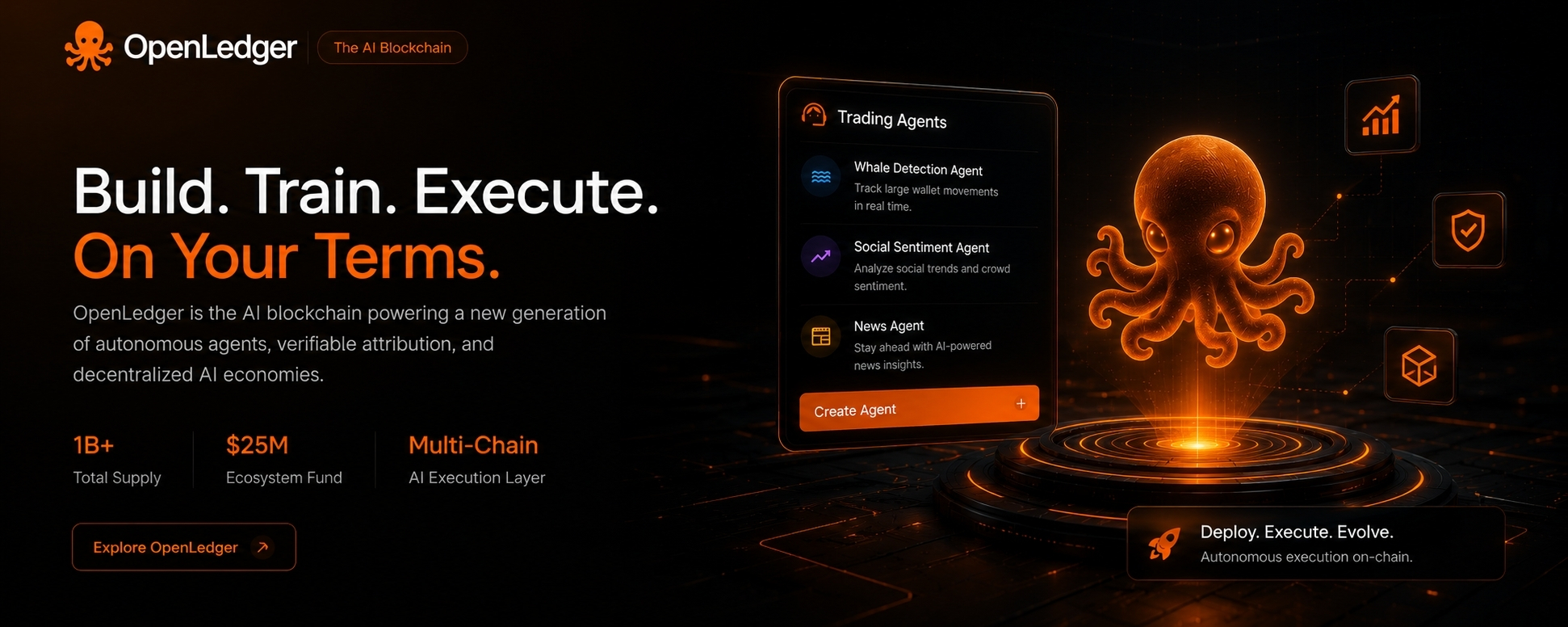
When most people hear “AI agents” in crypto, they still imagine glorified chatbots with market commentary attached to them. A few prompts, a dashboard, maybe some automation — and suddenly everything gets labeled as “agentic infrastructure.” But after spending time digging through @OpenLedger architecture and OctoClaw’s execution layer, I realized something feels fundamentally different here.
This does not look like another AI interface experiment.
It feels more like the early construction phase of an autonomous execution economy.
And honestly… that shift is much bigger than people realize right now.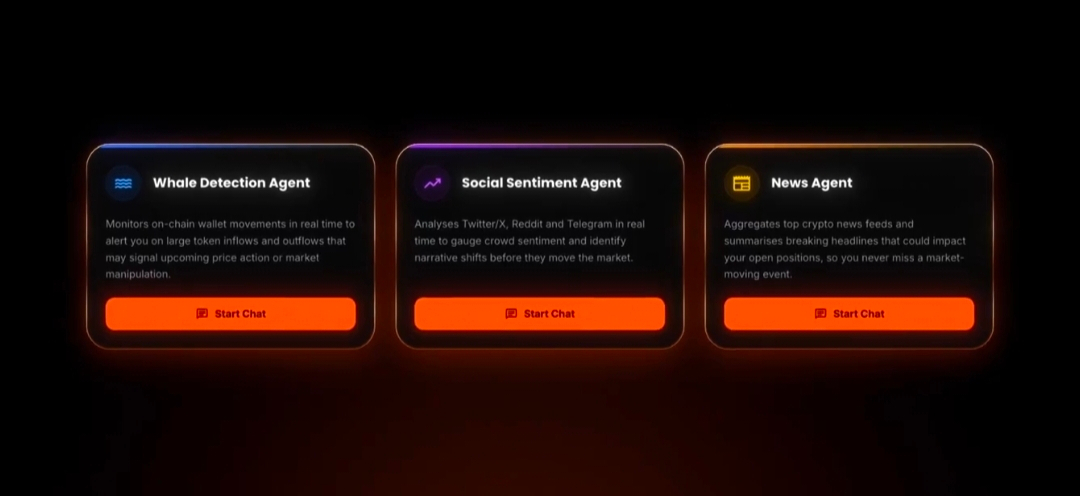
The first thing that caught my attention was not the AI itself — but the structure around it. Because OpenLedger is quietly building something most projects avoid touching directly: the coordination layer between AI decision-making and real on-chain execution.
That sounds abstract at first. But if you simplify it, the idea becomes very clear:
Most AI systems today can analyze. Very few can actually operate.
OctoClaw changes the conversation from: “AI that gives suggestions” to “AI that can execute workflows.”
And psychologically, that is a completely different category.
Now let’s come to the interesting part — Cloud Config mechanics.
At first glance, it sounds boring. Almost too technical to matter. But actually this may be one of the most important layers in the whole ecosystem. Because if AI agents are going to interact with markets, vaults, bridges, liquidity pools, and cross-chain systems… then they need structured permissions and behavioral boundaries.
Without that, everything becomes chaos very quickly.
So what OpenLedger seems to be building here is not unrestricted autonomy, but programmable autonomy.
That distinction matters a lot.
The Cloud Config layer almost feels like an operating system dashboard where execution rules are defined before intelligence acts. Risk thresholds, rebalance logic, permissions, memory states, strategy structures — all of this becomes configurable instead of manually scripted every time.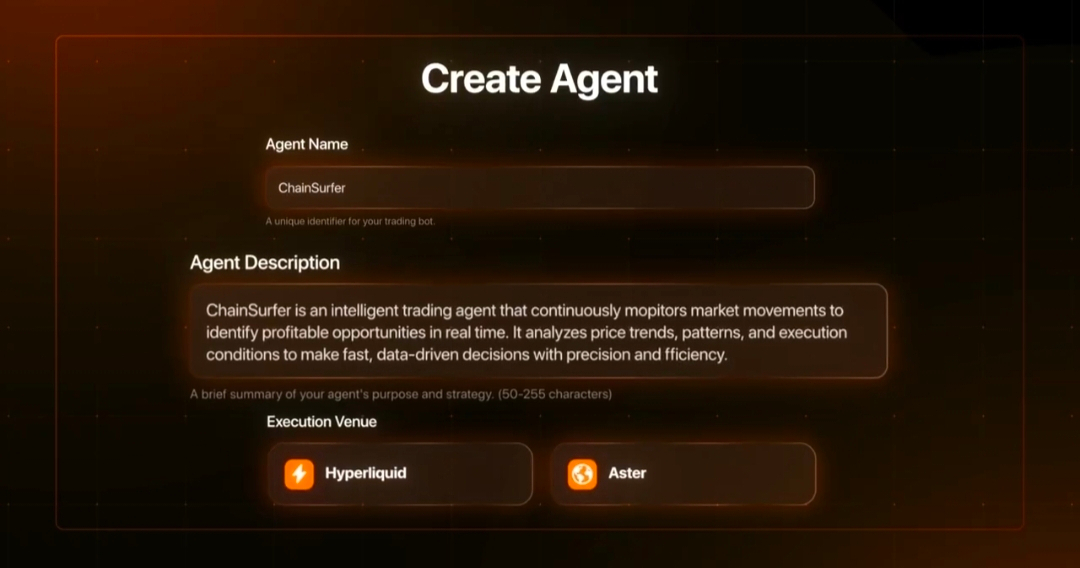
And honestly… that is where the infrastructure narrative starts becoming serious.
Because most people still think the AI race is about better responses.
But infrastructure-level players are starting to focus on something else entirely: execution coordination.
Now let’s come to the Trading Agent system.
This is where the whole thing starts feeling less theoretical.
The way I see it, OpenLedger is not positioning these agents as “trading bots” in the old retail sense. That narrative is too small. What they are actually experimenting with is autonomous capital orchestration.
That means: monitoring markets, moving liquidity, optimizing yields, rebalancing strategies, interacting with vaults, and eventually coordinating across multiple ecosystems without constant human intervention.
And if I am being completely honest… this may become one of the biggest psychological transitions in crypto over the next few years.
Because for the first time, markets are starting to think about AI not as a tool beside finance — but as an active participant inside finance.
That changes the entire architecture conversation.
Another thing that becomes very interesting here is the ERC-4626 integration.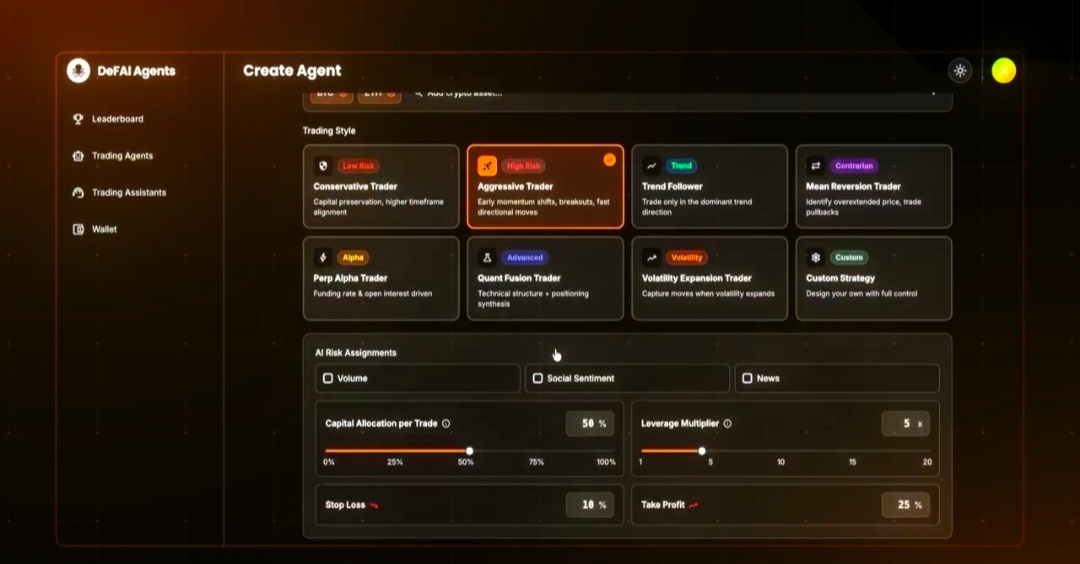
Most people probably skipped over this announcement because standards are not exciting on the surface. But actually, this may be one of the smartest infrastructure decisions OpenLedger has made.
Why?
Because autonomous agents cannot scale efficiently across DeFi if every protocol behaves differently.
Standardized vault structures solve this problem.
ERC-4626 basically creates a shared financial language for yield-bearing assets. So instead of building custom logic for every integration, agents can interact with multiple vault systems through a common framework.
It sounds technical, yes. But strategically… this is huge.
Because when AI agents eventually start managing capital at scale, interoperability becomes more important than intelligence itself.
And honestly, that is a very underrated realization.
Now let me tell you the part that genuinely changed the vibe for me — vibecoding.
At first, I laughed a little when I saw the term because it sounded like another CT buzzword. But after thinking deeper, I understood what OpenLedger is trying to do here.
They are reducing the psychological barrier between idea and deployment.
That is powerful.
Historically, AI development was gated behind technical complexity: terminals, frameworks, dependency management, GPU environments, fine-tuning pipelines.
But OpenLedger is slowly shifting the interaction model toward natural workflow creation instead of hardcore engineering rituals.
And whether people like it or not… that is exactly how mass experimentation begins.
The same thing happened with websites. Then apps. Then content creation.
Complexity gets abstracted away until participation explodes.
Now here comes the deeper layer most people are still ignoring: Datanets and contribution economics.
This is probably the most intellectually interesting part of OpenLedger’s architecture.
Because the project is trying to solve something the AI industry still handles very poorly: attribution.
Right now, data flows into models like invisible fuel. Contributors rarely capture long-term value. Training pipelines remain mostly extractive.
OpenLedger is experimenting with the opposite idea: what if data itself becomes an earned economic asset?
And honestly… this creates a strange tension inside the system.
On one side: open participation, decentralized contribution, permissionless ecosystems.
On the other side: strict validation, quality filters, structured acceptance systems, controlled formatting.
At first this contradiction feels uncomfortable. Almost anti-Web3.
But the more I thought about it, the more it started making sense.
Because unrestricted contribution sounds beautiful philosophically… until signal gets buried under noise.
And OpenLedger seems fully aware of this problem.
The contribution system itself reflects that mindset: daily limits, validation mechanics, acceptance-rate importance, structured formatting.
This is not optimized for volume. It is optimized for usable intelligence.
And honestly, that changes the incentive psychology completely.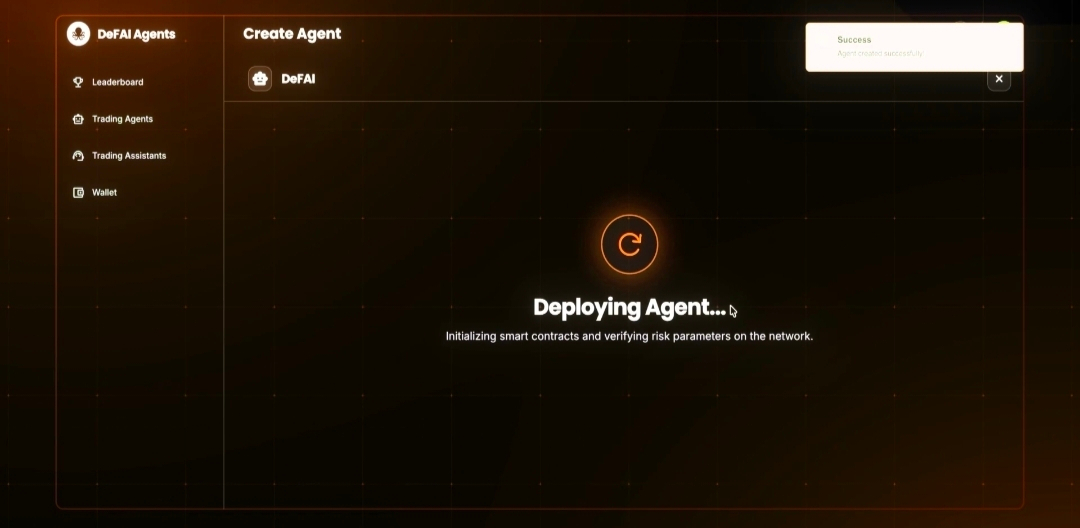
One thing I found surprisingly healthy is that rejected contributions do not heavily punish experimentation. That subtle design choice matters more than people think. Because once contributors become fear-driven, innovation slows down.
So the ecosystem tries to maintain a strange balance: discipline without discouraging experimentation.
Not easy to achieve.
Now let’s come to ModelFactory.
This is probably the clearest example of OpenLedger trying to democratize AI development without turning the ecosystem into complete disorder.
The platform supports: LLaMA, Qwen, Mistral, DeepSeek, BLOOM, ChatGLM, and multiple open ecosystems.
At first it looks like broad compatibility marketing. But strategically, it is ecosystem expansion.
Because supporting only elite models creates narrow experimentation. Wide support creates discovery layers.
And the GUI-based fine-tuning flow is actually more important than people realize.
Most people underestimate how much friction kills innovation.
If model training remains terminal-heavy forever, participation remains elite. But once workflows become visual and interactive: train → test → refine → redeploy becomes continuous instead of intimidating.
LoRA and QLoRA support also show that OpenLedger understands current economic realities.
Full fine-tuning is expensive. Lightweight adaptation scales better.
That practical thinking appears repeatedly throughout the ecosystem.
Nothing here feels built purely for hype. Most components feel engineered around operational efficiency.
Now let me explain the strange image that keeps coming into my head whenever I study this ecosystem 😂
OpenLedger feels like a very disciplined futuristic kitchen.
Nobody can randomly throw ingredients everywhere. Everything has structure, measurement, validation, workflow rules.
But once the system works… the kitchen becomes scalable.
And honestly, that may be the entire philosophical point here.
Because crypto spent years optimizing for openness. AI spent years optimizing for capability.
But OpenLedger seems to be asking a different question:
Can you build an open AI economy without collapsing into informational chaos?
That is a much harder problem than launching another AI token.
Now let’s come to the part I think the market is still underestimating the most: AI agents as economic actors.
This is where OctoClaw starts becoming more than infrastructure.
Because if agents eventually: hold wallets, move assets, coordinate liquidity, train models, optimize strategies, and interact across chains…
then entirely new economic frameworks are required.
Not just AI models. Not just blockchains.
But systems for: verification, permissions, attribution, cross-chain settlement, data ownership, and autonomous coordination.
That is the layer OpenLedger appears to be positioning itself around.
And maybe that is why the project feels different from most AI narratives right now.
It is not trying to build “another assistant.”
It is trying to build operational rails for machine economies.
Will all of this work perfectly? Honestly… I do not know.
There are still difficult questions: Can attribution scale? Can autonomous execution remain secure? Can decentralized data economies avoid manipulation? Can agent coordination function efficiently across fragmented ecosystems?
No one really has final answers yet.
But I think this is exactly why OpenLedger has become interesting to watch.
Because beneath the AI buzzwords and infrastructure announcements, there is actually a much deeper experiment happening here:
The transition of AI from passive intelligence… to active economic participation.
And if that transition really happens at scale one day…
then OctoClaw may end up representing something much bigger than a product launch.
It may represent the moment AI stopped talking — and quietly started executing.