

I’ve been watching the AI space move so fast lately that sometimes it feels impossible to process where things are actually heading.
Every week there’s a new model, a new tool, a new prediction about how everything will change.
But underneath all that noise, I keep noticing something smaller that feels more important.
Trust.
Not just whether AI works, but where its intelligence comes from, who contributed to it, and whether any of that can actually be verified in a fair way.
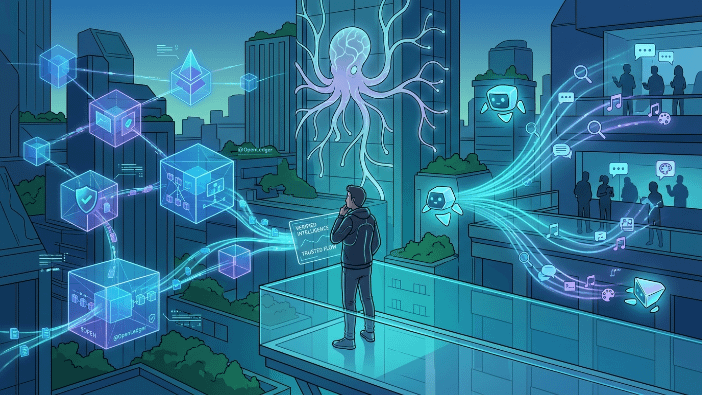
That’s probably why @OpenLedger stayed on my mind longer than I expected.
It wasn’t one big announcement or one flashy feature. It was more the feeling that AI and blockchain suddenly made sense together in a practical way.
For a long time, blockchain conversations felt disconnected from everyday AI use. Almost like two different worlds trying too hard to overlap.
But recently it feels different.
AI keeps absorbing data from everywhere, while blockchain quietly offers a way to track contribution, ownership, and movement inside those systems without relying entirely on centralized control.
And honestly, I don’t think enough people realize how important that shift could become.
Because once AI systems start influencing real decisions, content, research, and even online economies, people naturally start asking harder questions.
Where did this model learn from?
Who provided the data?
Who benefits from the output?
I noticed that #OpenLedger keeps circling around those uncomfortable questions instead of avoiding them.
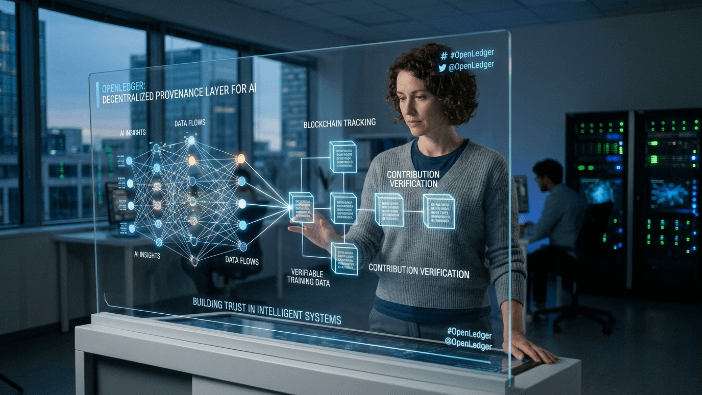
That made me pay attention.
The interesting part is that it doesn’t even feel futuristic anymore. It already feels close to reality.
People are interacting with AI constantly now without even thinking about it. Search, recommendations, automation, conversations. It’s everywhere already.
So the idea of creating systems where contributions become visible and measurable through networks like $OPEN doesn’t feel abstract to me anymore.
It feels necessary.
Maybe it’s just me, but I think the fusion of AI and blockchain becomes more understandable once you stop thinking about speculation and start thinking about accountability.
That’s when the connection finally clicks.
For some reason, #openledger feels less focused on replacing humans and more focused on recognizing participation inside intelligent systems.
And that changes the tone completely.
I’m not sure how to describe it exactly, but there’s something strangely human about wanting visibility inside systems we help build every day.
Especially when those systems are becoming smarter than ever.