

The part I keep noticing with OpenLedger is not the first action from the trading agent.
It is what the agent does after the first action leaves its hands.
A builder can vibe code an agent, launch it through OctoClaw, set the cloud config, and let the agent start a route. The run feels alive. The bridge step begins. The vault side is waiting. The dashboard may not show the final position yet, but the agent is still awake, still checking, still deciding whether anything needs to happen next.
That watching phase is easy to underestimate.
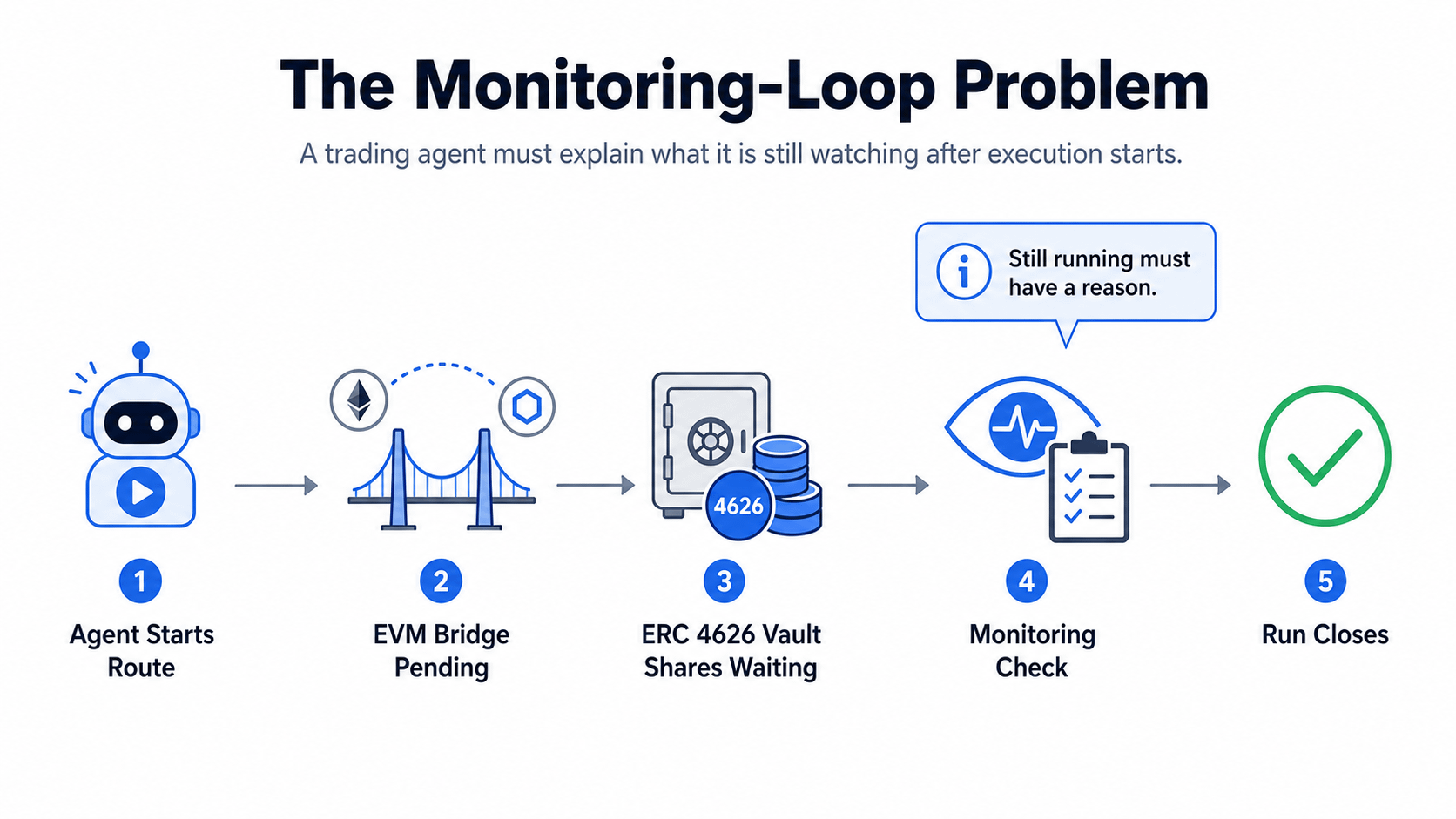
A trading agent should not go blind after it starts a route. If an EVM bridge leg is pending, the agent needs to know whether the destination state is ready. If an ERC 4626 vault action is waiting on shares, the agent needs to know whether the position actually appeared. If the cloud config has a stop condition, the agent needs to know when monitoring should end.
But there is a thin line between useful monitoring and pointless loop behavior.
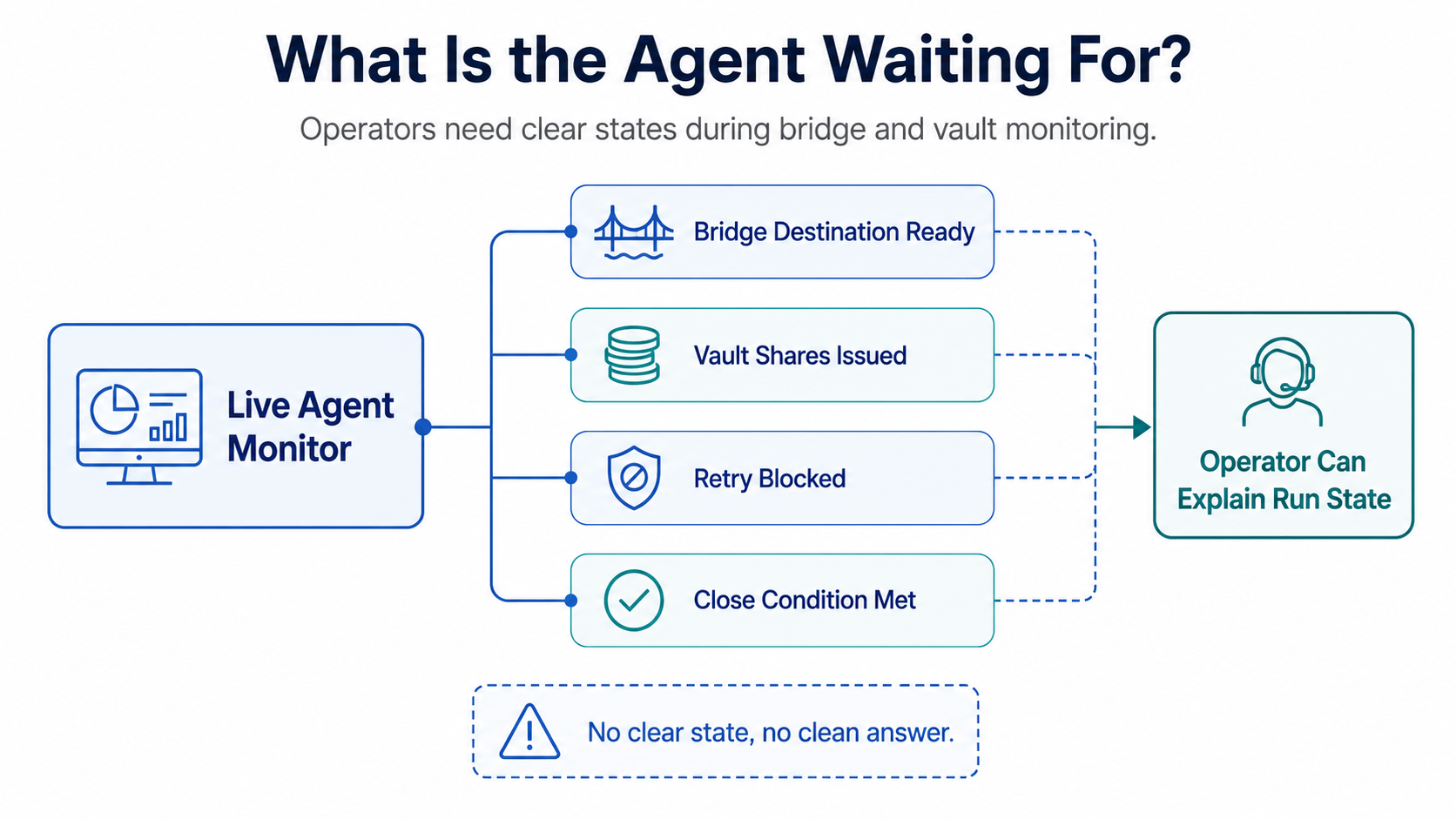
That is the OpenLedger bottleneck I would watch. Once the agent has acted, every follow-up check needs a reason. Is it waiting for bridge finality. Is it confirming the vault result. Is it checking whether the run can close. Is it refusing to retry because the original action is still pending. Those are different states, and they should not all look like the agent is just “still running.”
If they look the same, the builder gets a bad problem. The agent can consume time, attention, and run activity without creating a clearer result for the user.
The visible consequence lands on the operator.
A user asks why the agent is still running after the trade already started. The answer cannot be “it is monitoring.” Monitoring what. For how long. Under which condition does it stop. What exact bridge or ERC 4626 state is it waiting to see.
If the operator cannot answer that, the agent starts looking less controlled even when the route is working normally.
This is where OpenLedger feels specific. The agent is not only watching a price feed. It can be watching a route that crosses an EVM bridge and then lands in vault accounting. That means the waiting phase is not empty. It is the part where the system decides whether the first action became a real usable position.
The EVM bridge creates one monitoring burden. The agent has to separate delayed destination state from a failed move. It should not panic because the result is late, and it should not sleep through a route that actually failed.
The ERC 4626 vault creates another. The agent has to know whether the expected share result exists before it treats the position as ready. A vault result is not just a green check. It is the accounting surface the user will later read.
That is why I do not want the monitoring loop hidden behind vague status language. “Running” is too broad. “Waiting on bridge state” is different from “waiting on vault shares.” “Ready to close” is different from “still checking.” The operator needs those states separated before a user starts asking why the run feels stuck.
This is also where $OPEN only belongs if it stays close to the work being measured. If OpenLedger activity carries cost, usage, or attribution, then monitoring cannot be invisible background noise. A useful record should show whether the agent was actively checking a pending route, confirming a vault result, or wasting cycles after the run should have closed.
That is the pressure line I would keep.
An OpenLedger trading agent does not prove itself only by starting a route.
It proves itself by knowing exactly what it is still watching after the route has already begun.