
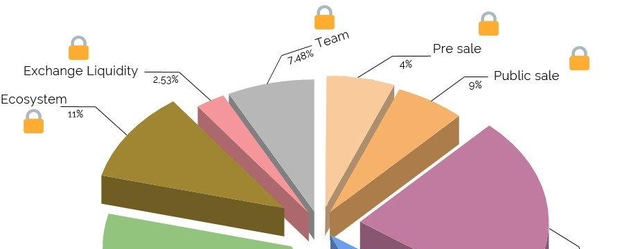

The market often focuses on narratives, partnerships, and short-term price action while quietly ignoring one of the most important structural signals inside crypto: token distribution. A large number of ecosystems claim to be community-driven, yet their supply structures tell a very different story once insider allocations and unlock schedules become visible. That’s partly why the 61.7% community and ecosystem allocation around $OPEN feels more important than most people realize.At first glance, it simply looks like generous tokenomics. But underneath, it changes incentive alignment across the entire network. When insiders control smaller portions of supply, the psychological pressure around future unlocks, aggressive sell-offs, and concentrated governance power begins shifting. Markets may underestimate how much long-term trust depends on perceived fairness of ownership distribution.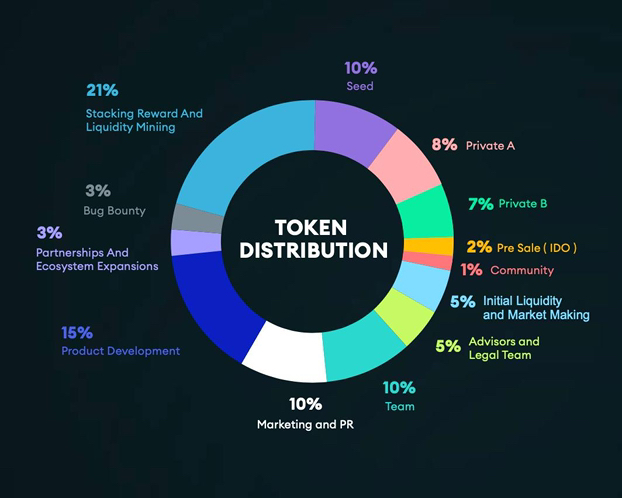
Most speculative cycles eventually expose the same problem: ecosystems struggle when users feel like temporary exit liquidity for early insiders. Even strong technology can lose momentum once participants believe incentives are structurally unbalanced. Fairer distribution models do not automatically guarantee success, but they often create healthier behavioral foundations for network growth.What becomes interesting is the second-order effect. Wider ecosystem allocation can strengthen participation psychology itself. Builders contribute longer. Communities coordinate more naturally. Governance feels less symbolic and more economically meaningful. Over time, trust stops being narrative-driven and starts becoming structurally embedded into the ecosystem design.Of course, token distribution alone solves nothing. Poor execution, weak adoption, or unsustainable incentives can still damage any ecosystem regardless of allocation structure. Markets also remain irrational for long periods, often rewarding hype faster than healthy architecture.But historically, systems with better-aligned incentives tend to survive longer once speculative attention fades.Because in crypto, ownership structure is not just tokenomics.It is behavioral infrastructure hiding in plain sight.
The market often treats token allocation as a secondary detail, somewhere beneath narratives, partnerships, and short-term momentum. But over time, ownership structure quietly shapes the psychology of an entire ecosystem. That’s why the 61.7% community and ecosystem allocation around $OPEN feels structurally more important than people may realize.
Most crypto projects eventually face the same invisible tension: users want decentralization, but token concentration often tells a different story. Heavy insider ownership creates an environment where markets remain subconsciously cautious, always watching for unlocks, exits, and hidden sell pressure beneath the surface.